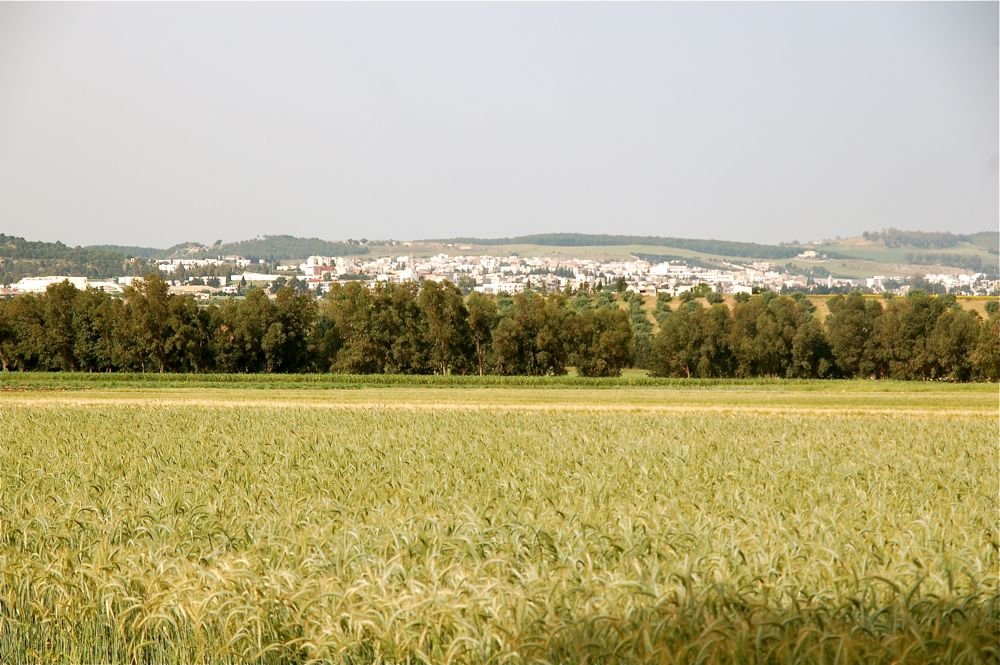
Béja sits in the green, rolling hills of northwestern Tunisia, about 100 km west of Tunis. This is the breadbasket of the country — wheat fields, olive groves, and grazing land spreading out from the town in every direction, a striking contrast to the desert south. The Romans called the place Vaga and prized it as a grain depot; the Carthaginians, Numidians, Vandals, Byzantines, and finally the Arabs all in turn took the town for the same reason.
The town itself is a working provincial capital of about 60,000 people, not a polished tourist stop. A Byzantine kasbah crowns the hill above the centre, looking out over the surrounding plains, and the Great Mosque in the old quarter dates back to the early Islamic period — built, like much of the kasbah, with stones quarried from the Roman city that preceded it. There are a few quiet cafés in the medina and a busy weekly market that draws farmers from across the governorate.
Most travellers pass through Béja on the way to Bulla Regia, the Roman site with its remarkable underground villas 50 km west, or Dougga, the spectacular hilltop Roman city 50 km south. Béja makes a sensible, low-key base for visiting both, and the countryside between them — rolling hills, cork-oak forest, and Roman ruins half-buried in fields — is some of the prettiest in Tunisia. Do not expect tourist infrastructure: come for the landscape, the history, and a glimpse of ordinary Tunisian provincial life.