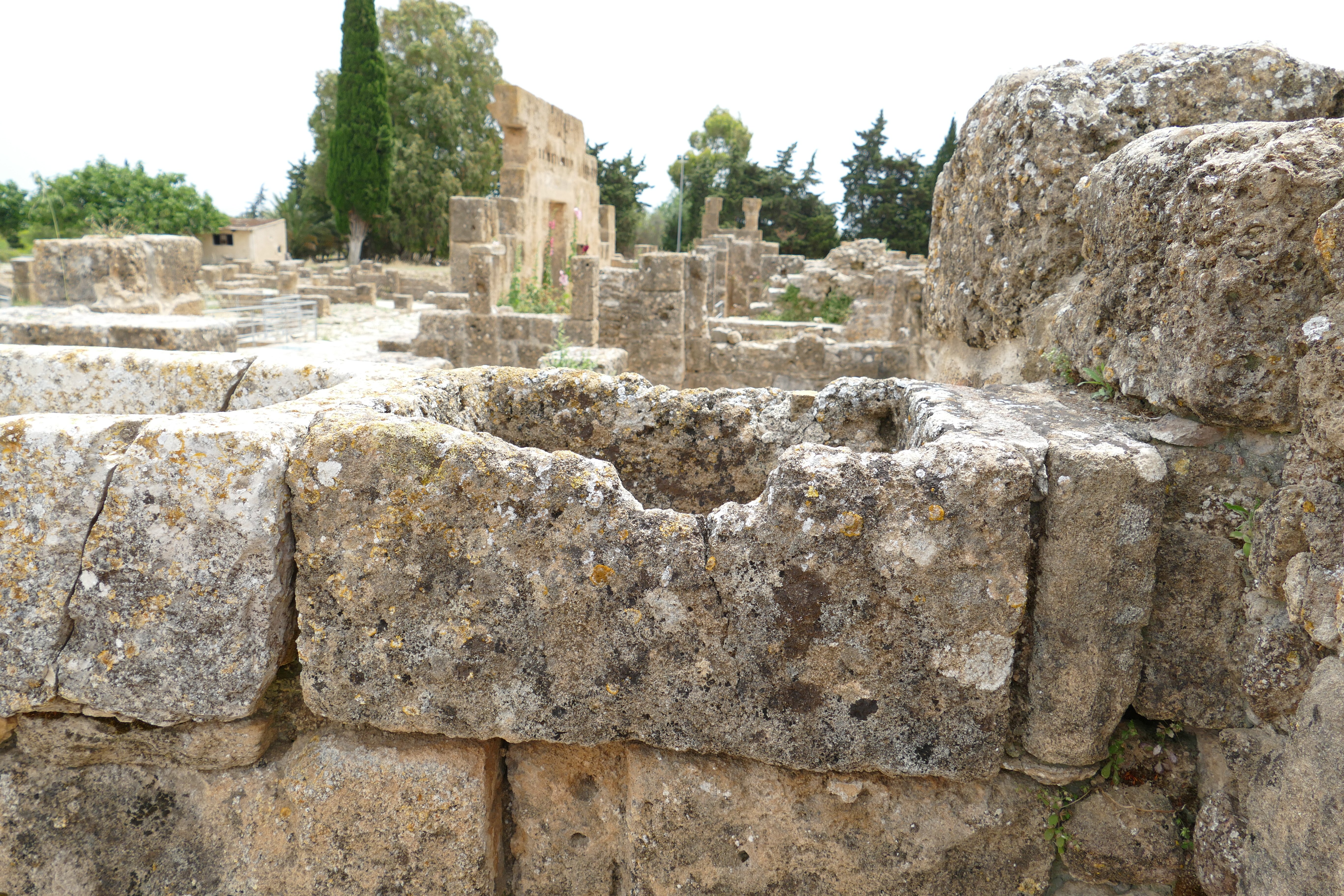
Utique (Utica in Latin) was one of the oldest Phoenician settlements in North Africa, founded according to tradition around 1100 BC — centuries before Carthage. For a time it was the most important city on the Tunisian coast, and after Rome destroyed Carthage in 146 BC, Utica served as the capital of the new Roman province of Africa. Its fortunes declined as its harbour silted up; the coastline has since shifted several kilometres north, leaving the ruins stranded inland.
The archaeological site today is modest compared to the grandeur of Carthage or Dougga, but it has its own quiet appeal. The most impressive remains are the Roman-era House of the Cascade and the House of the Hunt, with well-preserved mosaic floors. Foundations of the Punic Necropolis hint at the city's much older origins, and the Forum and Capitol and Roman Baths round out the Roman quarter. The Utica National Museum at the entrance displays finds from the site, including Phoenician pottery and Roman-era artefacts.
Utique sits about 30 kilometres northwest of Tunis, near the modern town of Henchir Bou Chateur along the Medjerda river plain. You will likely have the site largely to yourself — it receives far fewer visitors than Tunisia's more famous ruins. It pairs well with a trip to Bizerte further along the coast.