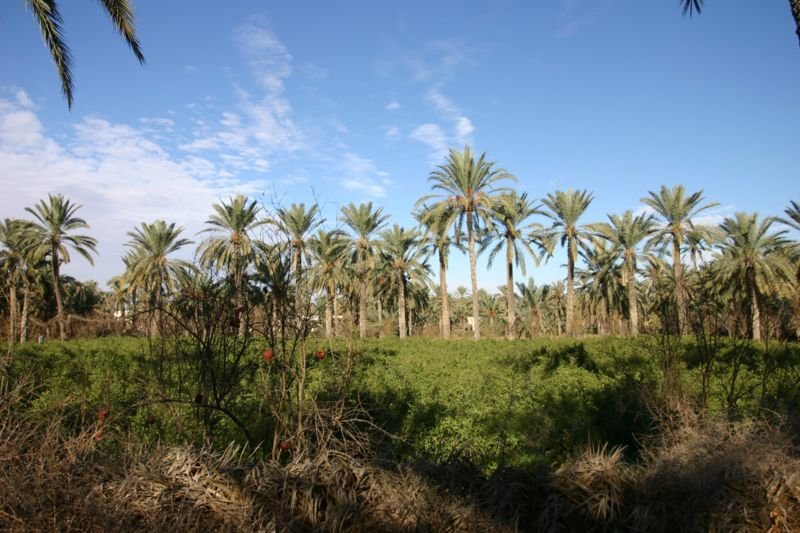
Gabès is a working port city on the Gulf of Gabès, about halfway down Tunisia's east coast. Its main distinction — and the reason it appears on most itineraries crossing the south — is its seaside oasis, the only one of its kind in the Mediterranean basin. For centuries, palm groves, pomegranate orchards, and vegetable gardens grew right down to the salt water, irrigated by springs that bubbled up from beneath the sand. The traditional oasis is still there, although industrial pollution from the chemical plants along the coast has put it under steady pressure, and the springs that once flowed all year now run weakly or have dried out altogether.
The city itself is a mix of crumbling colonial-era buildings, a modern centre that is unlovely but functional, and a small medina with a covered souk specialising in henna, spices, and basketwork. The Sidi Boulbaba mosque, named for one of the Prophet's companions said to be buried here, is the main religious monument; Chenini Gabès and Jara, the old palm-grove villages folded into the modern city, are the most attractive places to walk. The beaches along the gulf are usable but not the reason to come.
Most travellers use Gabès as a transit point — bus and louage connections south to Medenine and Tataouine, west toward the Sahara at Douz and Tozeur, and north to Sfax and Tunis. A day or even half a day is enough to see the oasis, the medina, and the souk before pushing on; for travellers heading to the troglodyte villages of the south, Gabès is the natural pivot point.