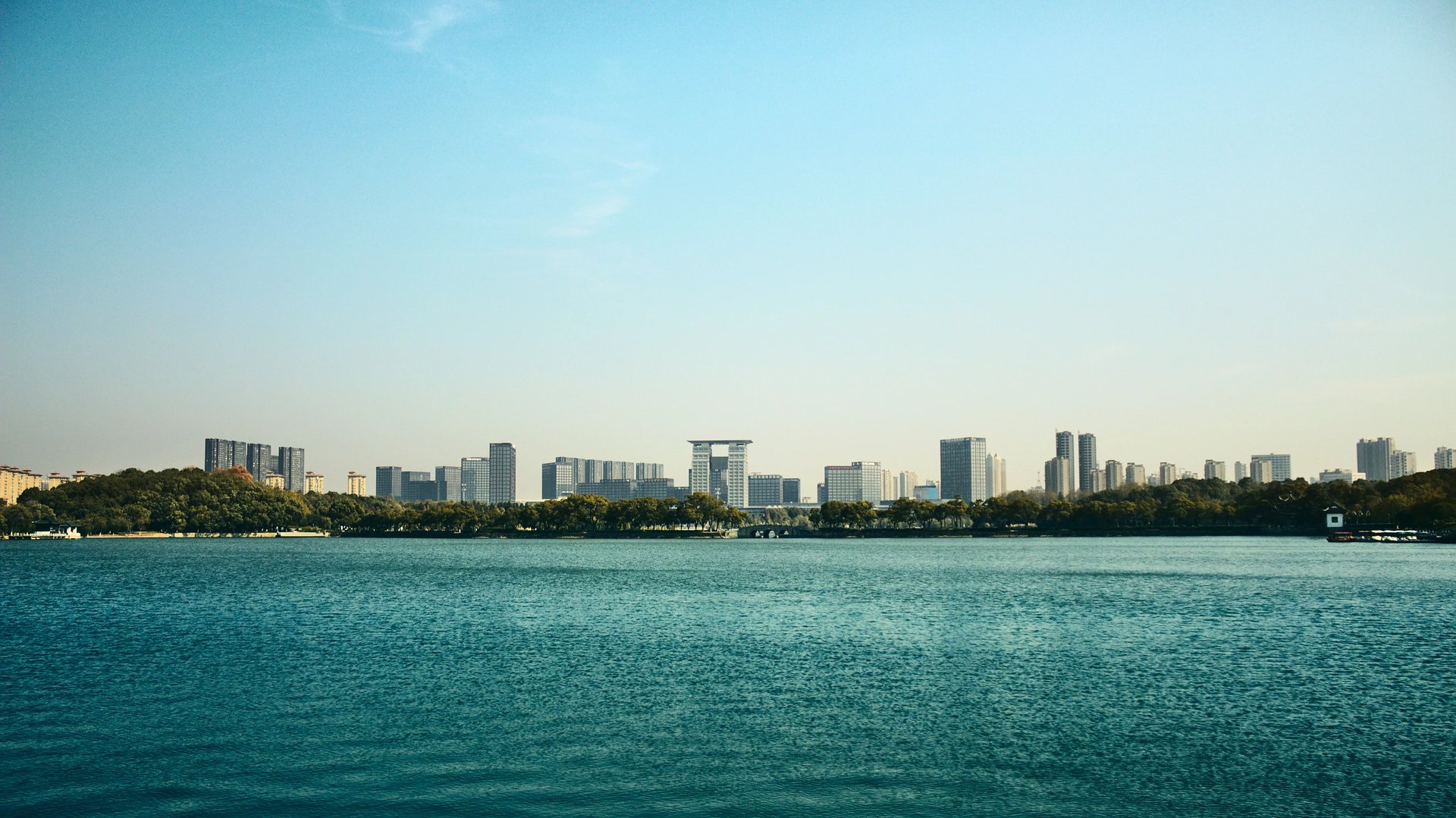
Tongling calls itself the Copper Capital of China, and the claim has real substance: copper has been extracted from the hills around this Yangtze River city for at least 3,500 years, and the mines that operated during the Shang and Zhou dynasties were among the most important bronze production centers in the ancient world. The city grew on that foundation, and even now — with modern industry supplementing the historical mining legacy — the identity holds. There is a good case that no other city in China has a clearer continuous relationship between its modern character and its ancient economy.
The Copper Culture Park makes the most of this heritage. A sculpture garden of bronze figures, a museum tracing the development of copper mining from the Shang dynasty to the present, and the centerpiece: a genuine claim to the world's largest pure copper statue, the Bronze Giant, which is worth seeing for the sheer audacity of scale. The Tongling Museum in the city center has a tighter, more scholarly collection of ancient bronzes alongside exhibits on the local natural environment.
Natural Anhui asserts itself at Tianjing Lake Scenic Area, where walking trails wind through wetlands and bamboo groves a short distance from the city center. Baidang Lake Ecological Wetland is the better site for birdwatching, particularly during autumn migration. Datong Ancient Town, a Ming and Qing dynasty river settlement about thirty kilometers from the city, preserves a stretch of old commercial streets and dock architecture that escaped the wholesale demolition common elsewhere.
Tongling North station is a major stop on the Beijing-Fuzhou High-Speed Railway, with easy connections to Hefei and the rest of the province. The nearest airport with useful connections is Chizhou Jiuhuashan, about seventy kilometers to the southwest.