Shiyan is one of China's more improbable cities — a planned industrial town built almost from scratch in the 1960s and 1970s in a remote Hubei valley to house the Dongfeng Motor Corporation, one of China's largest automobile manufacturers. Before Dongfeng, there was almost nothing here. The city grew out of the factory, not the other way around, which gives it an unusual urban texture: wide Soviet-influenced boulevards, uniform worker housing blocks, and an economy that still revolves around automotive production. The Dongfeng Museum, housed in the original factory complex, is a genuinely interesting document of twentieth-century Chinese industrial history.
Most visitors come to Shiyan as a staging point for the Wudang Mountains, the UNESCO-listed complex of Taoist temples and monasteries that lies about an hour to the southeast. Shiyan is the nearest large city with useful transport connections, and the relationship has given the city a quiet Taoist undertone — there are martial arts schools, tea houses serving mountain-grown teas, and practitioners doing Tai Chi in the city parks at dawn in numbers you don't find in most industrial cities. The Qinglong Mountain Dinosaur Egg Fossil Site, in the Yunyang district, is a less-visited attraction that rewards the curious: thousands of fossilised dinosaur eggs from the late Cretaceous period, displayed in situ in a national nature reserve.
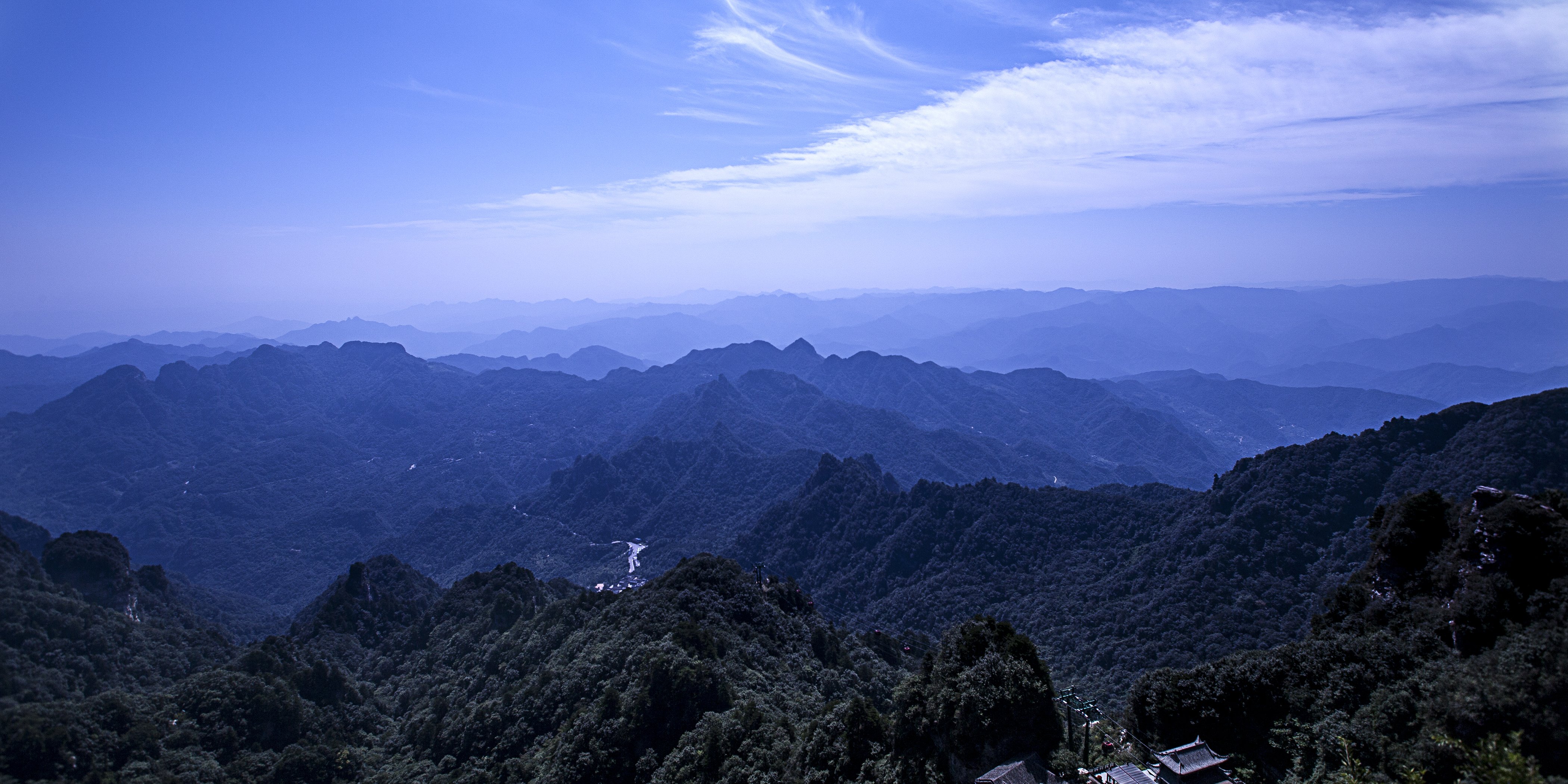
The setting itself is striking. Shiyan sits in the Qinba Mountains at roughly 300 metres elevation, surrounded by forested ridges that give the city a dramatic backdrop entirely at odds with its utilitarian origins. The summers are cooler than the Yangtze plain to the south, which made it an attractive location for the factory workers who were relocated here from coastal cities. The local cuisine reflects those transplant origins — you'll find traces of Shanghai and Wuhan cooking styles alongside northwestern Hubei mountain food.
The Wudang Mountains are the real reason to base yourself here rather than passing through. The mountain complex rewards at least two days: the Golden Hall, built during the Ming dynasty, the twelfth-century Purple Cloud Temple, and the South Cliff Palace, where a full temple complex is built directly into a cliff face. Multiple Taoist martial arts schools accept short-term students for week-long or month-long residential programmes.