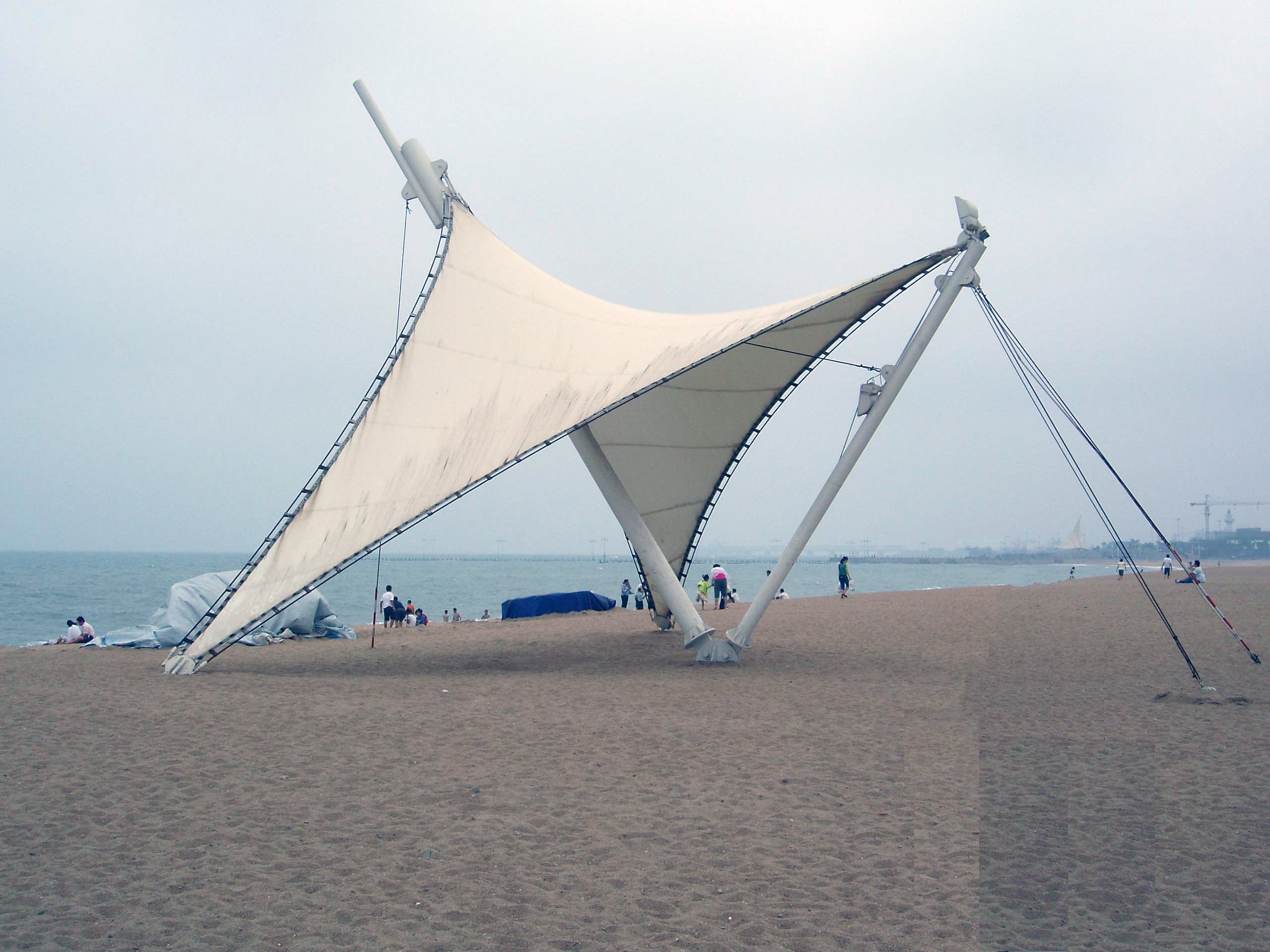
Rizhao means "first light of the rising sun," a name that explains both its geography — on the southeast Shandong coast, facing east across the Yellow Sea — and its marketing identity as a beach destination. The city sits about 100 kilometers south of Qingdao on a coastline that is less famous but not appreciably less attractive: Wanpingkou Beach runs for five kilometers along a sandy shore that is substantially less crowded than Qingdao's No. 1 Bathing Beach in summer, and the water quality here is consistently ranked among the best in northern China.
The city has designated itself the Water Sports Capital of China, a claim backed by genuine sailing and water sports infrastructure at multiple beach zones. The designation is not entirely promotional: the bay geometry and consistent summer winds do make conditions for small-boat sailing better than at most comparable coastal cities. The Rizhao Ocean Park, the main paid attraction, covers marine biology and has the standard aquarium exhibits, but the beaches themselves are the real draw and most of them are free.
Archaeological richness beneath the modern city is substantial: the Rizhao Museum holds artifacts from the Dawenkou culture (5000–2500 BCE) and the Longshan culture, both of which were centered in this part of coastal Shandong, and the collection includes the famous "Longshan black pottery" that is among the most technically refined ceramics from prehistoric East Asia. The Zaishui Art Museum, opened in 2023 and designed by Pritzker laureate Jun'ya Ishigami, adds a notable contemporary culture attraction. Inland, Wulian Mountain offers hiking through granite boulder landscapes and forested ridges. High-speed rail connects to Qingdao in under an hour; the city is uncrowded by Chinese standards and genuinely pleasant in shoulder season.