Doha has grown up fast. Sixty years ago it was a pearl-diving port of perhaps fifteen thousand people; today it is the capital of one of the richest countries on earth, a city of three million where roughly 90 per cent of residents are foreign workers, and the skyline of West Bay competes with Dubai's and Abu Dhabi's for glossy 21st-century statement.
The city has done one thing better than either Gulf rival: spent some of its oil money on serious cultural institutions. I.M. Pei's Museum of Islamic Art, on its own island at the end of the Corniche, is one of the best museums of its kind anywhere. Jean Nouvel's National Museum of Qatar, the great stacked "desert rose" that opened in 2019, is the natural follow-up. Mathaf, the Arab Museum of Modern Art, fills out the trilogy.
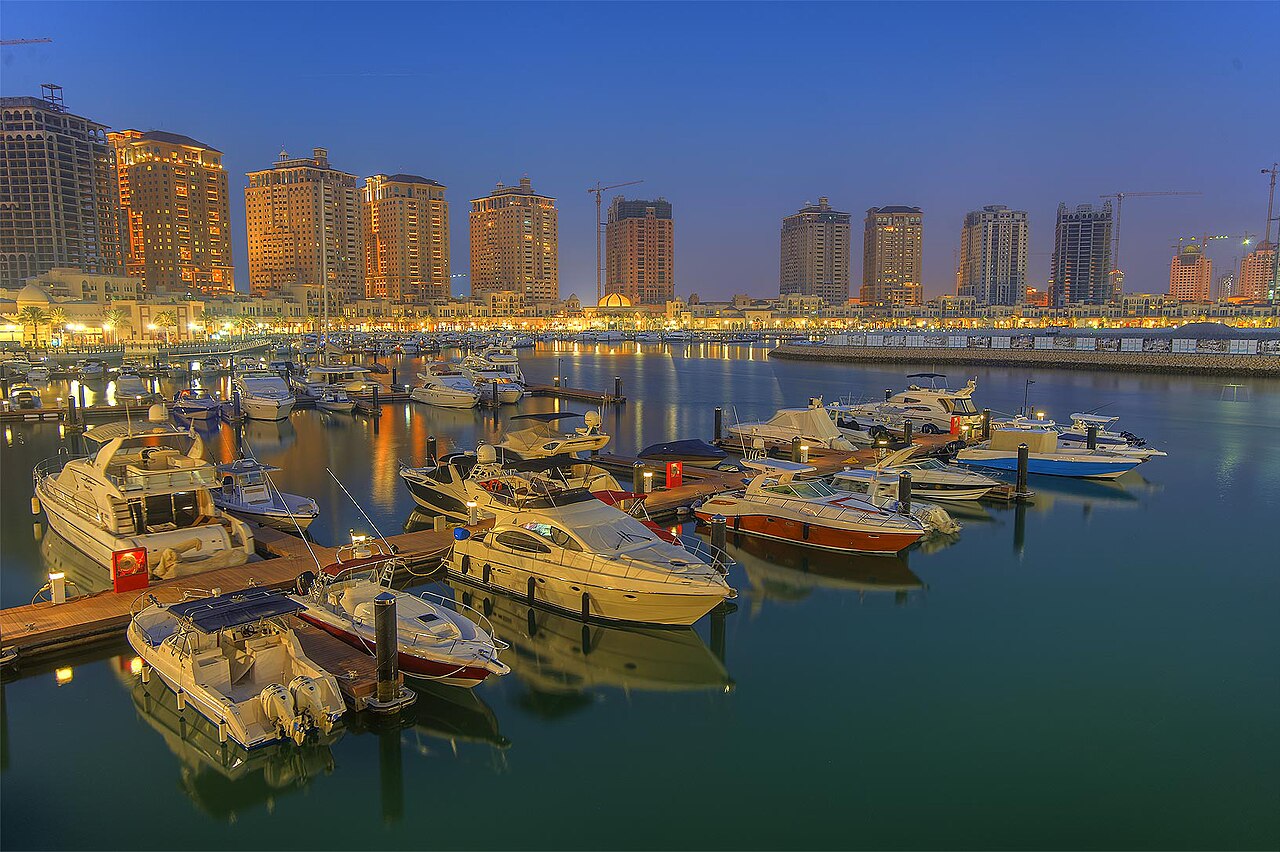
The old city has mostly been demolished and replaced, but Souq Waqif — rebuilt in traditional style in the 2000s — is the liveliest place in town after dark. The Corniche, the seven-kilometre crescent along Doha Bay, is where you walk in the cool of the evening. For the beach, head out to The Pearl or further down the coast to the new developments at Lusail.
Summer (May–September) is brutal: 45°C-plus with high humidity. Come between November and March, when evenings are pleasant and the Corniche fills with families. Qatar grants visa-on-arrival to most Western passports; alcohol is served in hotel bars but not otherwise.