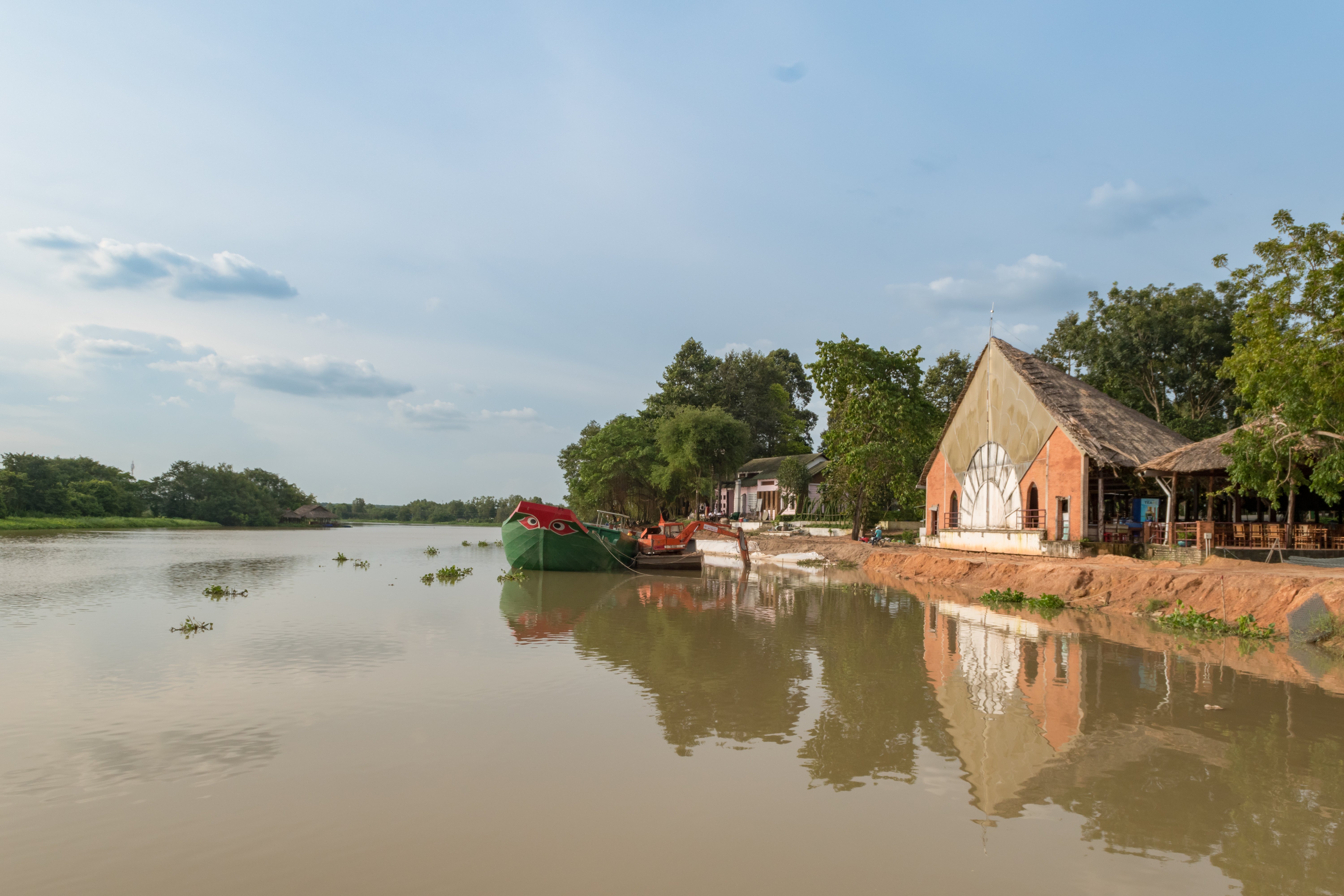
Cu Chi
©
Cu Chi

Cu Chi

Vietnamese district northwest of Ho Chi Minh City, known for its wartime tunnel network.

Cu Chi district, about 40 km northwest of Ho Chi Minh City, is home to one of the most visited historical sites in Vietnam: an extraordinary network of around 200 km of underground tunnels used by resistance fighters during the American War. The tunnels were begun by the Viet Minh in their fight against the French and were later extended by the Viet Cong, who used them to shelter fighters, store supplies, and stage operations while American forces bombed and defoliated the ground above.

At their most elaborate, the tunnels contained kitchens, hospitals, weapons workshops, meeting rooms, and sleeping quarters — a functioning community beneath the earth. The Cu Chi area was one of the most heavily bombed in the war, and the tunnels were the reason so many fighters survived. American troops who found tunnel entrances sent in volunteers called "tunnel rats" to investigate; few wanted the job.

Two sections of the tunnels are open to visitors — Ben Dinh, closer to the city, and Ben Duoc, more authentic and less crowded. Both have been enlarged to allow foreign-sized visitors to enter. A documentary film and museum explain the history. The site can be visited as a day trip from Ho Chi Minh City.

Guide

Bars and Cafes

There is no café or bar scene at either tunnel site. The site canteens sell cold drinks — water, soft drinks, and beer — which is what most visitors want after an hour underground in thirty-degree heat. Cu Chi town has local cafes where Vietnamese iced coffee (ca phe sua da, strong drip coffee over condensed milk and ice) is served in the slow, particular way it is everywhere outside the cities.

Most visitors are day-tripping from Ho Chi Minh City and return there for the evening. If you linger in Cu Chi town, the main street has a handful of local cafes that are pleasant for an hour in the afternoon before heading back.

Guide

Books

The Tunnels of Cu Chi by Tom Mangold and John Penycate (1985) is the definitive account. Two British journalists spent years interviewing both American tunnel rats and Vietnamese tunnel fighters; the book gives equal weight to both sides and remains the most thorough explanation of how the tunnels worked and what it cost to fight in and around them. Read it before you go.

The Things They Carried by Tim O'Brien (1990) is fiction built from the author's own service in Vietnam. It is not about Cu Chi specifically, but it is the clearest literary account of what the war felt like from the American side — the physical weight of equipment, the moral weight of what was asked of young men, and the impossibility of making clean sense of any of it afterwards.

Kill Anything That Moves by Nick Turse (2013) is a documented history of American conduct in the war, assembled from military records, civilian testimonies, and investigative reporting. It is not comfortable reading. But it explains why the Cu Chi area was so heavily targeted, and why the people who built these tunnels built them.

The Mountains Sing by Nguyen Phan Que Mai (2020) is a Vietnamese novel that follows four generations of a Hanoi family through the French colonial period, the American War, and its aftermath. Written in English by a Vietnamese poet, it is the best introduction available in English to the war as experienced from the Vietnamese side — the land reform campaigns, the bombing, and the long reconstruction that followed.

Guide

Day Trips

Ho Chi Minh City is the base for any visit to Cu Chi — the city is 40 km away and has accommodation, food, and onward transport for the whole country. Most visitors do Cu Chi as a day trip from HCMC rather than staying overnight in the district.

Tay Ninh, about 100 km north of Ho Chi Minh City, is sometimes combined with Cu Chi on a longer day trip. The main draw is the Cao Dai Great Temple — the headquarters of Caodaism, a Vietnamese syncretic religion founded in the 1920s that combines elements of Buddhism, Taoism, Confucianism, and Catholicism. The elaborate temple, with its noon ceremony conducted by white-robed worshippers, is unlike anything else in the country. The drive passes through the same flat, agricultural landscape as the Cu Chi district. Combining the two sites makes for a long day; some operators run combined tours.

Mekong Delta day trips from Ho Chi Minh City are a separate excursion entirely — south rather than north, and a different landscape of river channels, floating markets, and rice paddies. They are among the most popular HCMC day trips but have nothing to do with Cu Chi.

Guide

Eating Out

Eating options at the tunnel sites themselves are limited. The canteen at Ben Dinh serves simple food and is useful if you are hungry after the tour, but it is functional rather than memorable. Ben Duoc has similar basic facilities. The serious eating is in Ho Chi Minh City — most visitors are better off having a good meal in HCMC before heading out, or saving their appetite for the return.

Cu Chi town, the district centre about 10 km from Ben Dinh, has a range of local pho shops, banh mi stalls, and com binh dan (rice plate) restaurants along its main streets. These are cheap, genuine, and worth exploring if you are spending a full day in the area rather than rushing back to the city.

Guide

Getting Around

Ben Dinh and Ben Duoc are about 15 km apart and most visitors choose one rather than both. The sites are self-contained: once you arrive, everything is walkable within the grounds. Tours typically cover Ben Dinh; reaching Ben Duoc independently requires planning ahead.

Within either site, a guide is strongly recommended. Both sites have English-speaking guides available at the gate for hire if you are not on an organised tour. The physical experience of the tunnels is memorable regardless, but the history of what happened here — who built these tunnels, under what conditions, against what — is what makes the visit coherent. A good guide provides that context. It is included in most tour packages; hire one independently if you have arrived on your own.

The outdoor exhibits at both sites involve walking on uneven ground in heat and sometimes mud. Comfortable shoes and a hat matter more than anything else you bring.

Guide

Getting There

Cu Chi is about 40 km northwest of Ho Chi Minh City centre — around an hour's drive in reasonable traffic, often longer during peak hours.

The easiest way to visit is on a half-day organised tour from the backpacker area around Pham Ngu Lao in District 1. These run daily, cost very little, and include transport, entrance fees, and a guide. Most go to Ben Dinh; if you want Ben Duoc, book specifically for that site.

If you prefer to travel independently, local bus #13 (or the 13B variant) runs from Ben Thanh bus station to Cu Chi town for a few thousand dong. The journey takes around two hours depending on traffic and stops. From Cu Chi town, a xe om (motorbike taxi) or local taxi covers the remaining distance to Ben Dinh.

A Grab taxi or booked private car from HCMC is comfortable and, split between a group of three or four, not expensive. The drive out through the suburbs is unglamorous but the return, knowing what you have seen, carries its own particular weight.

Guide

Things to Do

The tunnels are the reason to come to Cu Chi. The district has two visitor sites — Ben Dinh, closer to Ho Chi Minh City and better connected by tour buses, and Ben Duoc, further north and considerably more atmospheric. Both open sections of the original tunnel network to visitors, widened slightly to accommodate foreign-sized bodies. Both have documentary films and museums on site that explain the history of the tunnels and the American War with real force; don't skip these.

A half-day from Ho Chi Minh City is enough for either site. The underground sections are claustrophobic and warm — a constant 25–30°C — and most visitors are ready to resurface after an hour below. Above ground, the sites preserve bomb craters, tank traps, and demonstrations of Viet Cong camouflage techniques. A firing range at each site lets visitors fire period weapons for a fee; it is entirely optional and easy to skip.

Guide

When to Go

The dry season — November to April — is the most comfortable time to visit Cu Chi. Temperatures stay in the low to mid thirties but the humidity is lower and rain is rare. The tunnels themselves are underground and maintain a relatively constant temperature of 25–30°C year-round, so the season affects the above-ground portions of the visit more than the underground tour.

In the rainy season (May to October), the jungle above the tunnels becomes muddy and the paths between exhibits can be slippery. The site remains open but is less pleasant. The heavy rains come in afternoon downpours rather than all-day drizzle, so morning visits are generally drier.

Weekdays are significantly quieter than weekends. Vietnamese school groups and family visits are concentrated on Saturdays and Sundays, and the Ben Dinh site in particular can feel crowded on a weekend morning. Coming on a weekday, especially in the morning before tour buses from HCMC arrive, gives a noticeably different experience.