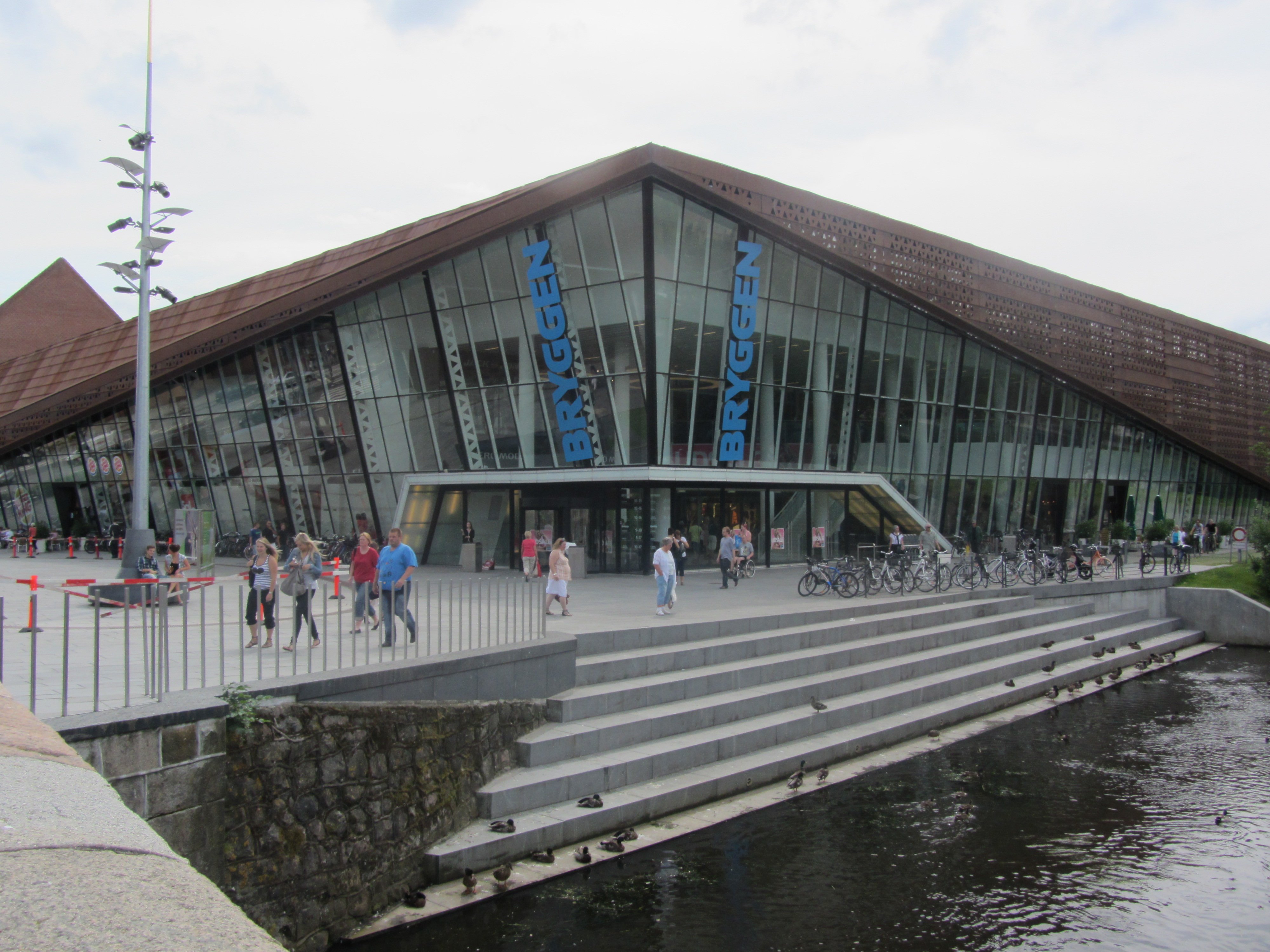
Vejle sits at the head of Vejle Fjord in eastern Jutland, squeezed between wooded hills in a setting that feels unusually dramatic for Denmark. The town has reinvented itself in recent years with striking modern architecture along the waterfront, including the wave-shaped residential building Bølgen, while the compact old centre retains a pleasant mix of pedestrian streets and half-timbered houses.
The most compelling reason to visit lies just outside town. The Jelling Stones, ten kilometres to the northwest, are a UNESCO World Heritage Site and arguably Denmark's single most important historical monument. Raised by King Gorm the Old and his son Harald Bluetooth in the tenth century, these massive runic stones mark the transition from Norse paganism to Christianity — the larger stone is sometimes called Denmark's birth certificate. The adjacent church and burial mounds complete a site that is surprisingly powerful for two carved rocks in a small churchyard.
Back in Vejle, the town's own curiosity is St. Nicolai Church, where a glass-topped coffin in the north wall displays a remarkably preserved Iron Age bog body discovered in a local peat bog. The Vejle Windmill, perched on the hill above the town centre, offers views across the fjord and surrounding valleys. Vejle is well connected by train and makes a practical stop between Aarhus and the south, particularly if you want to see the Jelling Stones without a car.