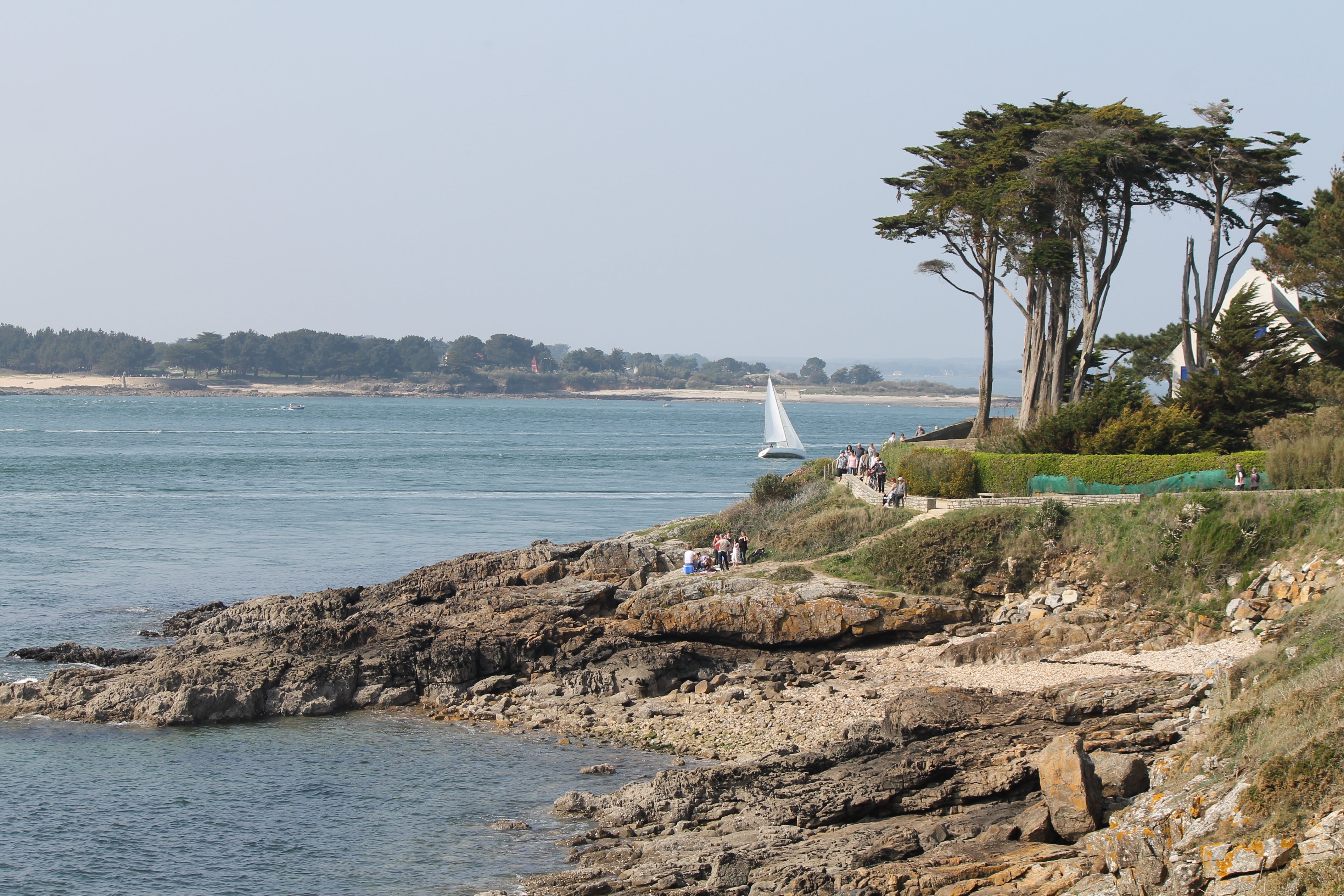
Morbihan is a département in southern Brittany, named after the Golfe du Morbihan — "small sea" in Breton — a sheltered inland sea dotted with dozens of islands. The gulf is a remarkable ecosystem of tidal flats, oyster beds, and bird colonies, and several of the islands — including the Île aux Moines and the carved Neolithic tomb on Gavrinis — can be visited by boat from Vannes, the main city.
Vannes has a beautifully preserved walled old town with half-timbered medieval houses, a cathedral, and a lively restaurant scene concentrated around the ramparts. Nearby Auray is worth the detour for its Saint-Goustan quarter — a picturesque harbour district of twisting medieval streets where Benjamin Franklin landed in 1776 on his way to Paris to enlist French support for the American Revolution. The village of Le Bono, upstream along the river, is known for its oyster farming and gorgeous views from the old bridge.
Beyond the gulf, Morbihan's coast stretches from the Quiberon peninsula — and the ferries to Belle-Île-en-Mer — to the megaliths of Carnac, one of the most impressive prehistoric sites in Europe — thousands of standing stones arranged in long rows across the landscape. The matching megalithic complex at Locmariaquer, at the mouth of the gulf, is less visited but arguably more impressive. Inland, the medieval village of Rochefort-en-Terre is one of the loveliest in Brittany. The inhabitants are proud to be Breton, and it is a pride they are happy to share.