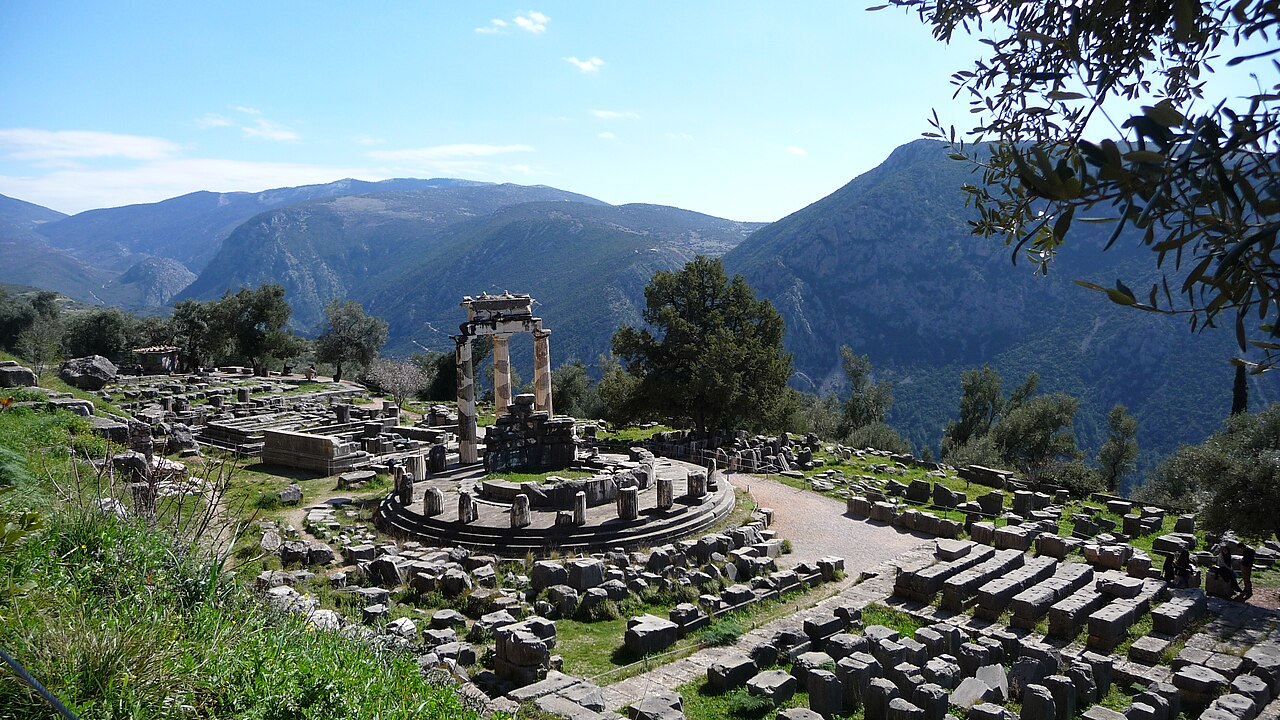
Delphi was once considered the centre of the world. Set dramatically on the slopes of Mount Parnassus, overlooking the vast olive-covered plain of Phocis, it served for centuries as the most important oracle in the ancient Greek world. A priestess of Apollo, the Pythia, would sit in a grotto and — under the influence of intoxicating gases rising from the earth — deliver prophecies that shaped the fates of kings and city-states. It was here that Oedipus learned his terrible destiny, and Socrates that no man was wiser than he.
The sanctuary complex is extensive and surprisingly intact. You walk up the Sacred Way past the ruins of treasuries once built by rival city-states competing to impress the god — the Treasury of the Athenians is the most complete — past the great Temple of Apollo, and on up to the theatre and the stadium where the Pythian Games were held. The views over the valley grow more spectacular with every step. Below the road, the separate Sanctuary of Athena Pronaia holds the Tholos, the circular colonnade that appears on every postcard of Delphi.
The Delphi Archaeological Museum is worth at least as much time as the ruins themselves. It houses the Charioteer of Delphi, one of the finest surviving bronzes from antiquity, along with the Sphinx of Naxos, the archaic Kouroi, and a collection that puts the ruins in vivid context.
Modern Delphi village sits just above the archaeological site. It is a small, tourist-oriented town, but the setting forgives everything: you are sleeping on the slopes of Parnassus, above one of the most important places in the ancient world.