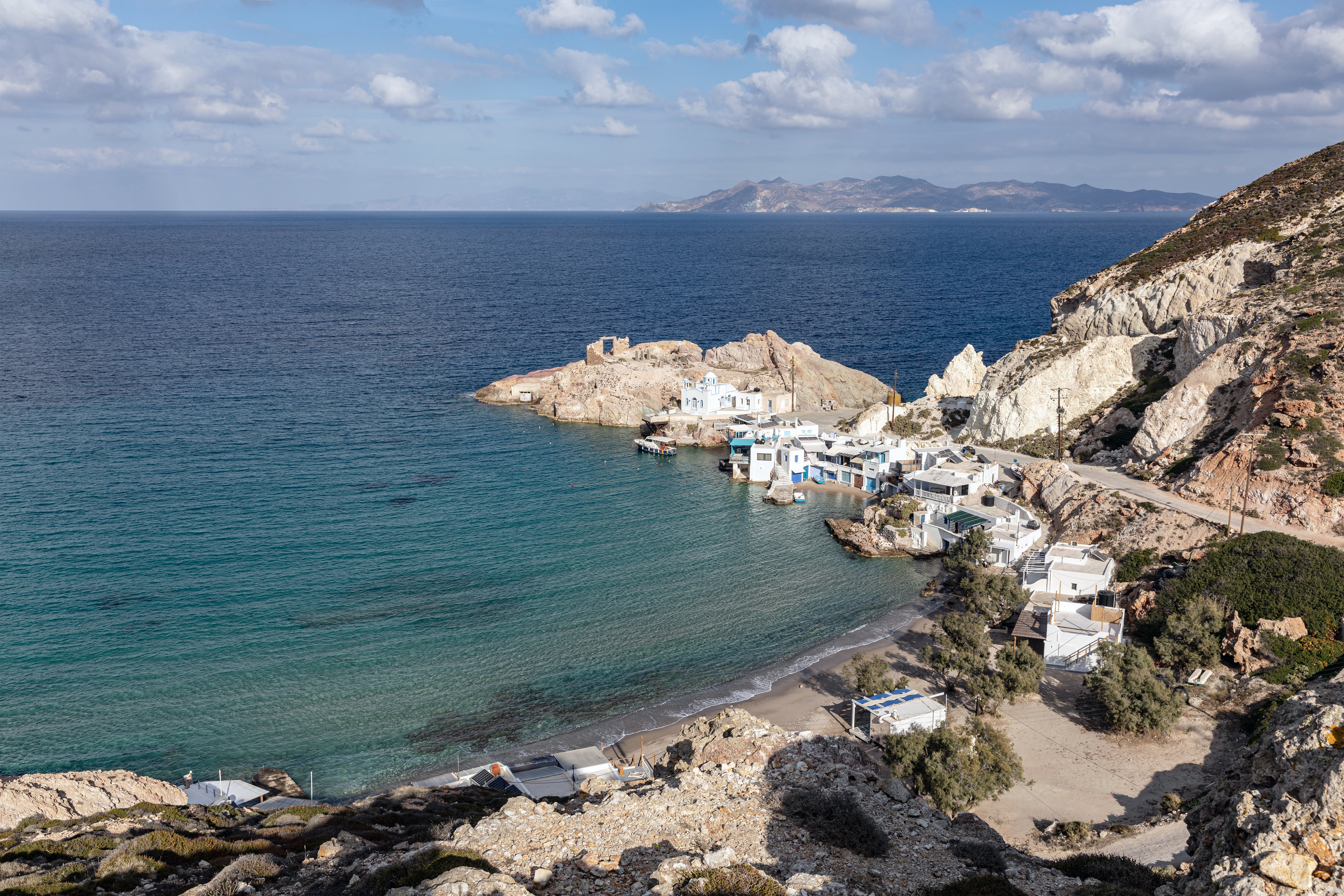
Milos is a volcanic island in the Cyclades, famous for its extraordinary variety of beach landscapes — coloured rock formations, sea caves, white sand coves, and the extraordinary lunar-looking coastline around Sarakiniko, where wind-eroded white pumice looks like a moonscape dropped into the Aegean. The Venus de Milo, now in the Louvre, was found here in 1820.
The island's volcanic origins mean the landscape is far more dramatic than most Cycladic islands: multi-coloured cliffs, hot springs, and a deeply indented harbour at Adamas. The village of Plaka perches above the harbour with sweeping views and good tavernas. Milos is quieter than Mykonos or Santorini but has been getting busier — still, outside July and August you will find it without the crowds of its more famous neighbours.