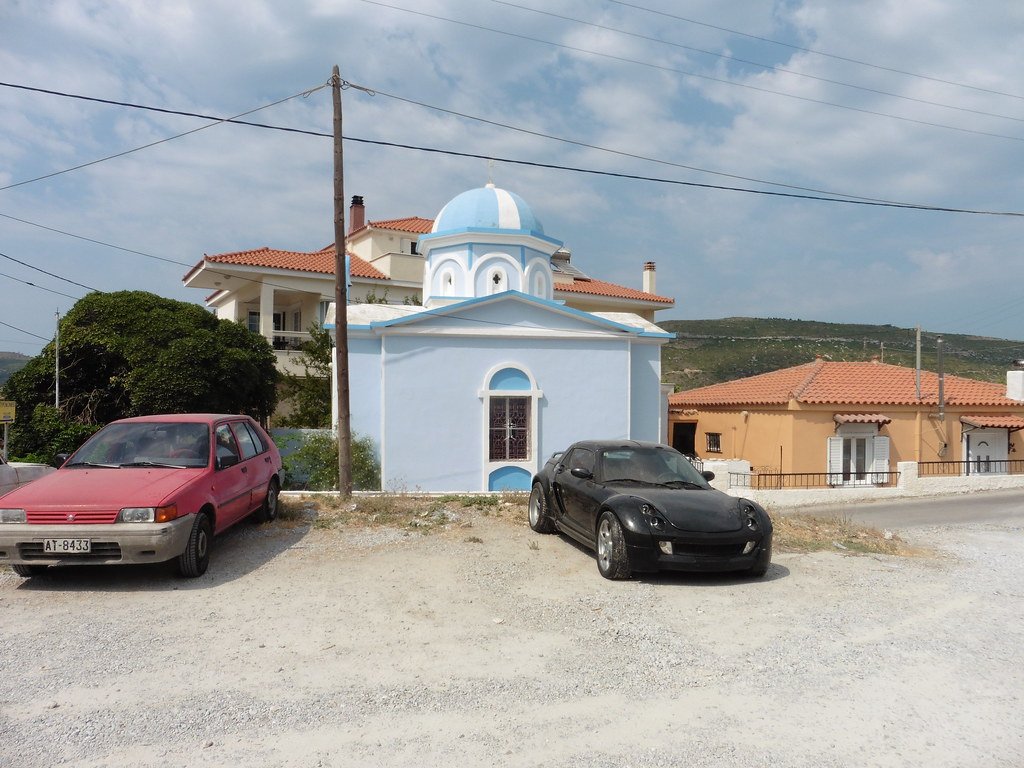
Samos is a green, mountainous island in the eastern Aegean, sitting less than two kilometres off the Turkish coast at its closest point — on a clear day you can see Kuşadası across the narrow strait. It is one of the lushest of the Greek islands: pine forests, olive groves, vineyards producing the sweet Samos Muscat wine, and waterfalls in the hills above the coast. That greenness, combined with some genuinely ancient history, makes Samos feel more substantial than a summer-sunshine island.
The island's main town is Samos Town (Vathy), built around a deep harbour on the north-east coast, with a small archaeological museum displaying the extraordinary kouros of Samos — a 5.5-metre-tall 6th-century BC statue, one of the largest surviving from the archaic period. Pythagoreio, on the south coast, is the island's second town and the birthplace of Pythagoras, the mathematician. Most visitors stay here for the harbour-front tavernas and the old fishing-village feel. Inland from Pythagoreio, the Heraion (sanctuary of Hera) was once one of the largest temples in the ancient Greek world — only a single column of the original hundred and fifty-five still stands upright, but the site is atmospheric and easy to reach. Just west of Pythagoreio, the Eupalinos Tunnel, cut through a mountain in 530 BC to bring water to the ancient city, is an extraordinary feat of ancient engineering and one of the weirder things you can walk through in Greece.
Samos is also the best of the Greek islands for hikers and walkers. The Kerkis and Ampelos mountains have marked trails leading to remote chapels, hill villages like Manolates and Vourliotes, and waterfalls at Potami, on the north coast. The beaches are mostly pebble rather than sand, with the best ones at Tsamadou (a nudist-friendly bay), Mikro Seitani (reachable only on foot), Psili Ammos on the south coast, and Kokkari, the north-coast village that has become the island's main resort.
Samos is well connected: regular flights from Athens, and summer ferries to Piraeus, the Cyclades, and neighbouring Ikaria, Chios, and Turkey. It was one of the main European arrival points for Syrian and Afghan refugees during the 2015–2016 crisis, and the island has been at the centre of Greece's migration policy ever since. But Samos remains a deeply rewarding destination, especially for travellers who want a Greek island with more history and more landscape than party atmosphere.