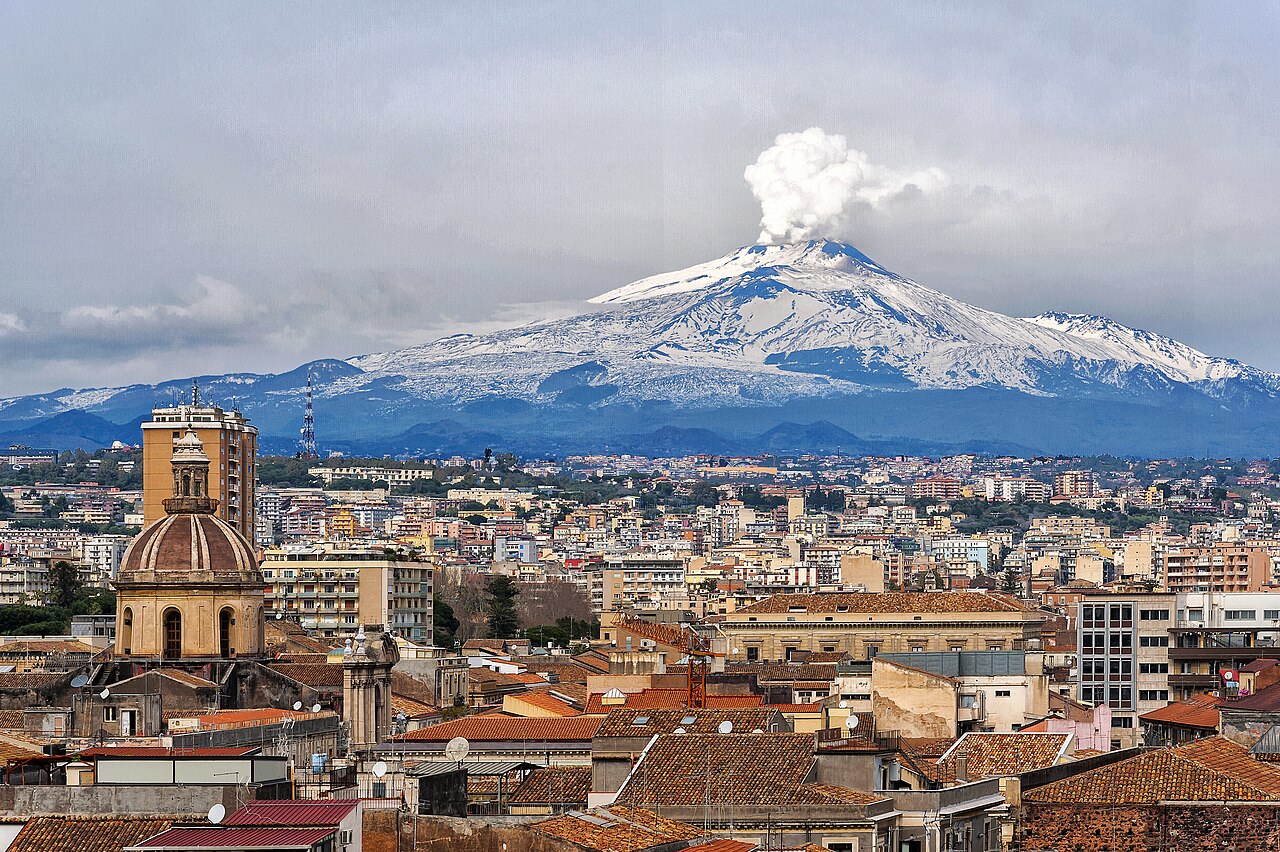
Catania sits in the shadow of Mount Etna, Sicily's great volcano, and you feel that presence everywhere — in the black lava stone that paves the streets and faces the baroque churches, in the sulphurous haze that sometimes hangs over the city, in the way locals talk about the mountain as if it were a difficult neighbour rather than a natural wonder. The city was almost entirely destroyed by the catastrophic earthquake and eruption of 1693 and then rebuilt in a grand baroque style, mostly by the architect Giovanni Vaccarini. It is darker and rougher than Palermo, but it has a vitality that grows on you.
The fish market near Piazza del Duomo — the Pescheria — is one of the great spectacles of Sicilian daily life. It runs every morning except Sunday, and it is noisy, fragrant, and alive in a way that tidier cities struggle to match. Swordfish, tuna, sea urchins, still-writhing eels: the vendors shout in Sicilian dialect, ice glitters in the sun, and the whole thing spills across the square under the shadow of the elephant fountain, Catania's civic symbol.
The city is also the birthplace of pasta alla norma — tomato, fried aubergine, salted ricotta — and the food scene generally is excellent and cheap compared to the tourist centres further north. Catania is a working city, a university city, and it shows in the bars and trattorias that stay open late.
Catania is the main gateway to Mount Etna and the eastern coast of Sicily, with good transport connections south to Siracusa and north toward Taormina and Messina.