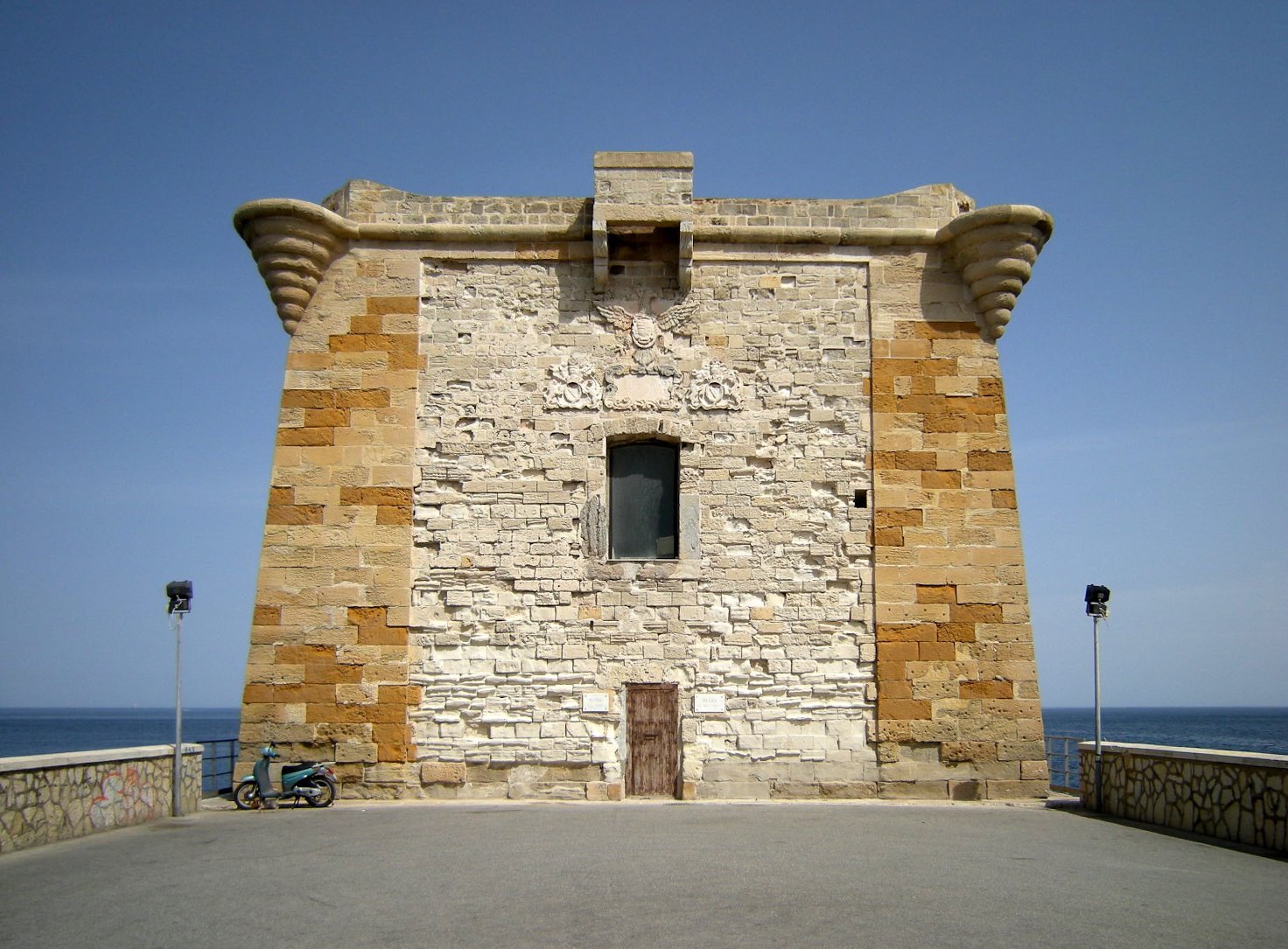
Trapani is built on a narrow sickle-shaped peninsula on the extreme western tip of Sicily — a city that juts into the sea with water on three sides and the salt pans of Marsala behind it. It was Phoenician before it was Greek, Carthaginian before it was Roman, and Arab before it was Norman, and these successive layers give the old town centre a distinctly non-standard Sicilian character: straight streets laid out on a North African grid, Arab-Norman architecture, and a cuisine built around couscous with fish rather than pasta.
The historic centre is compact and highly walkable, with the main pedestrian axis running from Piazza Vittorio Emanuele in the east to the tip of the peninsula where the Ligny Tower stands. The Cathedral of San Lorenzo and the baroque Palazzo Senatorio anchor the middle section of the old town, while the Castello di Terra at the base of the peninsula overlooks the port. Just outside the city, the salt pans and nature reserve between Trapani and Marsala are an unusual and beautiful landscape, particularly at sunset when the flamingoes are out.
The city is a practical base for exploring western Sicily. Erice sits dramatically on the mountain above the city — a medieval hill town with extraordinary views — and is connected to Trapani by cable car. The archaeological site of Segesta with its isolated Doric temple is 35 km away; the Egadi Islands (Levanzo, Favignana, Marettimo) are reached by hydrofoil from the port in under an hour.
Trapani's Good Friday procession — the Misteri di Trapani — is considered one of the finest in Sicily. Twenty wooden groups depicting scenes of the Passion, each carried by a confraternity, are borne through the city in a procession that lasts all night. The figures, some dating back to the 18th century, are extraordinary works of art in their own right.