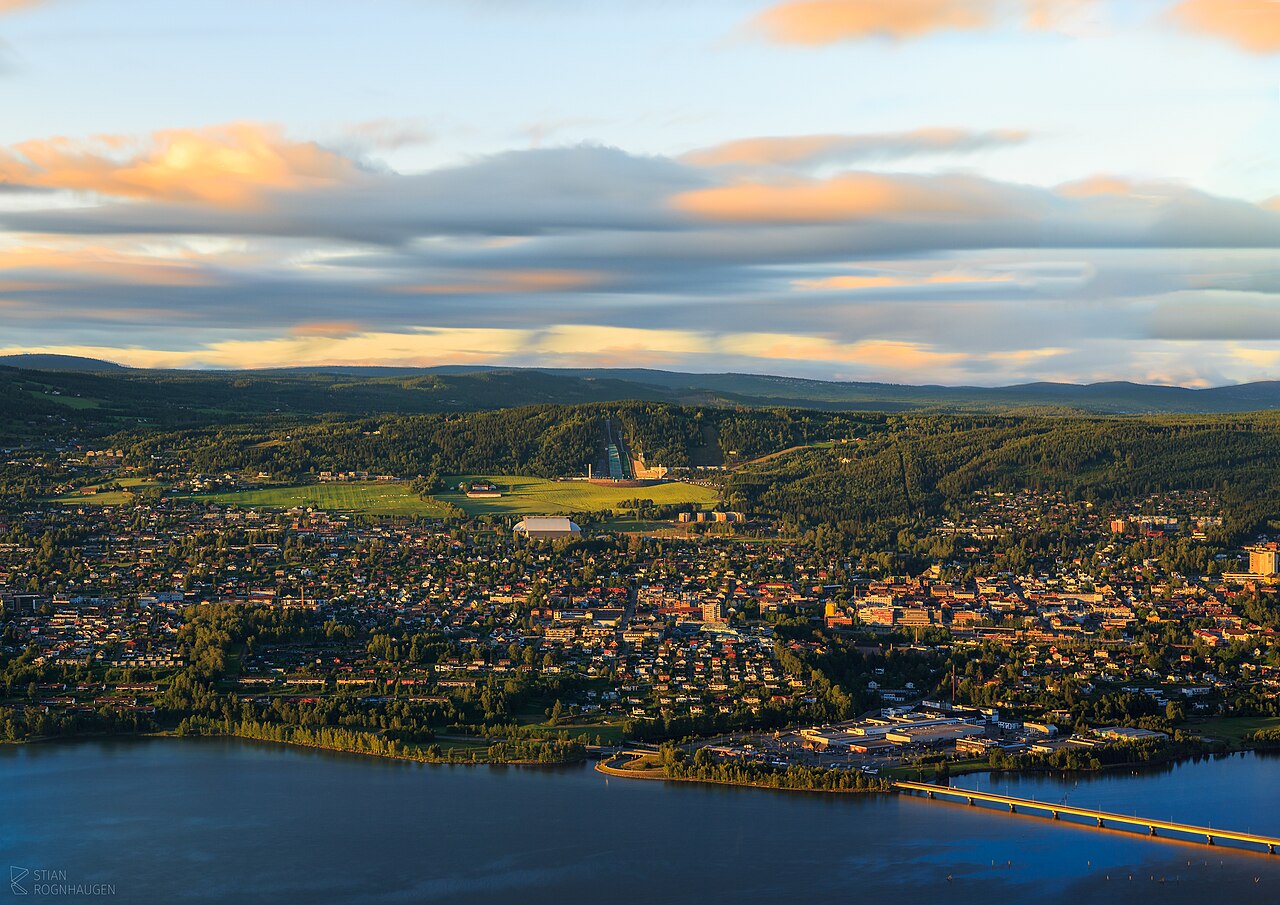
Lillehammer is a small, tidy town of 30,000 people at the northern tip of Lake Mjøsa — Norway's biggest lake — about two and a half hours north of Oslo by train. Most people have heard of it for exactly one reason: the 1994 Winter Olympics, which put the town on the map and left behind a set of ski venues, an Olympic museum, and a slight but enduring pride of place. It turns out to be a more interesting stop than that reputation suggests.
Storgata, the main walking street, is a long, gently curving stretch of 19th-century wooden buildings — painted red, yellow, and ochre — that climbs up from the lake. It is one of the best-preserved wooden main streets in Norway. At the top, Maihaugen is the town's real cultural highlight: one of the largest open-air museums in northern Europe, with 200-odd buildings relocated from around the Gudbrandsdal valley, including the Garmo Stave Church from the 13th century. You can easily spend half a day wandering through medieval farms, town houses, and post-war workers' cottages reconstructed room by room. The Norwegian Olympic Museum is also within the Maihaugen grounds.
In winter, Lillehammer is a cross-country skiing town more than a downhill one — the Birkebeiner ski race finishes here every March, drawing 16,000 participants — though Hafjell and Kvitfjell resorts, both a short drive away, have the downhill slopes. The Lysgårdsbakken ski jump arena and Håkons Hall ice arena are the other main Olympic legacy venues. In summer, you can hike in the surrounding fells, take the paddle steamer Skibladner (the oldest paddle steamer still in regular service anywhere) across Lake Mjøsa, and, if you're feeling brave, ride a wheeled bobsled down the original Olympic track at up to 100 km/h. The Lillehammer Art Museum, with its Snøhetta building, is another worthwhile stop.
It makes an easy day trip from Oslo, but it is worth an overnight if you can manage it: the light on the lake in the evenings, and the quiet of Storgata after dinner, are part of the point.