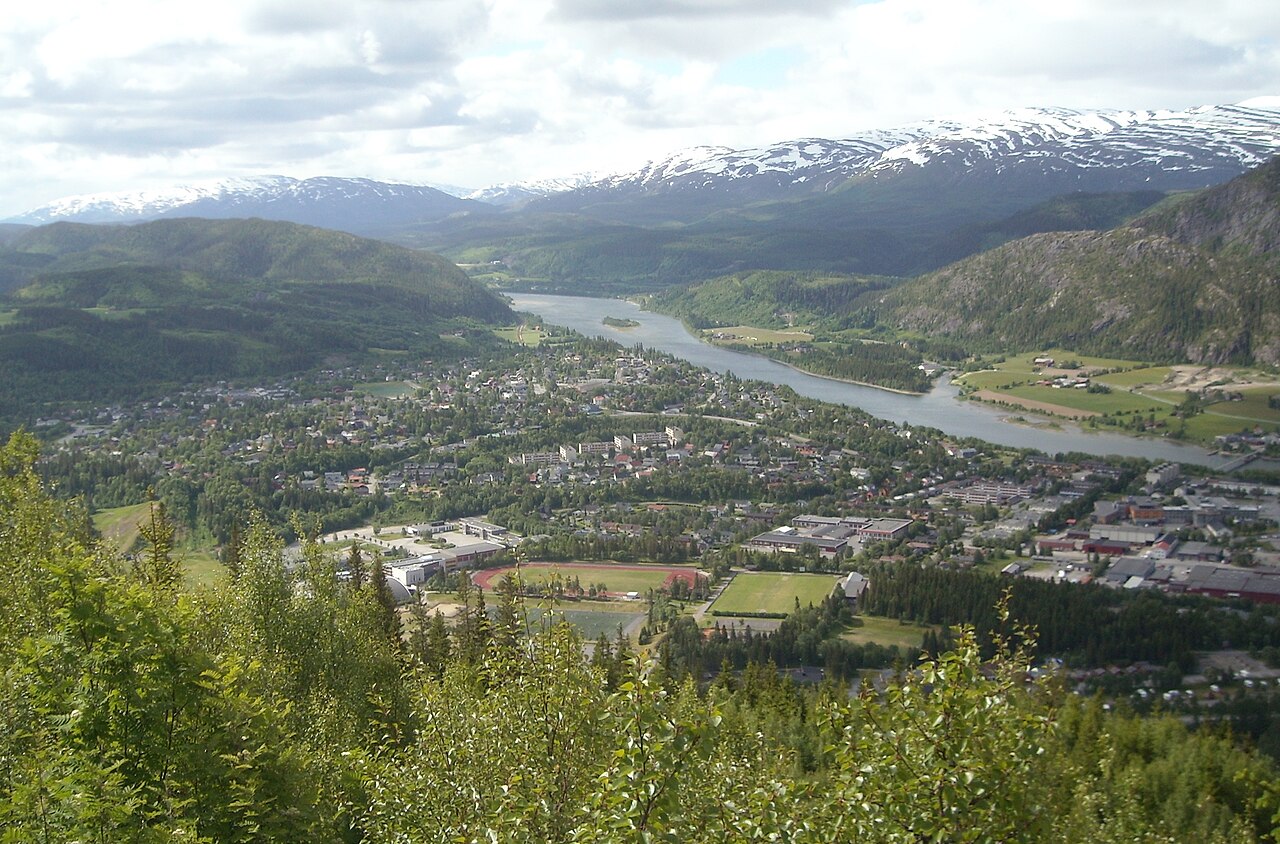
Mosjøen is a small town on the Vefsfjord in the geographic heart of Norway, the kind of place that rewards anyone who slows down long enough to notice it. Most travellers pass through on the E6 or the Nordland Railway without stopping — which is their loss. The old waterfront district, Sjøgata, is one of the best-preserved 19th-century wooden streetscapes in northern Norway, and the surrounding landscape of fjords and steep peaks is quietly spectacular.
The town sits at the mouth of the Vefsna river, sheltered by the mountain Øyfjellet on one side and the fjord on the other. It has been a trading post since the early 1600s, but it was a timber boom in 1866 — driven by English sawmill operators and Sami lumberjacks — that shaped the Sjøgata you see today. That street was nearly bulldozed in the 1970s; a local conservation effort saved it, and it has since won national architecture and environmental awards. Walk along Sjøgata on a summer evening and you will understand why. The handsome red Dolstad Church, built in 1735, and the Vefsn Museum inside a yellow merchant wharf house both reward an hour of attention.
Mosjøen is also the jumping-off point for some serious outdoor activity: the Øyfjellet Via Ferrata and Zipline, the Laksforsen waterfall about 30 km south on the E6, and hiking toward Oksskolten — the highest peak in northern Norway — to the northeast. In winter, snowmobile safaris run across the Helgeland plateau and the chances of seeing the northern lights are good.