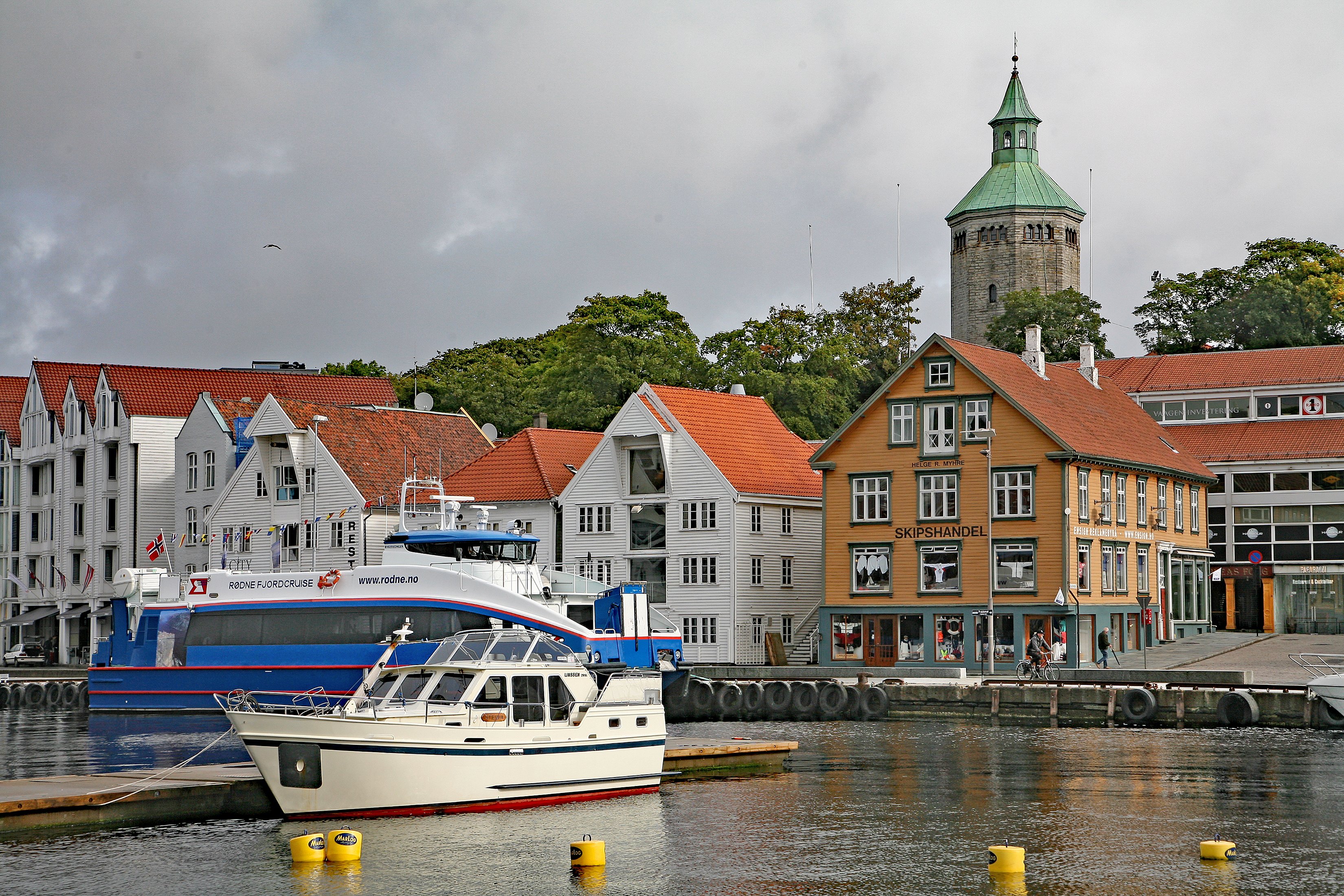
Stavanger is a charming southern Norwegian city and an exciting mix of old and new. Its proximity to the North Sea oil fields has made it the fast-growing and wealthy oil capital of Norway. But its narrow lanes and white timber houses are all in well-preserved traditional style. It is a modern city with a wide variety of shops, cafes and restaurants — contrast characterises this city, the people who live there, the surrounding landscape, and the weather.
Stavanger is Norway's fourth largest city. A city charter was obtained in 1125 when construction of Stavanger Cathedral began, but the area has been populated for over 10,000 years. Gamle Stavanger — the old town — is one of the best-preserved wooden townscapes in northern Europe, its whitewashed 18th-century houses climbing the hillside above the harbour.
The Norwegian Canning Museum is the only one of its kind in the world, housed in a genuine 1916 sardine cannery. The Norwegian Petroleum Museum makes an honest and engaging case for the oil era that transformed the country. Elsewhere, Ledaal manor house and the Stavanger Museum cover the city's older history.
The surrounding landscape is spectacular. Lysefjord, with Pulpit Rock and Kjeragbolten, is the obvious day trip and one of the best reasons to base yourself here. Seven kilometres southwest of the city, three giant bronze Swords in Rock mark the site of the 872 AD battle that united Norway under Harald Fairhair. The bars and cafes of Øvre Holmegate — the brightly painted Colour Street — are the liveliest place to spend an evening.