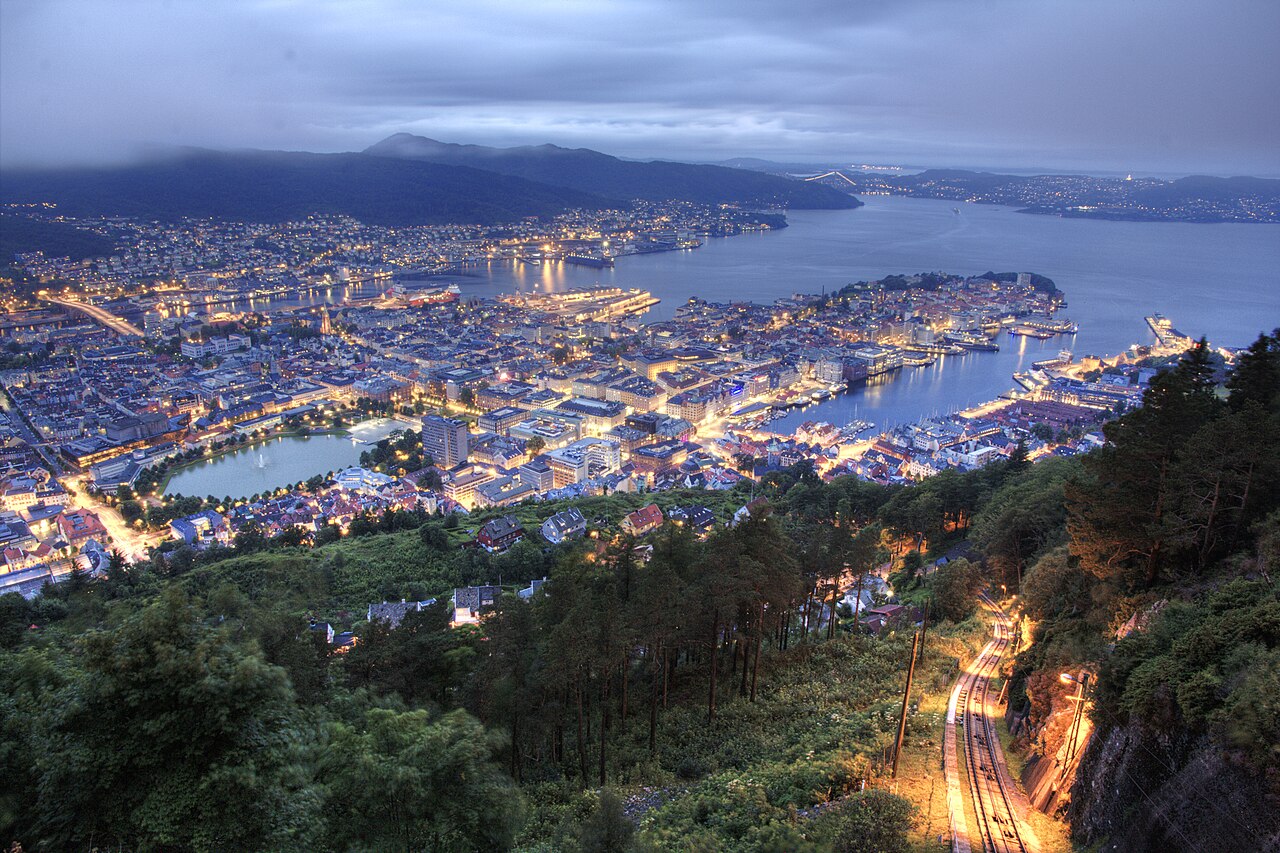
Bergen is a 900-year-old Hanseatic city wedged between seven mountains and the sea. For centuries it was Norway's most important trading port — ships brought dried fish from the north and grain from the south, and the German Hanse merchants who ran Bryggen controlled the whole business from their warehouse compound on the harbour. Bergen was at various points the largest city in the Nordic countries and, by some measures, Norway's capital. The citizens of Bergen have never quite let the rest of Norway forget this.
If you arrive by sea, the colourful timber facades of Bryggen will meet you — a UNESCO World Heritage Site and the most photographed view in Norway. The alleyways behind the facades lead back to the Hanseatic Museum, which gives the most vivid account of how the merchants actually lived. At the harbour mouth, Bergenshus Fortress has a great medieval hall built for a royal coronation in the 13th century and a tower built by a Renaissance governor who wanted to impress his king.
The Fløibanen funicular climbs to the top of Fløyen in eight minutes and gives the classic panorama of the city — well worth the small fare. The more ambitious option is the Ulriken cable car, which reaches the highest of the seven mountains and is the starting point of the Vidden trail, a full-day crossing of the high plateau between the two summits.
Outside the city, Troldhaugen — Edvard Grieg's villa on a lake 8 km south — is the best cultural excursion. Lysøen, Ole Bull's fantastical island villa with its onion domes and Norse carvings, is worth the boat trip. And Bergen is above all the gateway to the fjords: Sognefjord, Hardangerfjord, and Nærøyfjord are all within reach of a day trip.