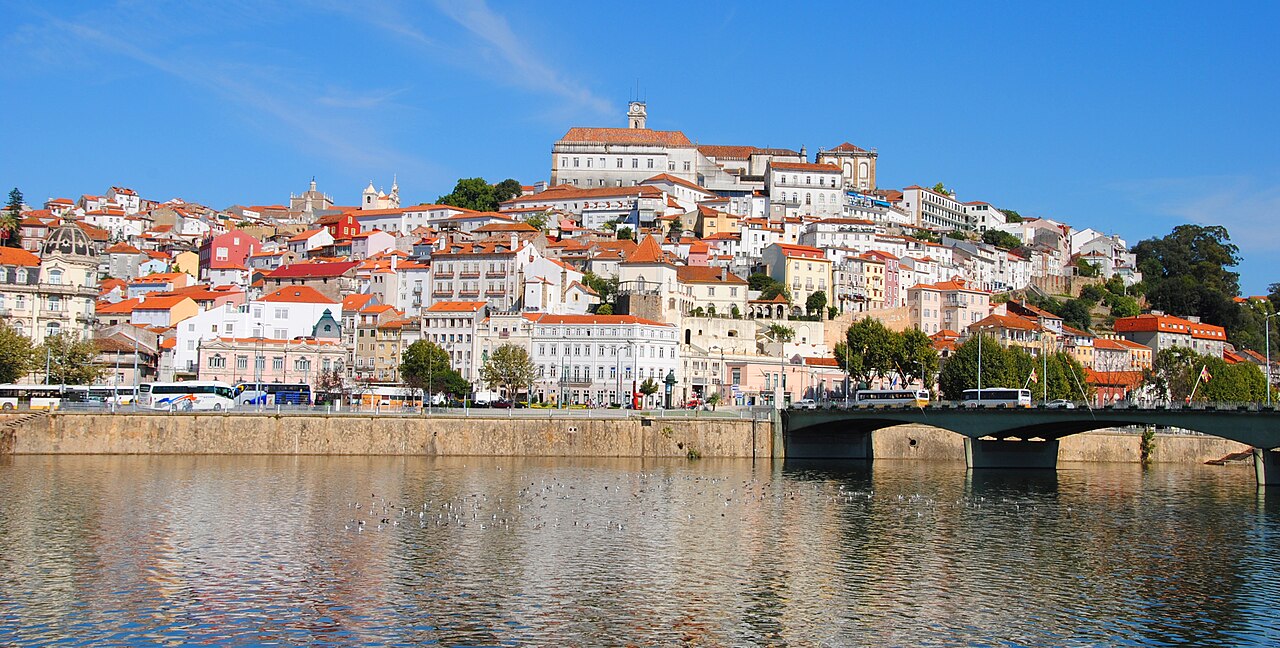
Coimbra was the first capital of Portugal and has been a university city since 1537, when King João III moved the country's oldest university here from Lisbon. The university still dominates — perched on a hill above the Mondego River, its Baroque library, the Biblioteca Joanina, is one of the most beautiful rooms in Europe, and students in black capes and torn gowns still walk the steep streets between lectures.
The old town climbs from the riverbank to the university gates. Start in the Baixa, the lower town, where narrow streets are packed with shops, cafes, and churches. On the way up, stop at the Sé Velha, the 12th-century Romanesque cathedral that looks more like a fortress than a church. At the top, the university courtyard opens out with views over the city and the river below. The Machado de Castro Museum nearby is built over a 1st-century Roman forum — you can walk the underground vaulted galleries as part of the visit.
Coimbra has its own style of fado, darker and more literary than the Lisbon tradition, sung by male students in their black capes. If you are here in late April or early May, the Queima das Fitas — when 30,000 students burn their faculty ribbons to mark the end of the academic year — is one of Europe's biggest student festivals.
Across the Mondego, the ruined Gothic convent of Santa Clara-a-Velha was abandoned when the river flooded it in the 17th century and is now partially excavated and open to visitors. The Botanical Garden on the university hillside and the Mosteiro de Santa Cruz — with the tombs of Portugal's first two kings — are also essential stops. The city makes a good base for day trips to the Roman ruins at Conimbriga, the forest of Buçaco, and the beach town of Figueira da Foz.