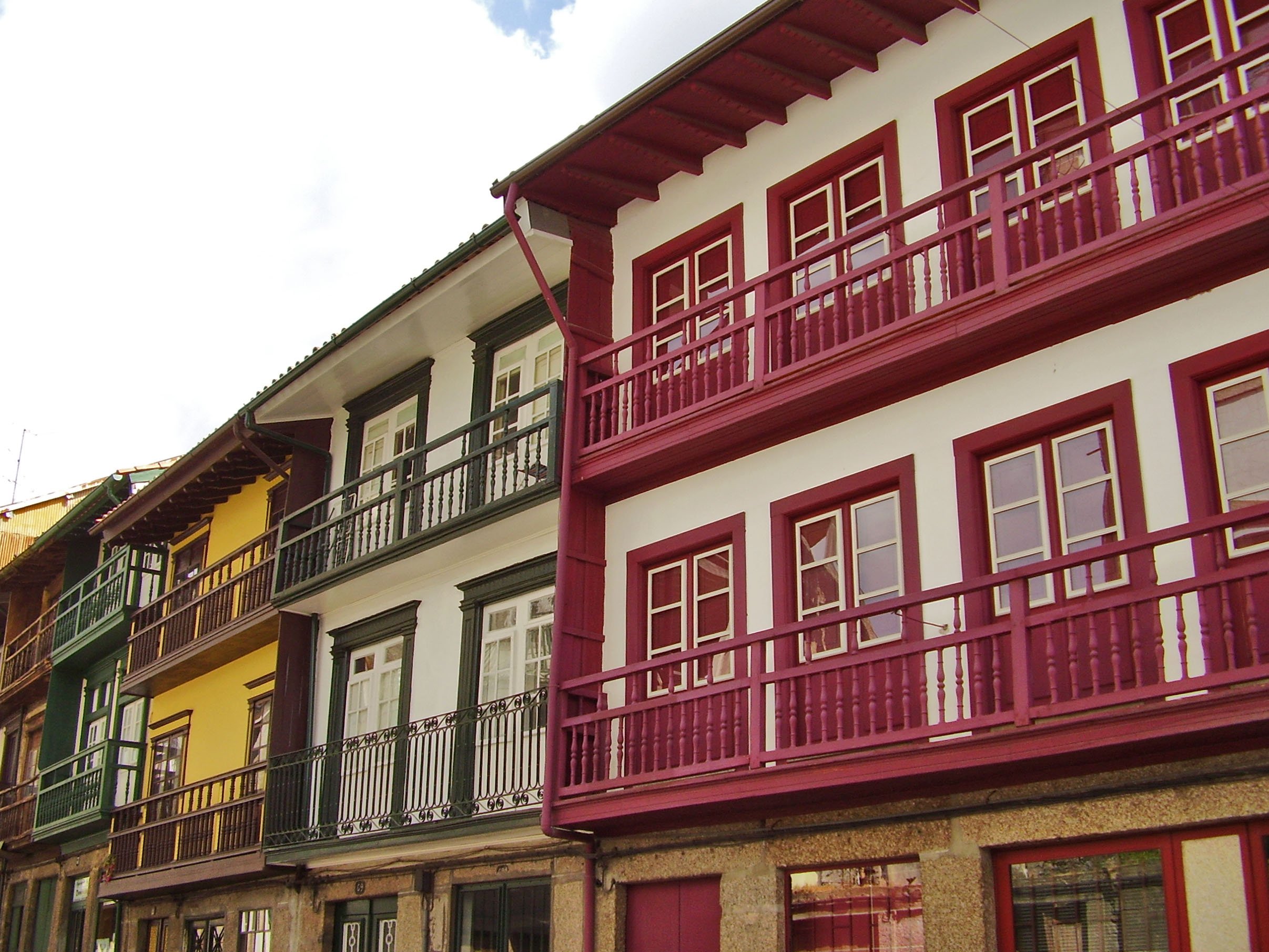
Guimarães is known as the birthplace of Portugal — it was here that Afonso Henriques, the first king, was born and raised, and it was from here that the country's independence was launched in the 12th century. The inscription "Aqui Nasceu Portugal" (Portugal Was Born Here) is carved into a medieval tower in the old town, and the locals take the claim seriously.
The historic centre is a UNESCO World Heritage Site, and deservedly so. Narrow streets of granite houses with wooden balconies lead between medieval squares, churches, and the castle on the hill where Afonso Henriques was baptised. The Palace of the Dukes of Braganza, a 15th-century manor with a distinctive row of brick chimneys, sits just below the castle and is open to visitors. Lower down, Oliveira Square and Santiago Square anchor the old town, with Rua de Santa Maria the most photographed street between them.
Guimarães also has a lively, youthful side — the University of Minho brings students and energy, and the old town's squares fill with cafe terraces on warm evenings. The city served as European Capital of Culture in 2012, which brought investment in arts venues such as the Vila Flor Cultural Centre and the redeveloped public spaces around Toural Square. For a view back over the whole place, take the cable car up Monte da Penha.