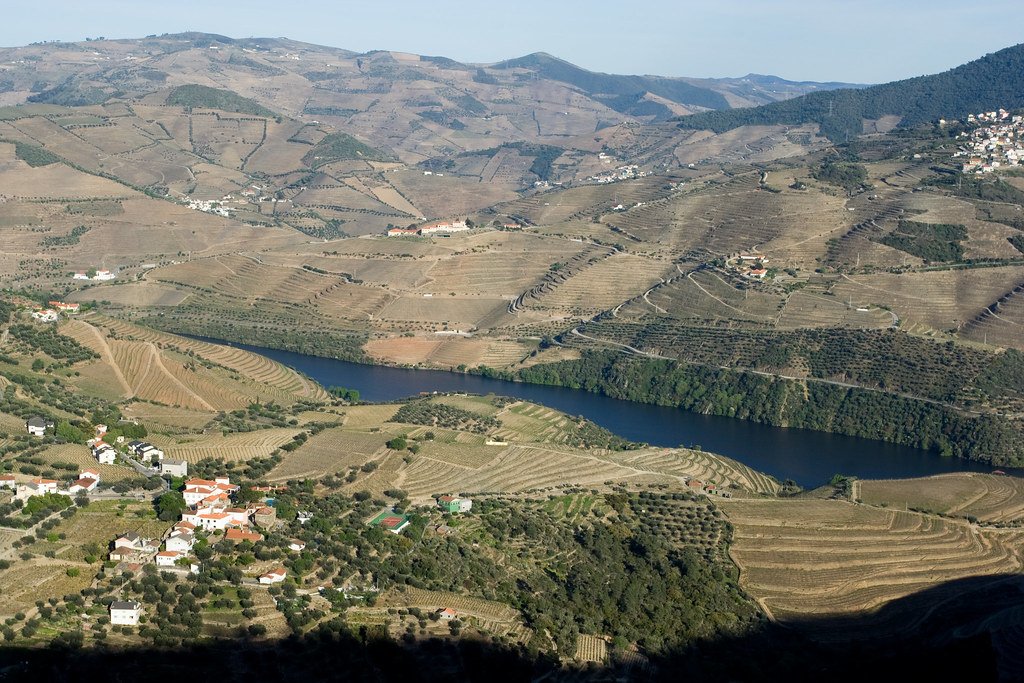
The Douro Valley is Portugal's great wine country — a steep, terraced landscape carved by the Douro River as it runs east toward the Spanish border. The schist hillsides are covered in quintas (wine estates) producing the grapes that become port wine, as well as increasingly respected table wines. The valley is a UNESCO World Heritage Site.
The journey from Porto into the valley — by train, by boat, or by road through Amarante and Vila Real — is itself part of the experience. The river widens behind a series of dams, turning the gorge into a chain of reservoirs perfect for boat trips. The towns of Peso da Régua and Pinhão are the main bases for exploring the vineyards. Régua's Museu do Douro is the best single introduction to the region's wine history.
The most dramatic section lies between Régua and the Spanish border, where the valley narrows and the terracing becomes almost vertical. Spring brings almond blossom; autumn is the harvest, when the steep slopes fill with pickers. Don't miss the azulejo panels of the Pinhão Railway Station, the Baroque facade of Mateus Palace outside Vila Real, or the long ceremonial staircase climbing to the Sanctuary of Nossa Senhora dos Remédios above Lamego.