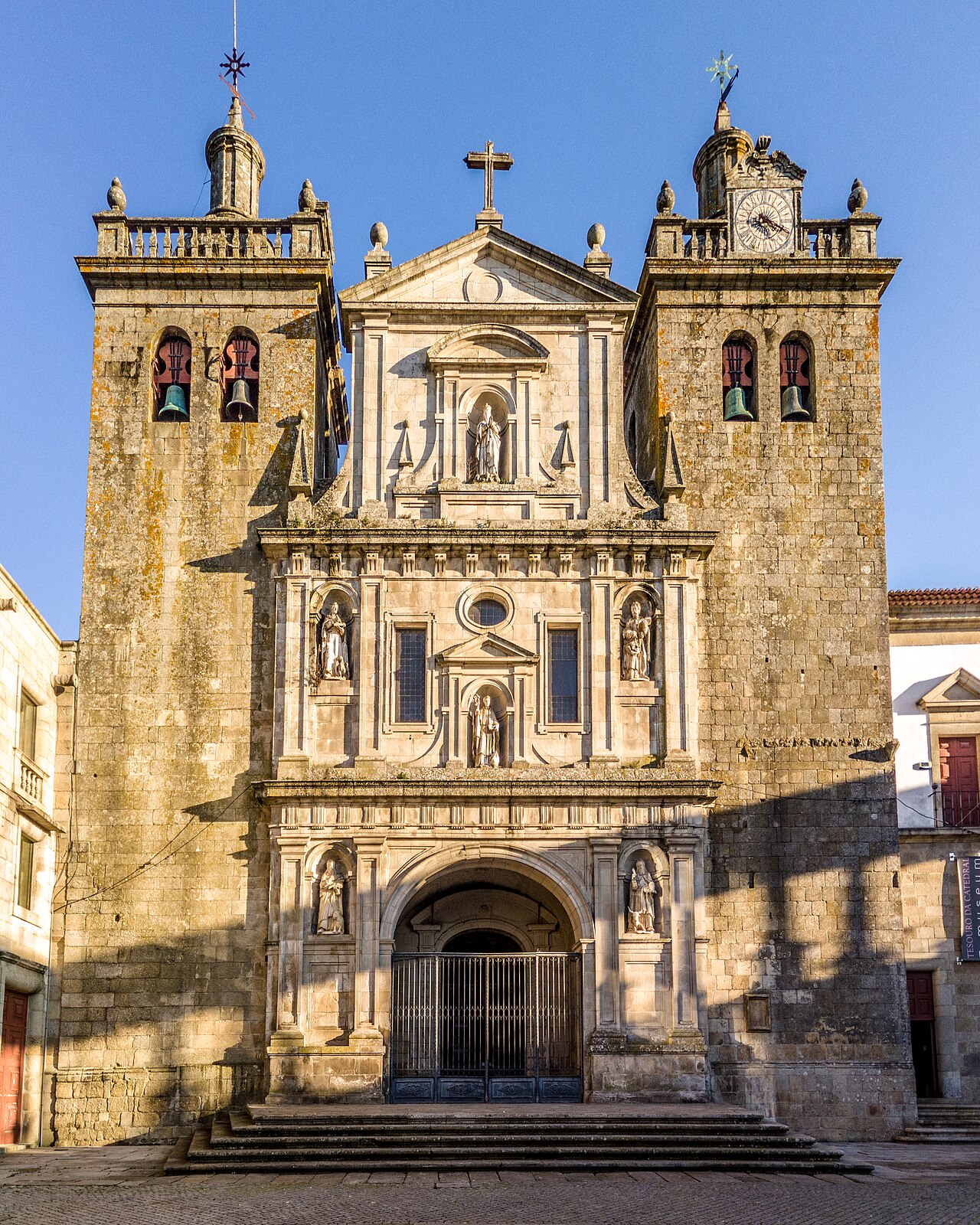
Viseu is a prosperous market city in central Portugal, set on a granite plateau in the Dão wine country of Beira Alta. It's one of the most liveable cities in Portugal — a claim backed by its consistently high rankings in quality-of-life surveys — and one of the most rewarding to visit: a compact historic centre of granite streets, a cathedral with 12th-century foundations, and one of the finest regional museums in the country.
The old city clusters around the Adro da Sé, a wide square flanked by the cathedral and the Grão Vasco Museum on a hill above the modern city. The cathedral dates from the Romanesque period and has a Manueline interior with extraordinary vaulting; it's associated with Vasco Fernandes — "Grão Vasco" (the Great Vasco) — the 16th-century Renaissance painter whose altarpieces now hang in the museum next door. The museum is one of the best in Portugal outside Lisbon.
Below the cathedral hill, the pedestrian streets of the old city are good for wandering: granite-paved lanes, azulejo-tiled facades, pastry shops, and a lively municipal market. The Cava de Viriato, an octagonal Roman earthwork at the edge of the city, is an unexpectedly large and curious monument in a quiet park. The Feira de São Mateus, held each August and September and dating to 1392, is one of the oldest and largest fairs in Portugal.
Viseu is the commercial capital of Dão wine country. Dão reds — typically made from Touriga Nacional and Tinta Roriz — are full-bodied, earthy, and age-worthy, among Portugal's most underrated wines. They're served in every restaurant in the city and worth buying at the market to take home.