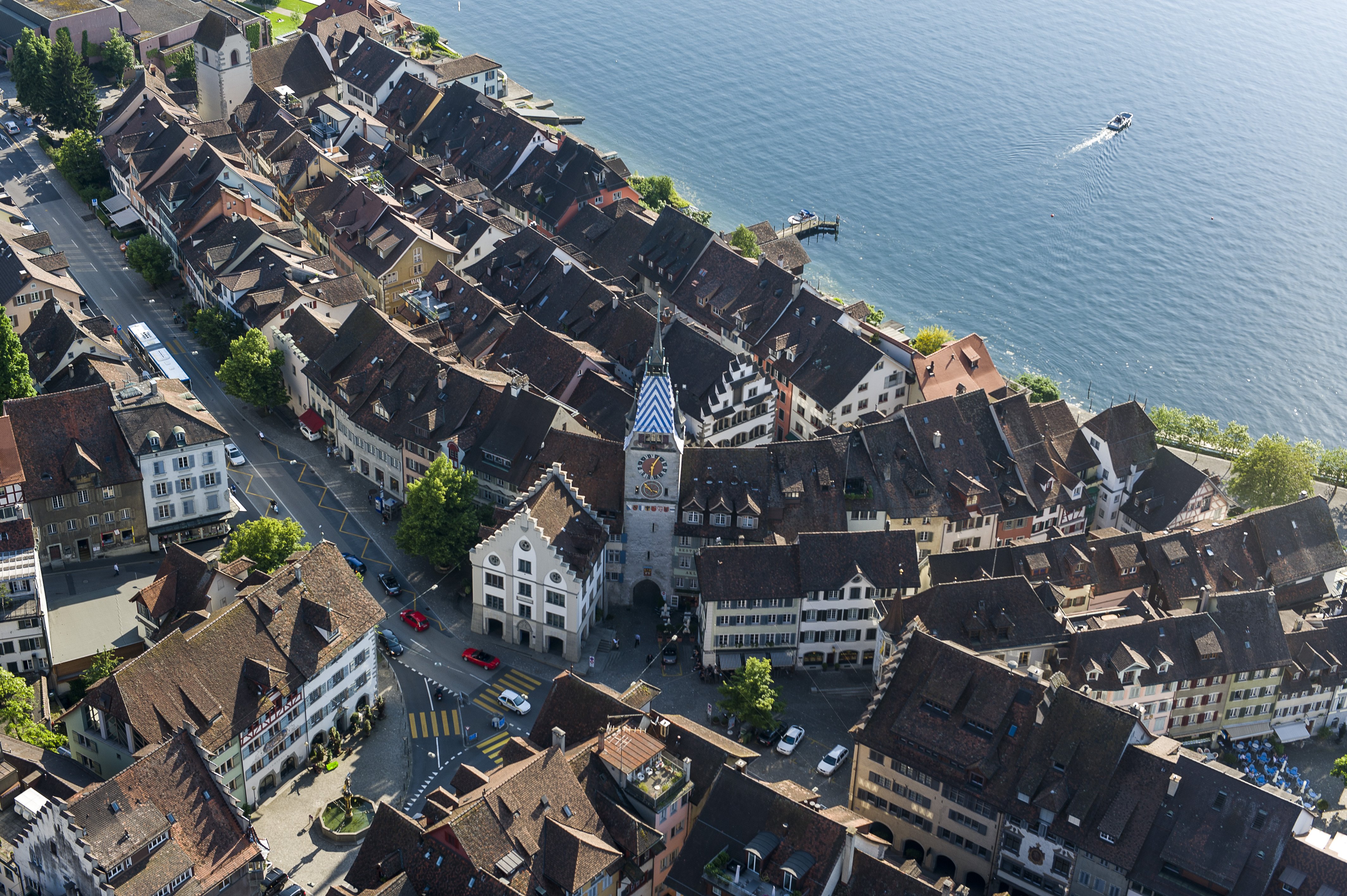
Zug is one of Switzerland's smallest cantons and its most prosperous. The city sits on the northeastern shore of Lake Zug, with the Alps rising clearly to the south and the rolling hills of the Mittelland stretching north. It is wealthy in a quiet, understated way — low taxes have drawn banks, commodity traders, and pharmaceutical companies here for decades — but the old town along the lake still feels like the medieval market settlement it once was.
The historic center is compact and easy to walk. The Zytturm, a painted clock tower that anchors the old town, has been keeping time since the fifteenth century. Cobbled lanes wind past guild houses and the lakeside promenade, where on clear days the view across to the Rigi and Pilatus is hard to beat. The cherry orchards that blanket the hillsides around Zug are not decoration — they supply the cherries for Kirsch, the distilled spirit that has been made here for centuries and turns up in everything from the local layer cake to a simple post-dinner glass.
Zug is often overlooked by travelers rushing between Zurich and Lucerne, both of which are less than half an hour away by train. That is part of its appeal. The city is small enough to feel unhurried, and the lake is swimmable in summer, with good walking trails around its shores. The Kirschtorte — a sponge cake soaked in Kirsch with a macaroon base and butter cream — is worth seeking out at a local bakery before you leave.