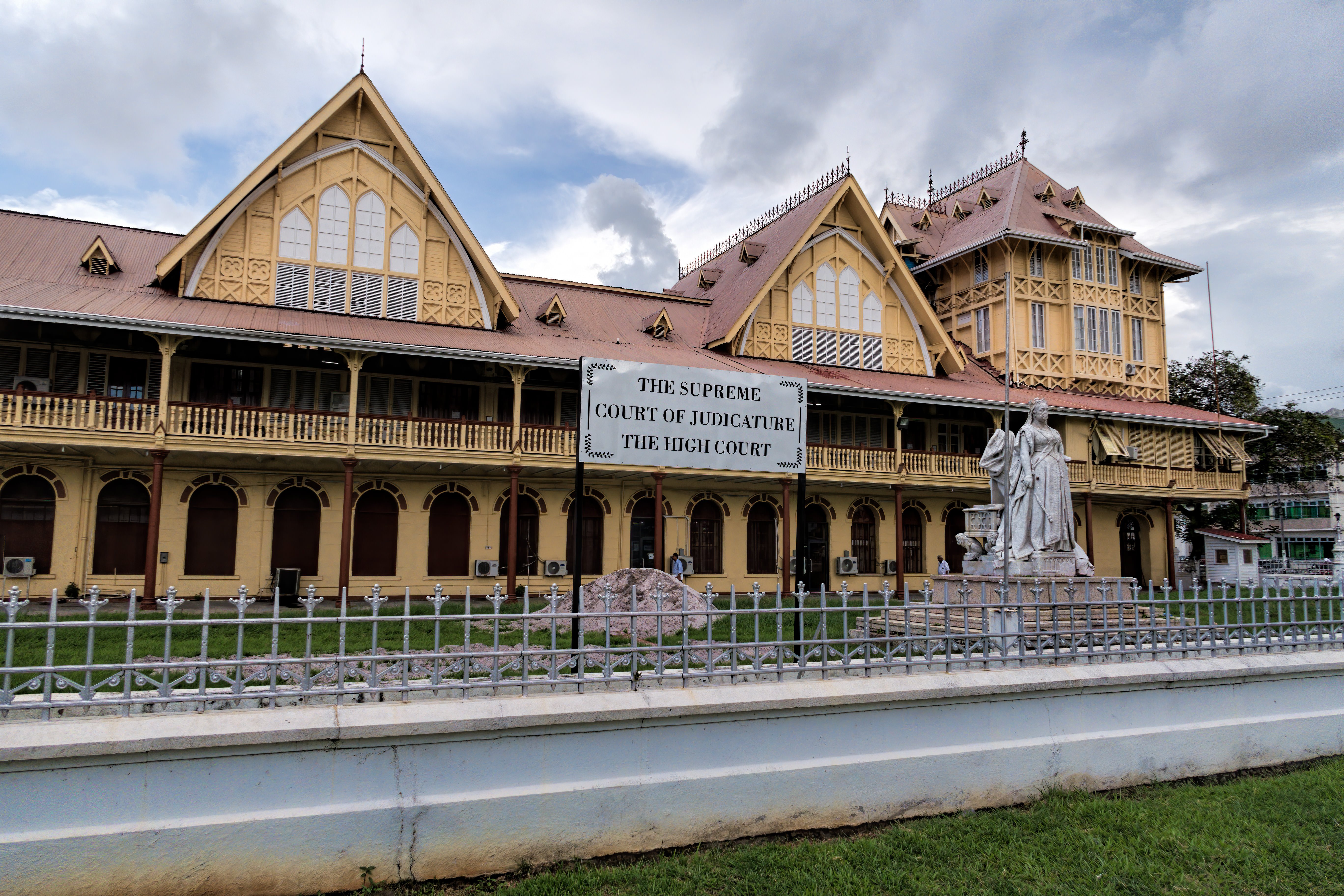
Georgetown is unlike any other capital in South America. It sits below sea level — protected by a seawall and a Dutch-engineered canal system — and its architecture is almost entirely wooden, a legacy of colonial-era construction that gives the city an improbable, slightly ramshackle elegance. Victorian Gothic churches, colonial government buildings, and merchants' houses raised on stilts above the flood line line broad, palm-shaded boulevards. Much of it needs paint, and some of it is actively falling apart, but the bones are extraordinary.
The city has grown fast in recent years with the oil boom, and a new confidence shows in the construction cranes and new restaurants appearing around the centre. But it remains a manageable, walkable city with a genuine character.
The main sights are in central Georgetown. St. George's Cathedral is one of the largest wooden churches in the world, an Anglican Gothic structure from 1899 that rises 43 metres above the city. City Hall, the Law Courts (the Public Buildings), and the National Museum are all within walking distance. The Stabroek Market — a cast-iron Victorian market hall with a distinctive clocktower — is always busy and makes a good orientation point. The Botanic Gardens, 120 acres of lotus lilies, palms, and orchids on the edge of the city, are worth a couple of hours.
The Sea Wall along the Atlantic coast is where Georgetown's residents come in the evenings to walk, eat, and socialise. A string of food stalls and vendors sets up here at dusk. It is the best place to watch life go by and to understand why Guyanese are so attached to their unusual city.
Safety requires attention. Do not walk at night in most of Georgetown, and be cautious during the day in unfamiliar areas. Use licensed taxis arranged through your hotel.