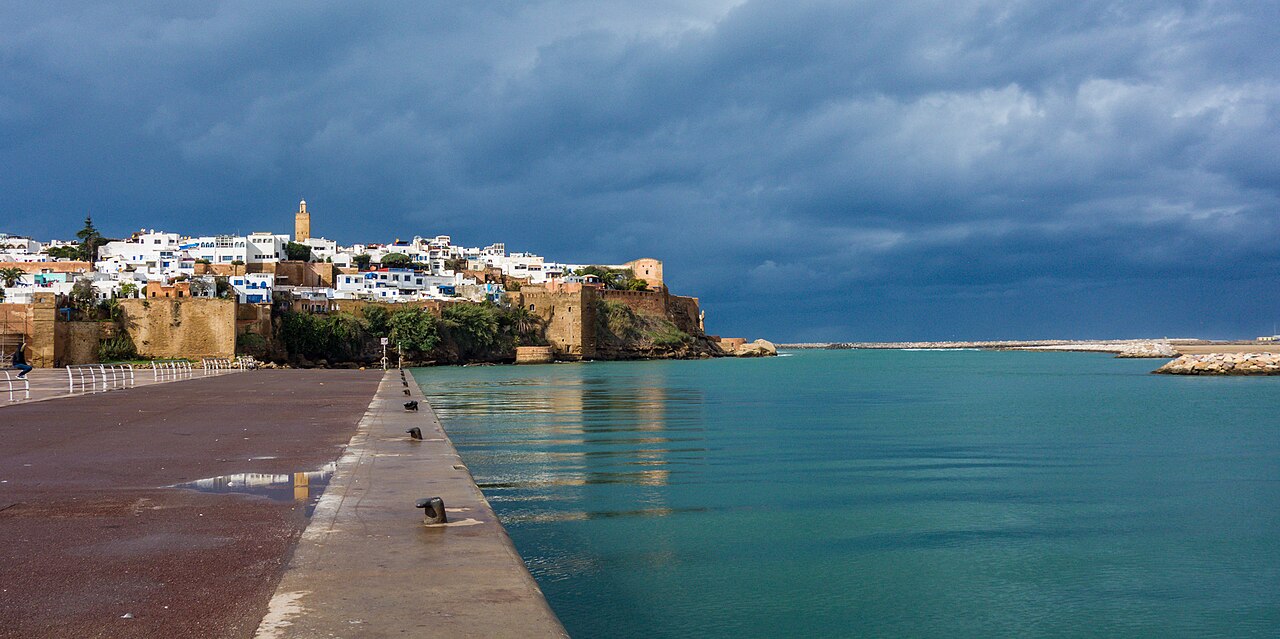
Morocco's capital sits where the Bou Regreg river meets the Atlantic, and it is the most liveable of the country's imperial cities. No carpet touts, no maze you cannot escape from — Rabat moves at a human pace. A million people live in the city and neighbouring Salé, but the old medina feels like a small town. That is part of its appeal.
The headline sights are grouped within walking distance of each other. The Kasbah des Oudaya perches at the river mouth: a walled 12th-century Almohad citadel of blue-and-white lanes, an Andalusian garden, and a terrace café with a view over the estuary. Ten minutes south, the red sandstone stump of the Hassan Tower rises above a plateau of broken columns — the ghost of the world's largest unfinished mosque — flanked by the white marble Mausoleum of Mohammed V. On the opposite side of the modern city, Chellah encloses Roman and Merinid ruins in a walled garden where storks nest on the old minaret: the best single archaeological site in northern Morocco.
Rabat is Morocco's capital and its most European-feeling city. The Ville Nouvelle — built by the French Protectorate in the early 20th century — is wide-boulevarded and café-lined. Mohammed V Avenue is good for an afternoon stroll. The Mohammed VI Museum of Modern and Contemporary Art opened in 2014 and is one of the best art museums in Africa. For a different mood, take a blue petit taxi to Chellah or cross the river to Salé for a quieter look at a genuine Moroccan town.
For first-time visitors to Morocco, Rabat is an excellent landing point. The souks in the medina are manageable, the streets around the kasbah are genuinely relaxed, and the train to Casablanca, Fez, or Marrakech takes no more than a few hours.