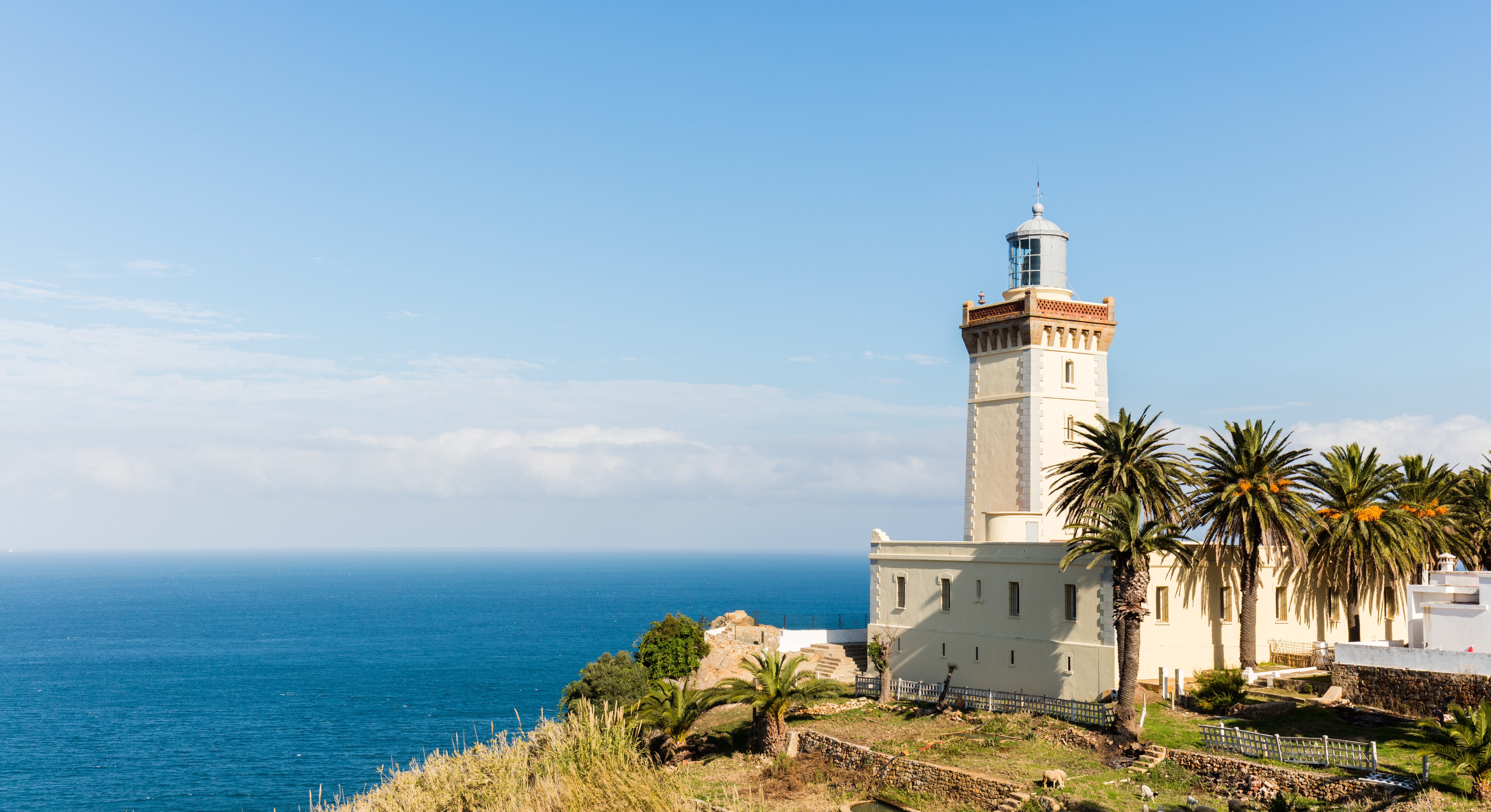
Tangier sits at the northwestern tip of Africa, where the Mediterranean meets the Atlantic and Europe shimmers on the horizon. For centuries this position made it a crossroads of civilizations, a free port, and an international zone where anything went. The old reputation for intrigue has faded, but the city's restless energy has not.
The medina tumbles down from the kasbah on its hilltop, a maze of narrow lanes lined with spice shops, tea houses, and crumbling riads being slowly restored. At its heart, the Petit Socco still draws people to its cafe terraces, much as it did when Burroughs and Bowles made Tangier their home. Below, the Grand Socco marks the threshold between old and new, its leafy plaza connecting the medina to the wide French-colonial boulevards of the ville nouvelle.
Outside the city walls, the waterfront stretches along a sweeping bay where locals swim and drink mint tea at beach bars. A short drive west takes you to Cap Spartel, where the two seas meet, and the Caves of Hercules carved into the cliffs below. The light here is extraordinary, shifting from Mediterranean blue to Atlantic grey within the space of an afternoon.
Tangier is also changing fast. A new high-speed rail link connects it to Casablanca and Rabat, the port area is being redeveloped, and a wave of boutique hotels and restaurants has arrived. It is still rough around the edges, and that is part of its charm.