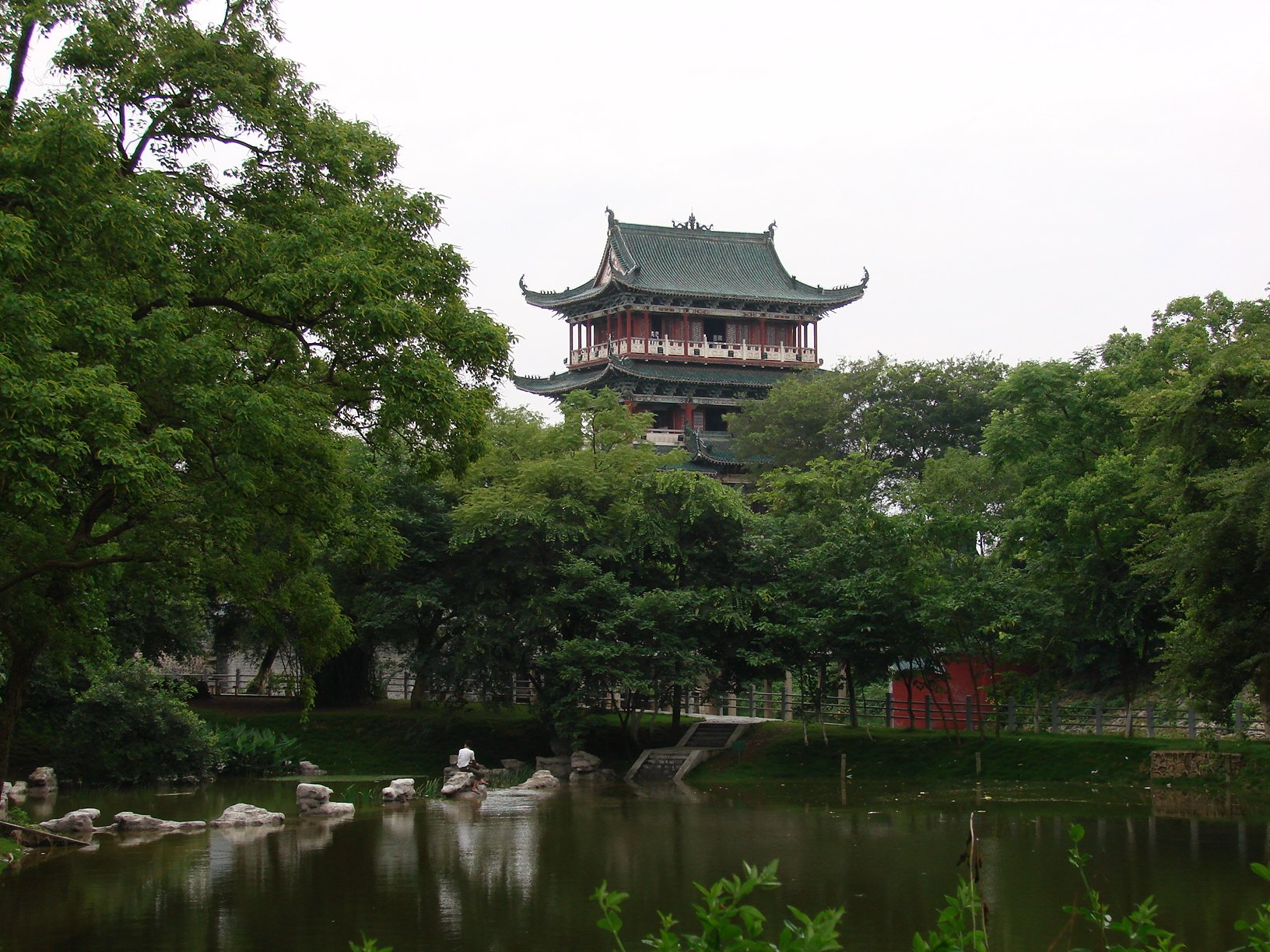
Ganzhou is a large city in the far south of Jiangxi province, historically the most important settlement between the Yangtze River basin and the Lingnan region of southern China. Its position at the confluence of the Zhang and Gong rivers made it a significant commercial hub for centuries, and that geographic logic still holds today — the city feels prosperous and self-contained in a way that smaller Jiangxi cities do not. Hakka culture permeates the place, visible in the cuisine, the local dialect, and in the circular earthen structures of the surrounding countryside.
The old city retains a few genuinely ancient layers. The Fushougou drainage system, an underground network of stone channels built over 900 years ago, still functions — an extraordinary piece of civic engineering that you can tour beneath the streets. A floating pontoon bridge across the Gan River, assembled from dozens of moored wooden boats, gives access to the western bank and is especially lovely at dusk. The Tang-dynasty Buddhist pagoda near the city center is one of the oldest intact structures in the province.
Modern Ganzhou benefits from high-speed rail connections to Shenzhen in two hours and Guangzhou in two and a half, making it a natural base for exploring southern Jiangxi. The city's markets deal heavily in rare earths — Jiangxi holds a significant share of global deposits — but for visitors the more immediate draw is the food: Ganzhou rice noodles served in peppery broth are excellent, and the local version of braised pork shoulders toward richer, darker flavors than the Cantonese style to the south.