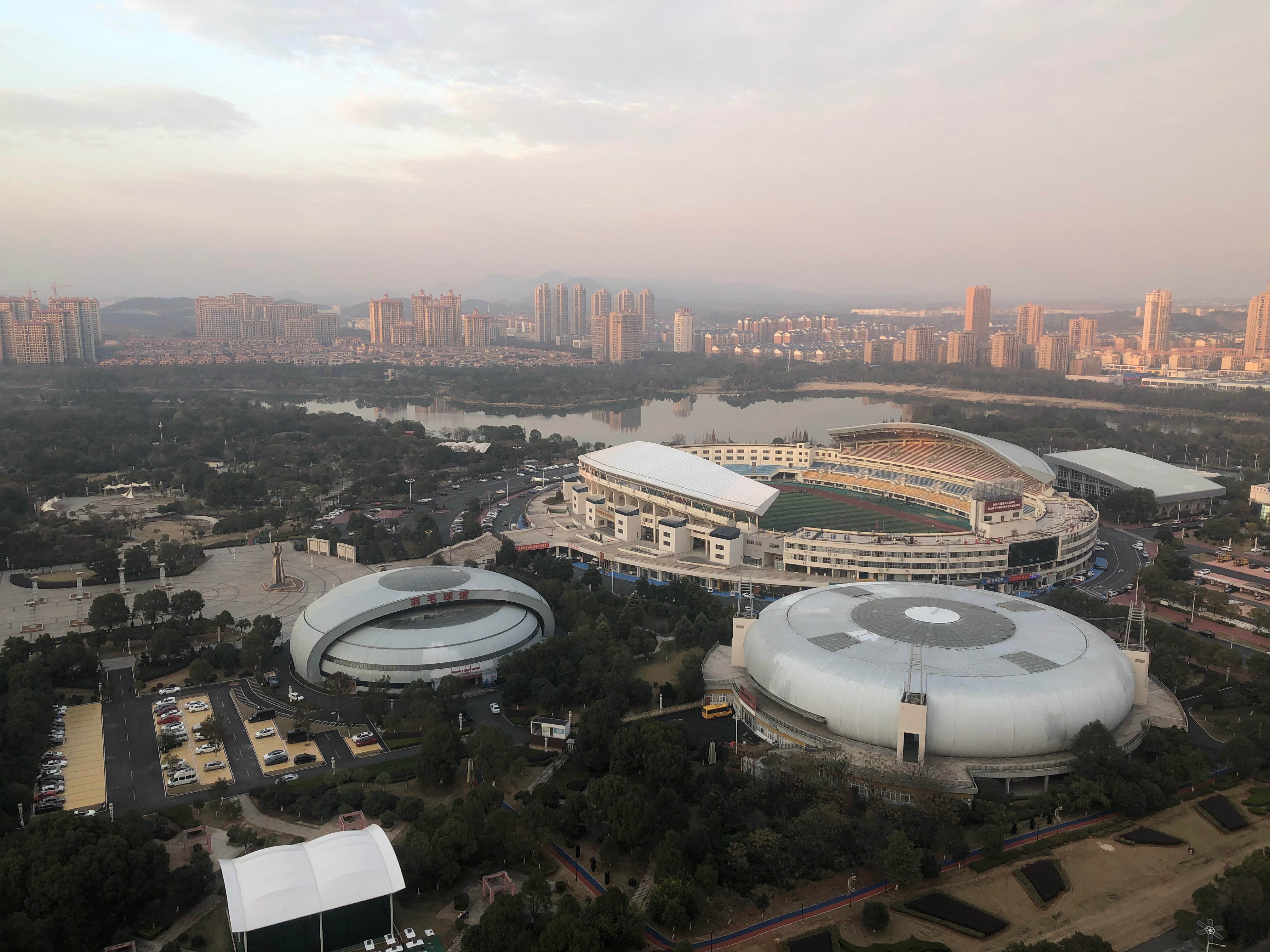
Xinyu is a small, unpretentious city in central-western Jiangxi that most travelers pass through without stopping, a pattern they occasionally regret when they learn about Fairy Lake. The reservoir, about fifteen kilometers from the city center, is improbably scenic: more than two hundred small forested islands rise from the water, and the boat tours that weave between them take a couple of hours and cost very little. On weekdays the crowds are thin, and the contrast between the placid water and the pine-covered hillocks has a quality more associated with Guilin than with an industrial Jiangxi prefecture.
The city itself is best known domestically as a steel-producing center, but it has invested in the Fu Baoshi Park to honor Fu Baoshi, one of the twentieth century's most celebrated Chinese ink painters who was born here. The park is genuinely pleasant — traditional pavilions, stone paths, seasonal plantings — and the attached museum has a respectable collection. The West Jiangxi War Resistance Museum documents the region's experience of the Second Sino-Japanese War with unusual specificity.
Xinyu's position on the Shanghai-Kunming high-speed rail line makes arrival and departure easy, and the local honey oranges — sold at every station platform and market stall — are distinctive enough to buy: they hold a geographical indication status and export in considerable quantities. The city is manageable as a half-day stop or overnight between Nanchang and Pingxiang.