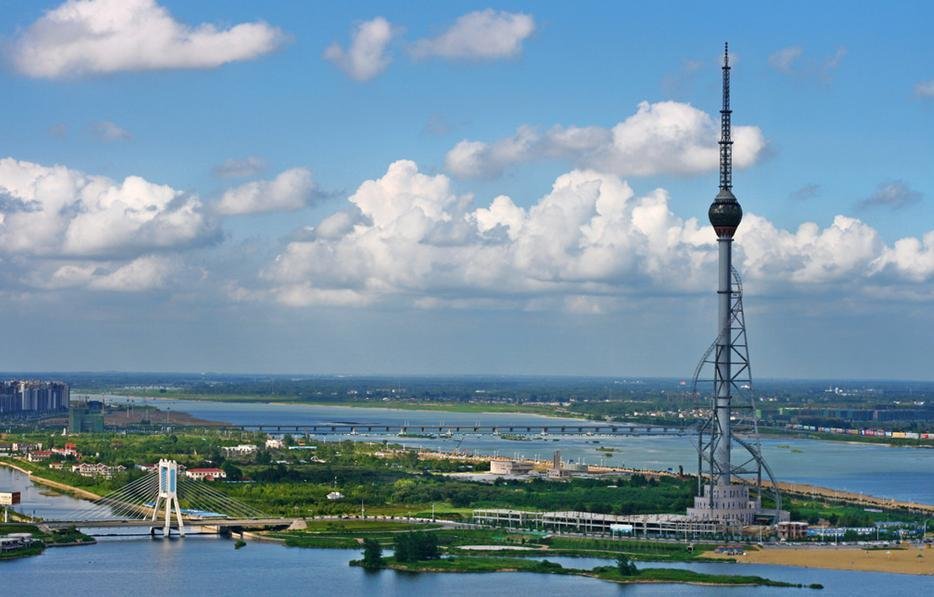
Linyi is one of the largest cities in China that most Western travelers have never heard of — a prefecture of 11 million people in southeastern Shandong, built on a logistics and manufacturing economy that has made it one of the country's biggest wholesale distribution hubs. The city lacks the imperial monuments of Qufu or the coastal scenery of Qingdao, but it has a genuine claim on Chinese history: this is the region where the calligrapher Wang Xizhi was born and where Zhuge Liang spent his early years before becoming the legendary strategist of the Three Kingdoms period. The single most compelling reason to visit is the Yinqueshan Bamboo Slips Museum, where you can look at the oldest known copy of Sun Tzu's Art of War, written on bamboo strips two millennia ago.
The Yimeng Mountain scenic area covers a broad stretch of the Meng Shan range to the north of the city — rugged hills with rivers, waterfalls, and sections of the ancient Qi State great wall threading through the landscape. The mountains are cool and forested, notably less visited by foreign travelers than better-known scenic areas in the province, and the tea grown on their lower slopes is worth seeking out. The Tianyu Natural History Museum, to the east in Pingyi County, holds one of the world's largest dinosaur collections under a single roof.
Linyi has an airport with flights to major cities and a railway station on the conventional network. It is not a place most itineraries will include, but travelers moving between southern Shandong and the coast, or those interested in early Chinese military thought, Three Kingdoms history, and Chinese calligraphy, will find more here than the city's low profile suggests.