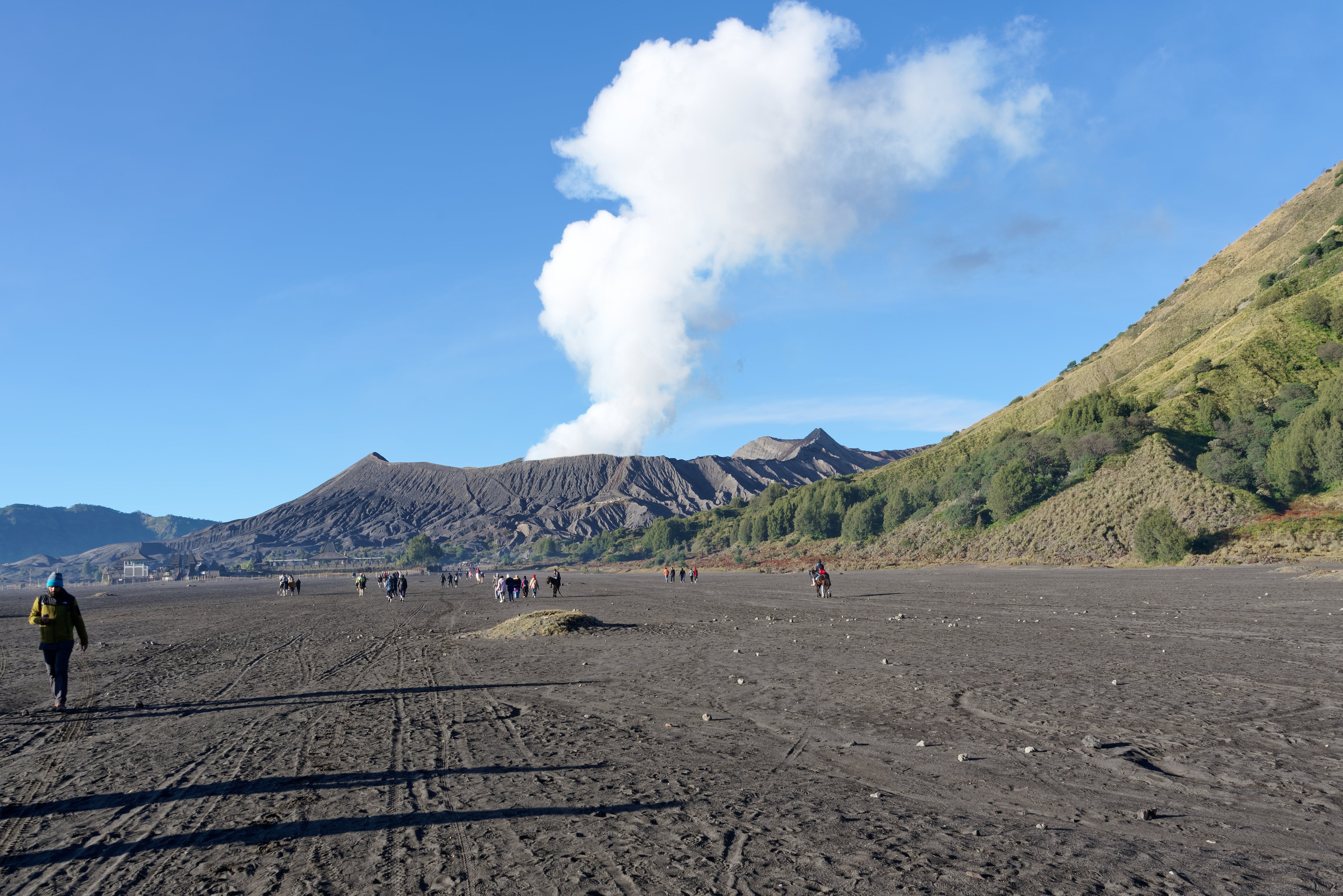
Mount Bromo is one of the most dramatic landscapes in Indonesia — an active volcano rising from the vast flat floor of the Tengger caldera in East Java, surrounded by a lunar sea of volcanic sand. The caldera is 10 kilometres across; Bromo itself, with its smoking crater, sits at 2,329 metres. Around it stand several other cones, most prominently the perfectly shaped Mount Batok. The whole scene, especially at dawn from the rim of the caldera, looks too theatrical to be real.
The famous view — Bromo steaming in a sea of grey ash, Mount Semeru (Java's highest peak) erupting in the background — is captured from a viewpoint above the village of Cemoro Lawang at sunrise. Jeeps carrying tourists to the viewpoint depart from 3am. The smoke and the light are best in the first 30 minutes after dawn; after that, tour groups arrive in waves. The crater rim of Bromo itself is accessible on foot across the sea of sand and up a long staircase cut into the side of the volcano — the climb takes about 30 minutes from the caldera floor.
The Bromo Tengger Semeru National Park that surrounds the volcano is one of East Java's most visited attractions, but the landscape is large enough to absorb the crowds if you move away from the main viewpoint. The Tengger people — a Hindu minority who have farmed the caldera rim for centuries — are the descendants of Majapahit kingdom refugees who fled Islamic expansion in the 15th century. Their annual Kasada festival, in which offerings are thrown into Bromo's crater, is one of Indonesia's most spectacular religious events.
Access is from Probolinggo to the north (the busiest and most direct route) or from Malang to the south. Most visitors base themselves in Cemoro Lawang at the caldera rim, which has a range of accommodation from simple homestays to a handful of better guesthouses with crater views.