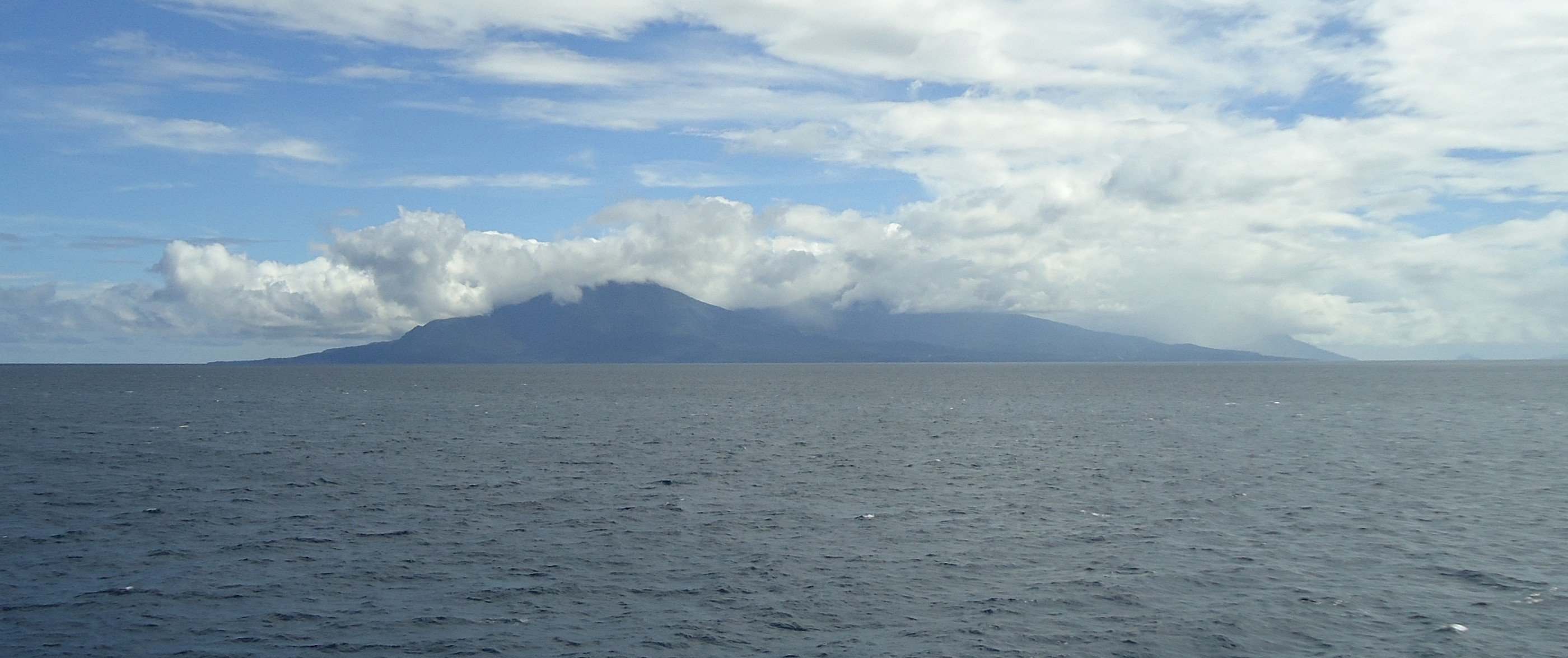
Camiguin is a small volcanic island off the northern coast of Mindanao, covering barely 240 square kilometres, with more volcanoes per square kilometre than almost any other island on earth — seven in total, four of them active. It sits in the Bohol Sea, reached by a short ferry from the Mindanao mainland, and has remained quiet enough to feel genuinely off the beaten track even as it accumulated a reputation among divers and travellers looking for something beyond the Philippines' more famous beach destinations.
The island's character is shaped almost entirely by its volcanic geology. Black sand beaches give way to dense jungle on the slopes above, streams carry mineral-rich water down from the mountains, and Ardent Hot Springs bubble up near the coast above Mambajao. The highest point, Mt Hibok-Hibok, last erupted in 1951 and can be climbed with a registered guide over two days. The eruptions have left their mark in more unusual ways: a 19th-century cemetery near Catarman slid into the sea after a volcanic event, and the Sunken Cemetery — its cross still visible above water, its headstones encrusted with coral six metres below — is one of the most distinctive dive sites in the Philippines. The Gui-ob Church Ruins, a colonial campanile half-buried by the same 1871 eruptions, are equally haunting.
White Island, a crescent sandbar of fine white sand about a kilometre offshore from Agoho, is the exception to Camiguin's volcanic colour scheme. Bancas make the short crossing from the north coast beaches, and the view back to Mt Hibok-Hibok rising above the jungle behind the resorts is the island's most memorable scene. Katibawasan Falls drops 70 metres into a swimmable pool southeast of Mambajao. Mantigue Island offshore has sea turtles and excellent snorkelling. The island's lanzones fruit — small, grape-like, sweet — is harvested in October and celebrated with a week of street dancing and food in Mambajao, the main town.
Mambajao is the administrative capital and ferry connections run from Benoni port on the east coast. The island can be circuited by road in a couple of hours, and most visitors base themselves at one of the small resorts strung along the north coast between Agoho and Mambajao.