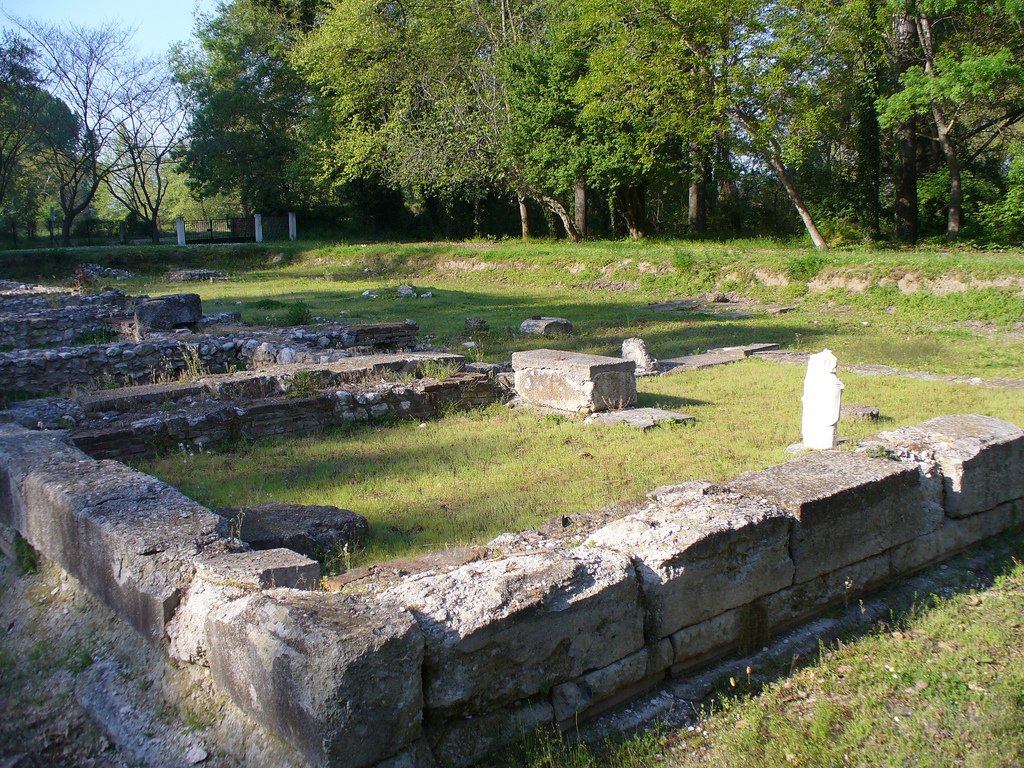
Dion is a small village at the foot of Mount Olympus in northern Greece, but its significance far outweighs its size. The ancient city of Dion was one of the most sacred places in the Macedonian kingdom — Philip II and Alexander the Great both made offerings here before military campaigns, and the city's temples to Zeus, Demeter, and Isis were among the most important in the ancient world.
The Archaeological Site of Dion and its excellent museum are the reason to come. Excavations begun in the 1970s have uncovered mosaics, statues, a theatre, and the remarkably preserved Roman baths. The museum houses an impressive collection of sculptures and finds, including a stunning hydraulis (water organ) from the first century BC. The site itself sits amid a flat plain with Olympus rising immediately behind — the setting alone is memorable.
The wetlands and natural park surrounding the site add an unexpected dimension: herons fish among the ruins, and the Vaphyras River feeds a network of reed beds and channels that support rich birdlife.
Dion is an easy day trip from Thessaloniki or a stop on the road south toward Athens.