Thessaloniki is Greece's second city, and many would argue its most interesting. Where Athens trades on classical antiquity, Thessaloniki is a layered Byzantine, Ottoman, Sephardic and modern Greek port that wears all those pasts at once. It has a young, irreverent edge thanks to a huge student population, the best food scene in the country, and a long curving waterfront on the Thermaic Gulf with a view across to Mount Olympus.
The defining landmark is the White Tower on the seafront, the stump of the old Ottoman fortifications that has become the symbol of the city. From there a flat, walkable grid runs west past Aristotelous Square — the grand, slightly Parisian heart of the modern town — toward the Roman ruins of the Arch of Galerius and the Rotunda. Scattered through this lower city are the great Byzantine churches that earned Thessaloniki its UNESCO listing: Hagia Sofia, modelled on its more famous Istanbul namesake, and Aghios Dimitrios, built over the spot where the city's patron saint was martyred.
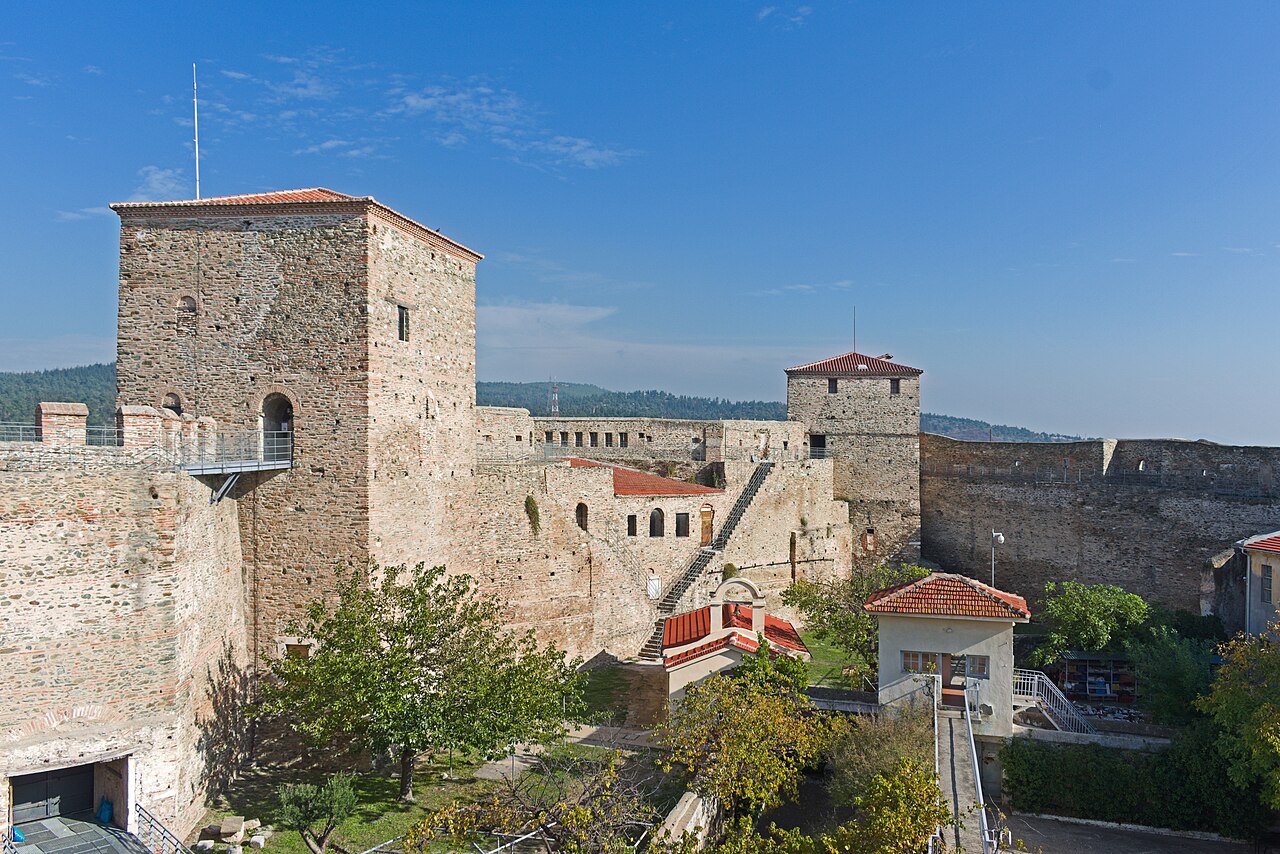
Climb up into Ano Poli, the Upper Town, and you find the only quarter that survived the great fire of 1917 — narrow lanes, timber-framed Ottoman houses, tiny tavernas and the ramparts of the Byzantine walls with the city, the bay and Olympus laid out below. Down by the port, Ladadika — the old oil merchants' district — has been turned into a dense knot of bars and ouzeries that get going late and stay loud. In the middle of it all is the Modiano market, the covered hall left by the city's once vast Sephardic Jewish community, almost entirely deported in 1943.
Eat your way through the city. Thessaloniki invented (or perfected, depending who you ask) bougatsa — flaky pastry filled with semolina cream or feta — and you should have it for breakfast, standing up, dusted with sugar. Lunch is a koulouri sesame ring from a street cart; dinner is a long, loud table at a mezedopoleio in Ladadika or Ano Poli with grilled octopus, mydia saganaki, and a carafe of tsipouro. The city's cafés are an institution in their own right — students nurse a single freddo espresso for three hours and nobody minds.
It is not a city of monuments to be ticked off. It rewards the traveller who is happy to walk, eat, sit by the sea at sunset, and let the place reveal itself slowly.