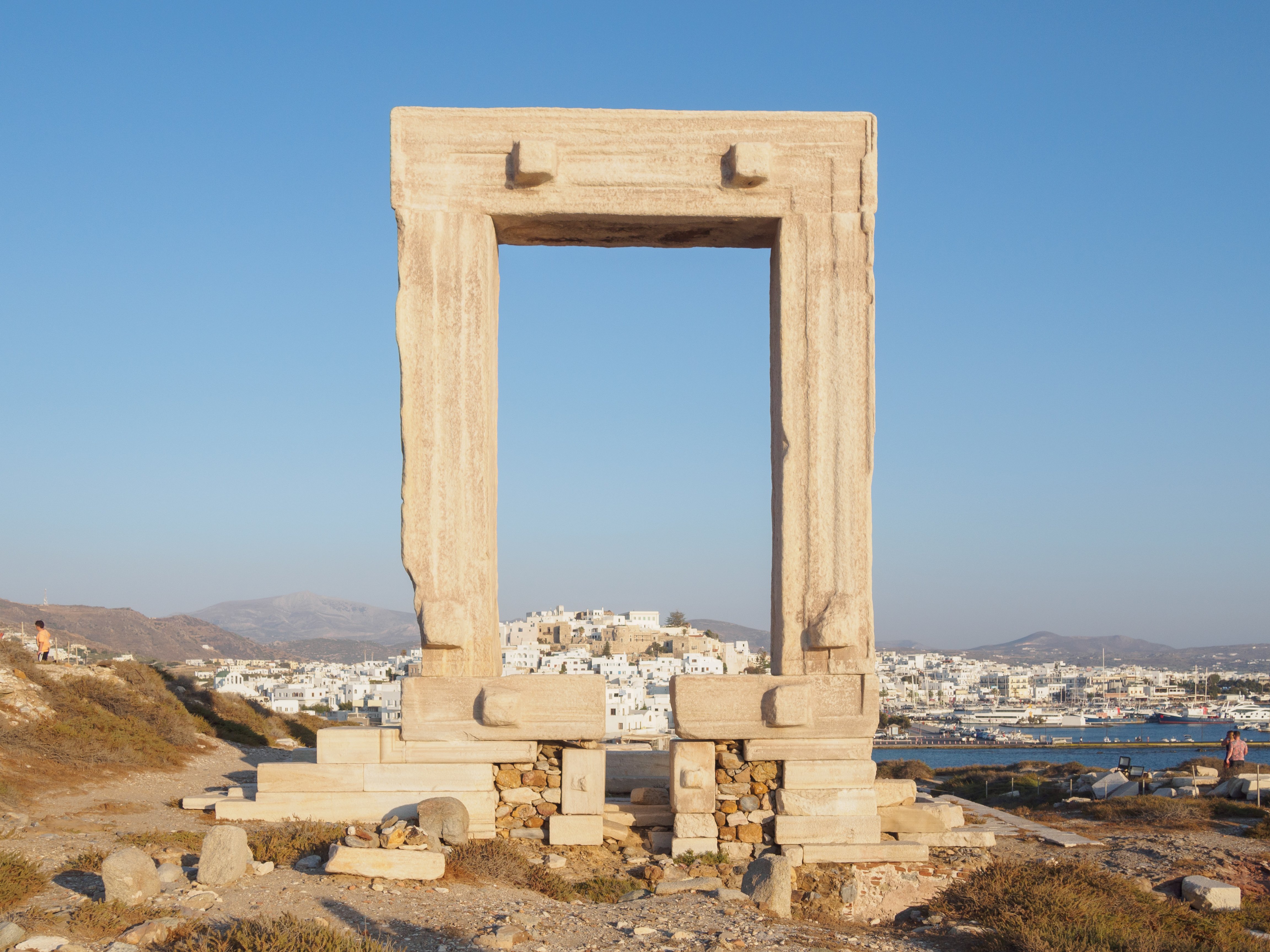
Naxos is the largest of the Cyclades and arguably the most rewarding. Unlike its neighbours Mykonos and Santorini, tourism is not the main industry here. The island is fertile and green by Greek island standards, producing its own potatoes, cheese, and citron liqueur. You notice the difference immediately: the food is better and cheaper, and the villages feel like places where people actually live.
The main town, Hora (also called Naxos Town), climbs a hillside behind the port, capped by a Venetian castle district called the Kastro. At the harbour entrance, the massive marble doorway of an unfinished Temple of Apollo — the Portara — stands on its own peninsula, framing perfect sunsets. It is the island's most photographed spot for good reason.
Beyond the town, Naxos opens up into a surprisingly varied landscape. The interior is mountainous, with the peak of Mount Zas (the mythical birthplace of Zeus) rising to over 1,000 metres. Ancient marble quarries dot the hillsides, some with enormous half-finished kouros statues still lying where sculptors abandoned them 2,600 years ago. The western coast has long sandy beaches that rival anything in the Cyclades — and most of them stay uncrowded even in high season.
Naxos works well as a base for exploring the central Cyclades. Ferries connect frequently to Paros, Ios, and Santorini, and the island has enough to fill a week on its own. It is reachable by ferry from Athens (Piraeus or Rafina) or by a short flight.