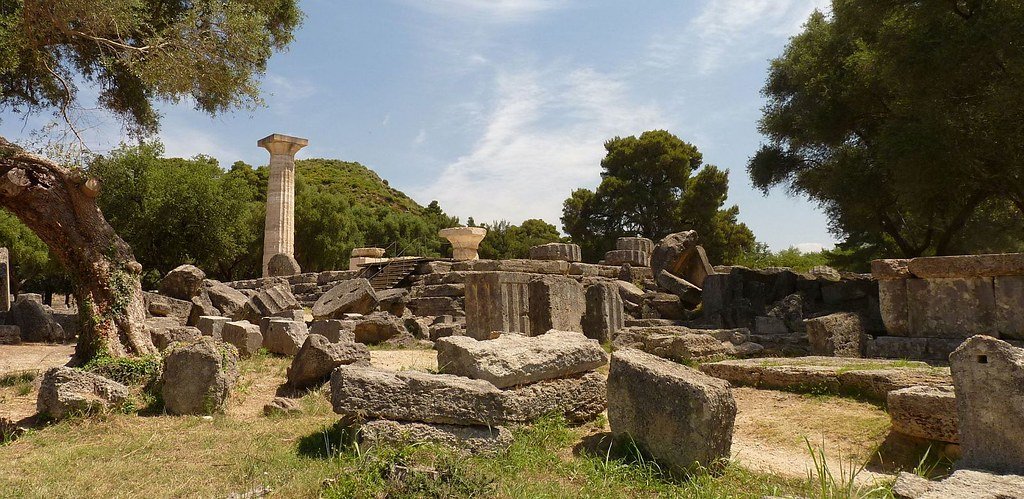
This is where it all started. In 776 BC, athletes gathered in this riverside valley in the western Peloponnese to compete in honour of Zeus, and the Olympic Games were born. For over a thousand years the games drew competitors and spectators from across the Greek world, until a Roman emperor shut them down in 393 AD. The site lay buried under river silt for centuries before archaeologists uncovered it in the 19th century.
The archaeological site is vast and deeply atmospheric. The ruins of the Temple of Zeus once housed one of the Seven Wonders of the Ancient World, a 13-metre gold-and-ivory statue of the god. You can walk through the remains of the ancient gymnasium, the palaestra where wrestlers trained, and the stadium itself, where the original start and finish lines are still carved in stone. The excellent Archaeological Museum of Olympia, just across the road, holds some of the finest classical sculpture in Greece, including the pediment sculptures from the Temple of Zeus and the famous Hermes of Praxiteles.
Modern Olympia is a small, quiet village that exists almost entirely to serve visitors to the site. A single main street is lined with tavernas, souvenir shops and small hotels. It makes for a comfortable base, though most people visit on a day trip from Patras (about two hours by car) or the nearby town of Pyrgos (30 minutes). If you have your own transport, the drive through the green hills of Elis is lovely.