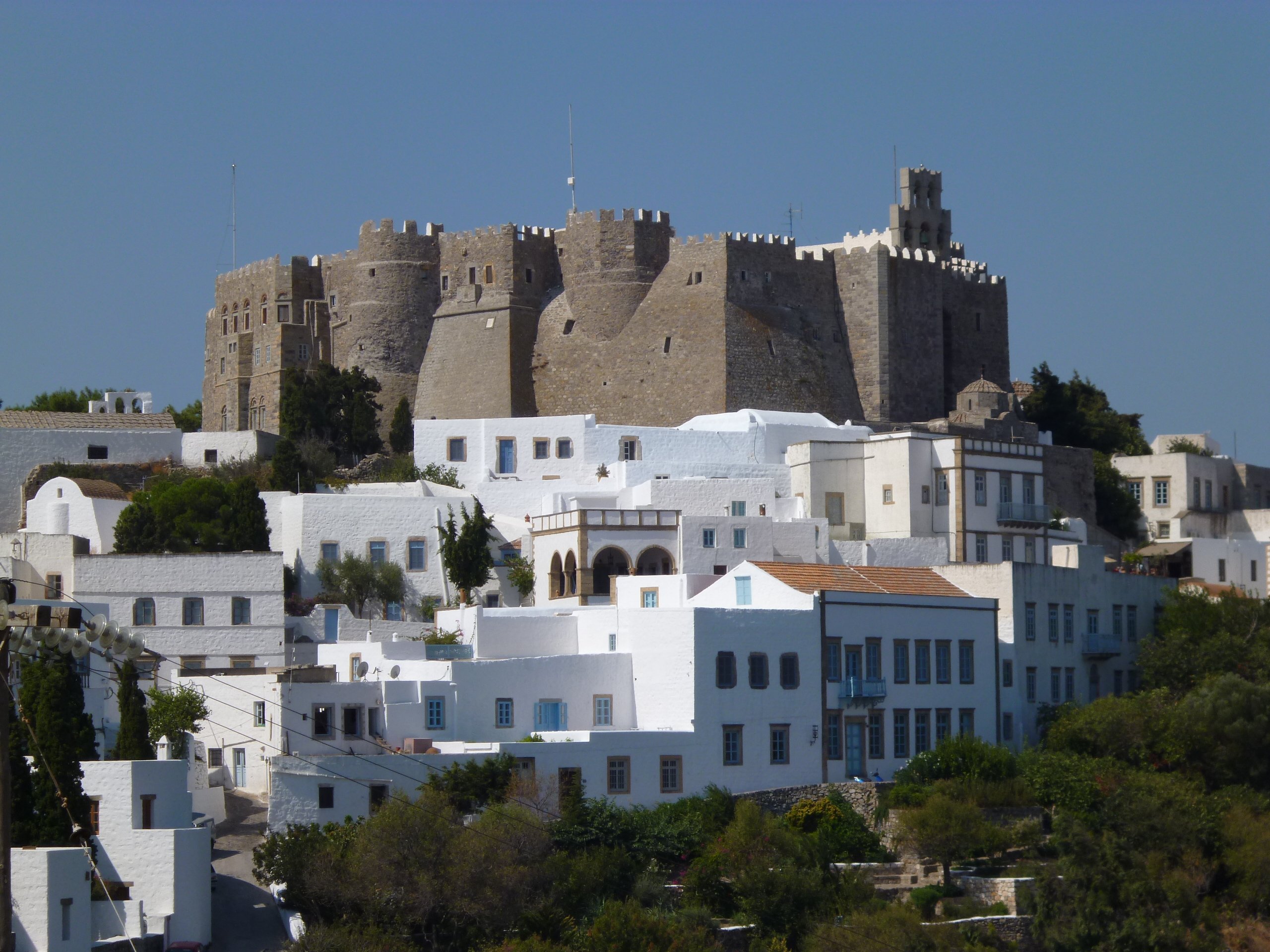
Patmos is a small, steep island in the Dodecanese where St. John is said to have written the Book of Revelation. That spiritual legacy earned the island a UNESCO World Heritage designation, but Patmos is far more than a pilgrimage site. It is one of the most quietly elegant islands in Greece, attracting a well-heeled crowd that values beauty over nightlife.
The hilltop Monastery of St. John the Theologian dominates the skyline of Hora, the main town, its fortified walls giving it the look of a medieval castle. Below the monastery, the Cave of the Apocalypse marks the spot where John supposedly received his visions -- a small, hushed space that feels genuinely sacred regardless of your beliefs. Hora itself is a gorgeous maze of whitewashed mansions, many dating to the 17th century, with hidden courtyards and rooftop terraces overlooking the Aegean.
Down at sea level, Skala is the port town and practical hub where ferries dock and tavernas line the waterfront. The island has a handful of good beaches -- Psili Ammos is the standout, a sheltered cove of fine sand reached by boat or a steep trail. Patmos stays relatively uncrowded even in high season, partly because there is no airport. That is a feature, not a bug.
The island runs on a slow, contemplative rhythm. Evening means a drink in Hora's plateia watching the sunset light up the monastery walls, then dinner at one of the surprisingly good restaurants scattered around the island. Patmos rewards those who come with no agenda beyond soaking in the atmosphere.