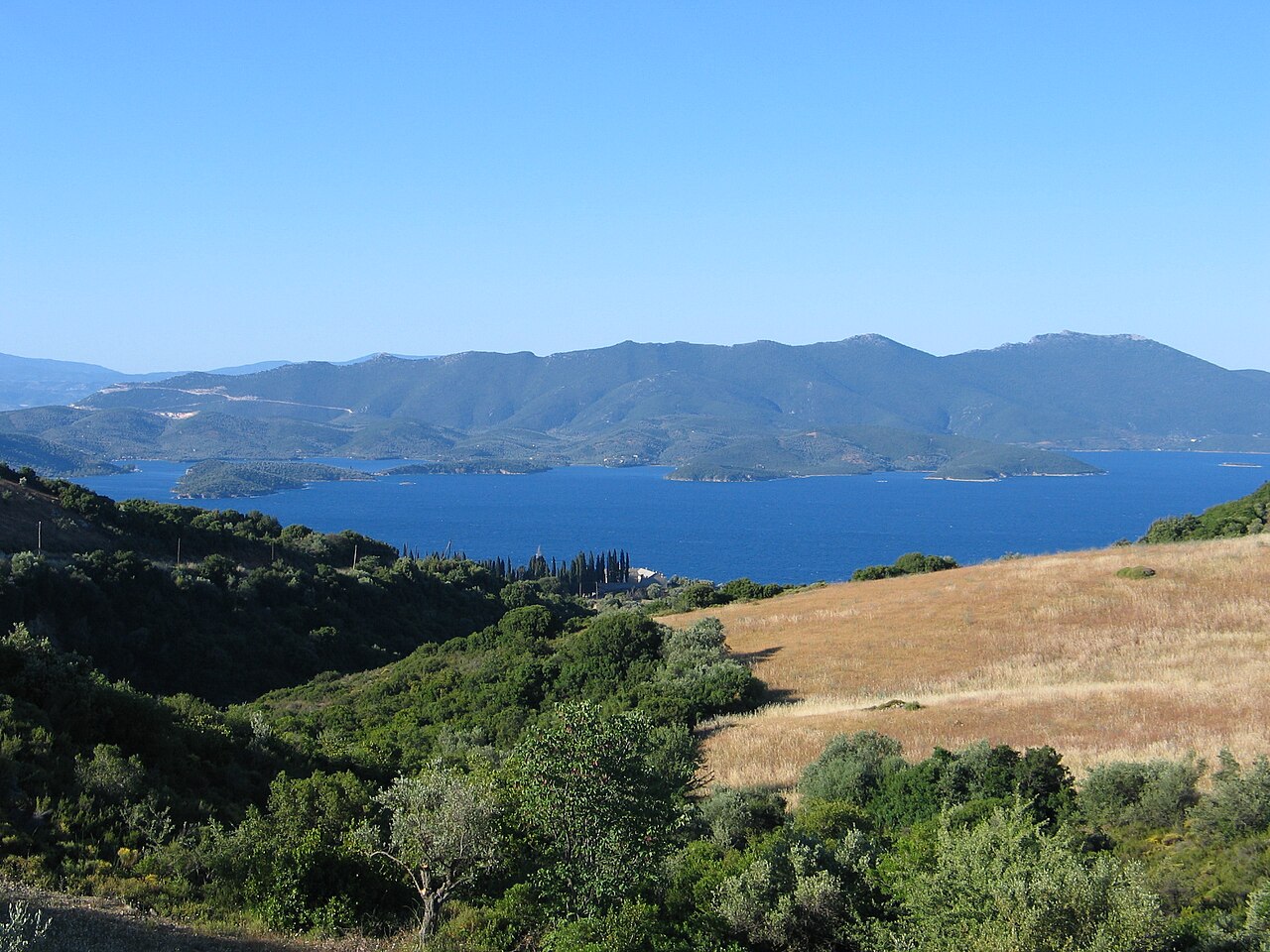
The Pelion peninsula (also spelled Pilion) curves into the Aegean Sea east of Volos, its spine draped in thick chestnut and apple orchards that give way to dramatic clifftops above the sea. In Greek mythology this was the home of the centaurs, and it still feels a little wild: cobbled kalderimi paths connect stone-built villages, each with a shaded central square and a church. It's popular with Greeks in summer but quiet enough the rest of the year to feel like a secret.
The peninsula has two very different coastlines. The eastern side faces the open Aegean with exposed, often rough beaches; the western side along the Pagasitic Gulf is calmer and warmer. Most villages sit high in the hills between them, connected by winding roads that drop to the coast.
On the western side, Makrinitsa and Portaria are closest to Volos and give the quickest introduction to traditional Pelion architecture. On the eastern side, Tsagarada — home to a thousand-year-old plane tree — is deeper into the forest and more removed from the main tourist trail. Below it, the tiny harbour of Damouchari has Byzantine castle ruins and one of the most atmospheric settings on the coast. The beaches at Agios Ioannis and Mylopotamos are the main draws in summer. The Pelion Railway, a narrow-gauge heritage line, runs on weekends from the coast up through the hills to Milies.