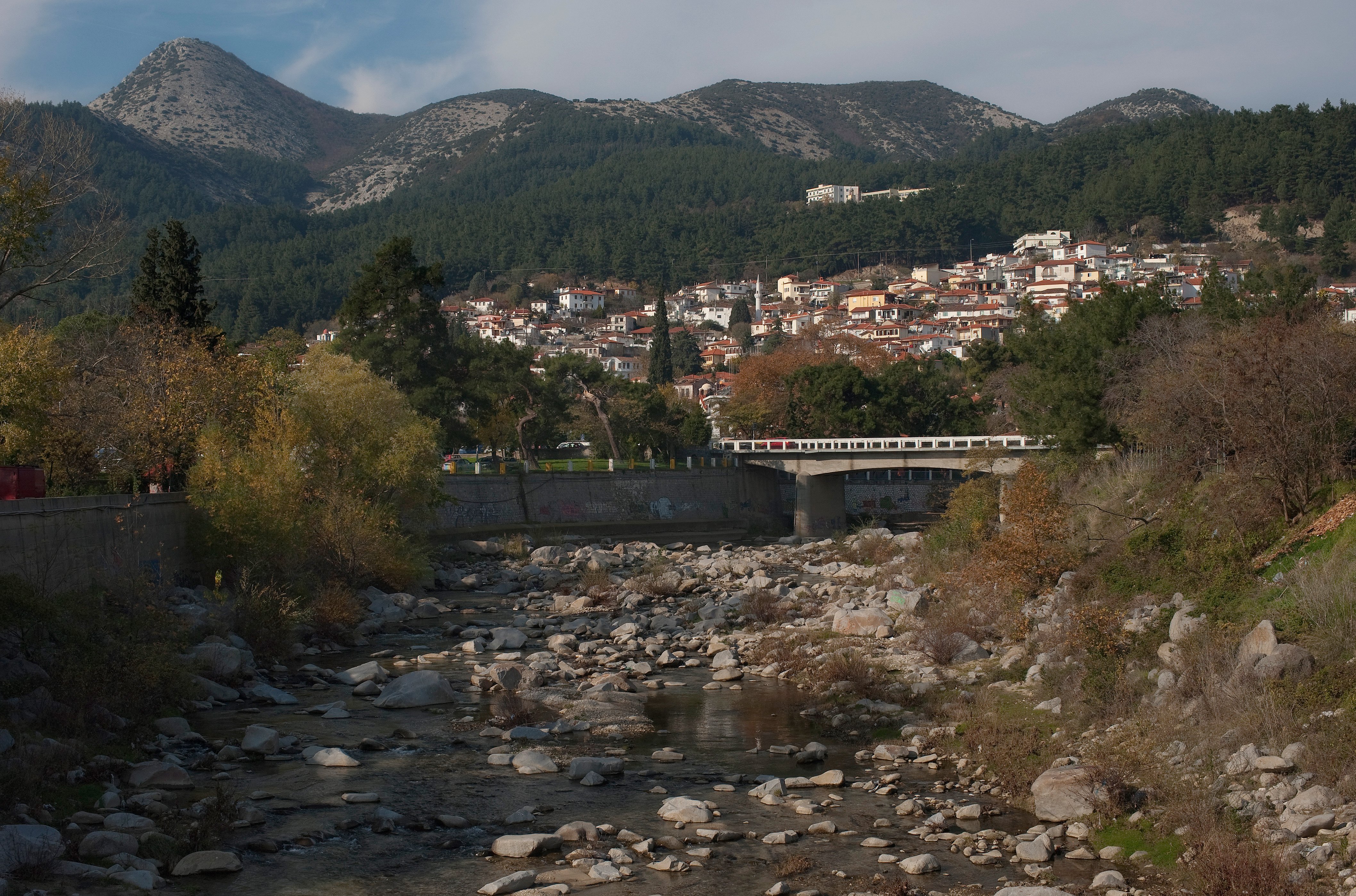
Xanthi sits in the northeast corner of Greece, in Thrace, about 220 km east of Thessaloniki and close to the Bulgarian border. It is a lively university town with an atmosphere quite unlike the rest of Greece — partly because of its significant Muslim minority, partly because of its well-preserved Ottoman-era old town climbing the hillside above the modern centre.
The old town is the reason to come. Narrow cobbled lanes wind between colourful mansions with overhanging upper floors, many dating from the tobacco boom of the 19th century. The Folk Museum in a restored mansion explains the trade that funded all this architecture. The Clock Tower — the sole survivor of a mosque destroyed in 1941 — stands at the upper edge of the neighbourhood as a monument to the city's layered history.
Xanthi is at its best during the Carnival in February or March, one of the liveliest in northern Greece, and during the Old Town Festival in early September. The Saturday bazaar is a weekly institution — one of the largest traditional markets in the region — and well worth timing a visit around.