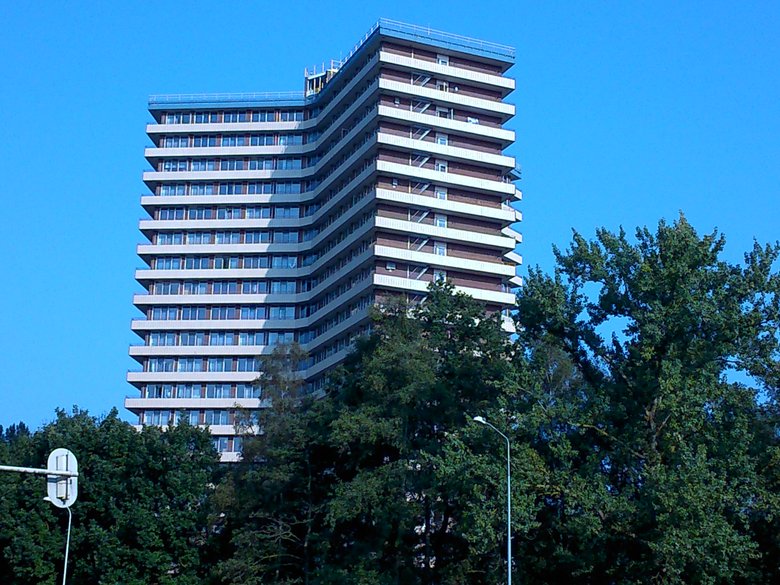
Wageningen is a small university town of about 40,000 people on the north bank of the Rhine river in the Dutch province of Gelderland, about 85 km south-east of Amsterdam and 30 km west of Arnhem. It sits at the southern edge of the Veluwe, the large forested heath area that contains the Hoge Veluwe National Park, and is surrounded by agricultural polders and river flood plains. The town has two distinct identities — as Europe's leading agricultural research centre and as the place where the Second World War in Europe effectively ended.
Wageningen University & Research (Wageningen UR) is consistently ranked as the top agricultural university in the world, and the whole town is shaped by it. Nearly a quarter of the population are students, many of them international; the wooded campus on the western edge of town has an atmosphere closer to a research park than a traditional European university quarter. The spillover effect on the town is noticeable: an unusually diverse population, good ethnic food, a busy Saturday market, and more bicycles per capita than almost anywhere in the Netherlands (which is saying something).
On 5 May 1945, the German surrender of all forces in the Netherlands was signed at Hotel de Wereld in the town centre by General Blaskowitz and the Canadian General Charles Foulkes, effectively ending the war in the Dutch territory. The hotel still stands, with a plaque marking the event, and every year on 5 May Wageningen hosts the national Bevrijdingsdag (Liberation Day) celebrations and the Bevrijdingsfestival — one of the largest free music festivals in the country. The Airborne Museum at nearby Oosterbeek, commemorating the disastrous Operation Market Garden of September 1944 and the Battle of Arnhem, is a moving half-day trip.
Beyond the war memorials and the university campus, the town has a modest but pleasant medieval centre around the 15th-century Grote Kerk and the old moat; the Rhine riverside walks and the nearby Rijnstrangen wetlands are popular with cyclists. The Wageningse Berg — the southernmost spur of the Veluwe — offers forested ridge walking with river views a short bike ride from the centre, and the World Soil Museum on the university campus is a surprisingly absorbing stop.