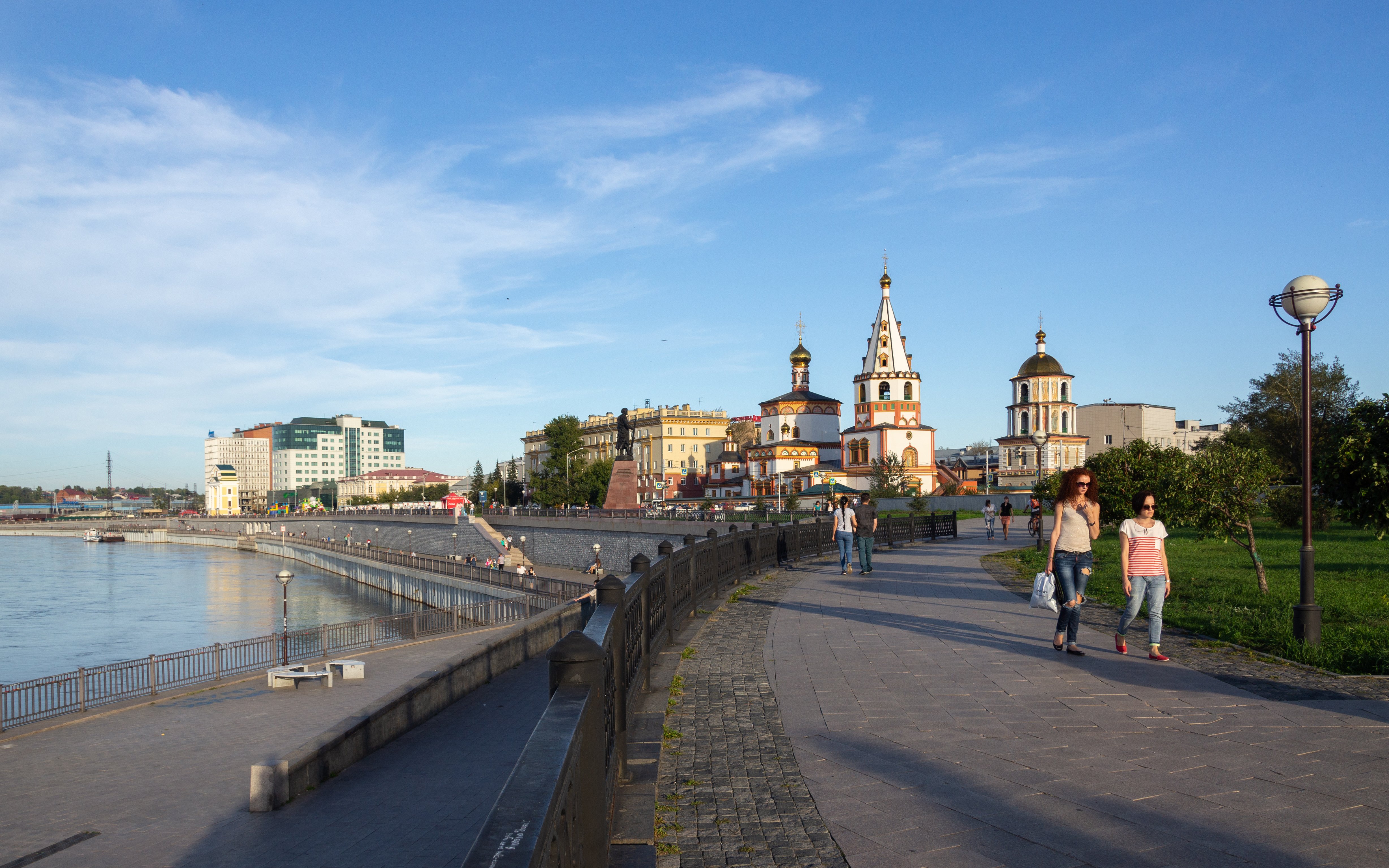
Irkutsk calls itself the Paris of Siberia, which is a stretch, but the nickname gestures at something real. It is a city of pastel 18th-century administrative buildings, ornate wooden houses carved with patterns that look almost like lace, and an educated, cultured population shaped by centuries of forced intellectual exile. The city sits on the Angara River, 60 kilometres from Lake Baikal — which makes it the natural base for exploring the world's deepest lake, but there is more than enough in Irkutsk itself to justify a couple of days.
The city was founded in 1661 as a Cossack fort and rapidly became the main centre of the Russian trade route to China. Merchants, missionaries, and eventually exiles passed through. After the failed Decembrist uprising of 1825, Tsar Nicholas I sent the surviving conspirators to Siberia; many settled in Irkutsk, building French-furnished houses and founding reading societies that gave the city its progressive reputation. Their former homes survive as the Decembrist Museums.
The old centre along the Angara Embankment is compact and walkable. Baroque churches — their turquoise or white facades incongruous against the Siberian winters — punctuate streets of ornate wooden houses. The 130th Quarter, a restored district of 19th-century merchant houses now filled with cafes, is the most photogenic corner of the city. The Irkutsk Regional Museum, one of Siberia's oldest, has strong collections on the Buryat people and Lake Baikal's natural history. Schloss Gottorf analogue — the Kazan Church, an 18th-century baroque church in a quiet neighbourhood, is one of the finest religious buildings in the region.
For day trips, Listvyanka on the south shore of Baikal is under an hour by shared minibus — enough for a half-day on the lake. A longer journey east by the Trans-Siberian reaches Ulan-Ude, capital of Buryatia and a city with a very different feel.