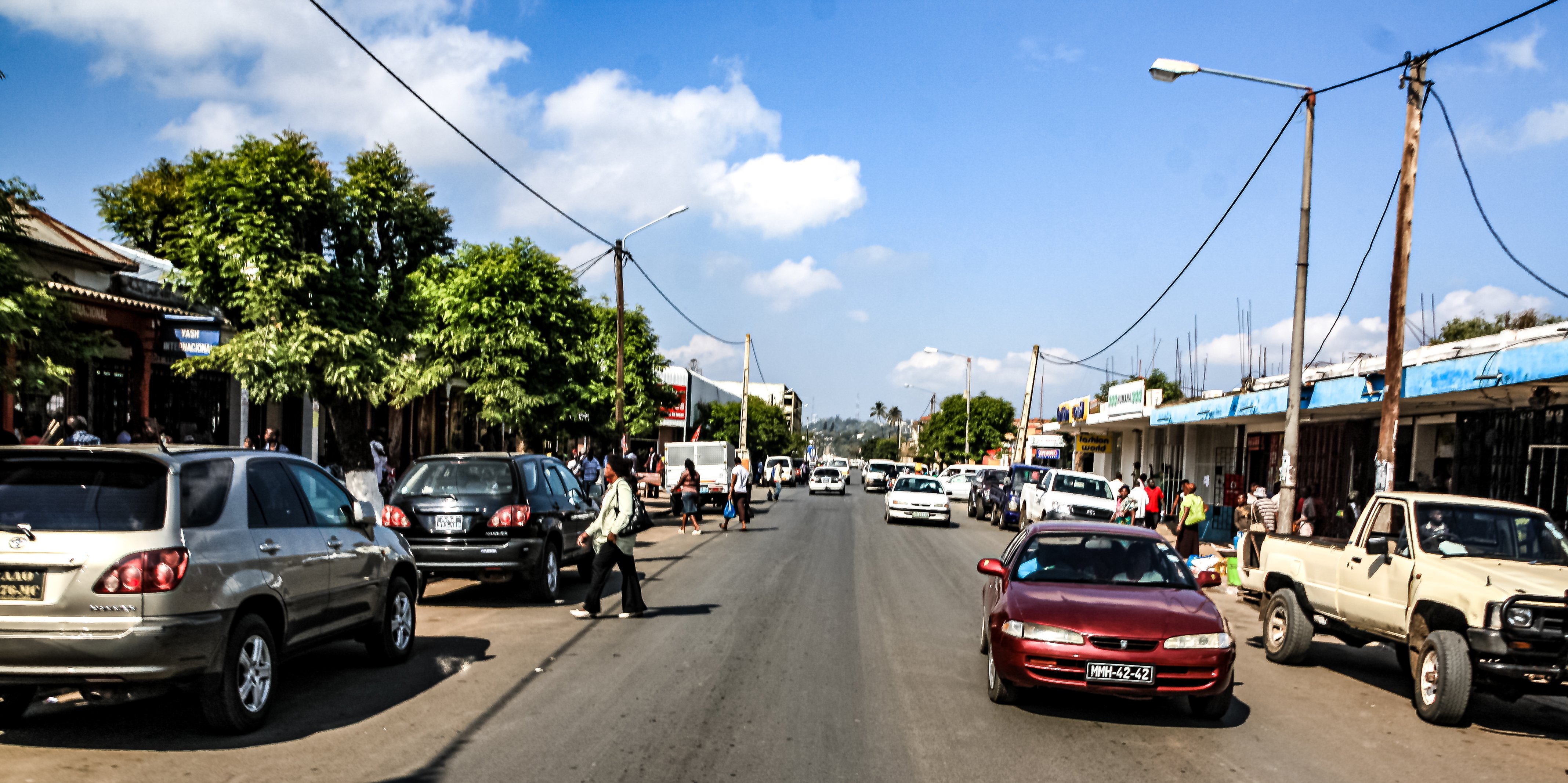
Beira is Mozambique’s second city, sprawling across a flat peninsula where the Pungwe River meets the Indian Ocean. It is above all a port — and has been since the Portuguese founded it in 1891 as the main outlet for landlocked Central Africa. The Beira Corridor, a road and rail link running west to Zimbabwe, still carries freight from Zimbabwe, Malawi, and Zambia to the sea.
The city wears its history visibly. The Cathedral of Beira was built partly using stone from the sixteenth-century Portuguese fort of São Caetano at Sofala, erected between 1505 and 1512 — one of the earliest European structures in southern Africa. Sofala itself has long since been swallowed by the Pungwe estuary, but the stone lives on in Beira’s walls. The railway station, a late modernist masterwork from 1966, is the other architectural anchor of the city.
Macuti Beach, at the northern tip of the peninsula, is the most pleasant part of town. A Portuguese-era lighthouse stands at the point next to the wreck of a beached cargo ship, and the beach gets lively in the evenings. At the southern edge of town, the abandoned Grande Hotel — once Africa's largest, now a vertical squatter settlement — has become one of the city's strangest landmarks. Beira is also a natural base for visiting Gorongosa National Park, one of Africa's great wildlife recoveries, roughly three hours to the northwest.