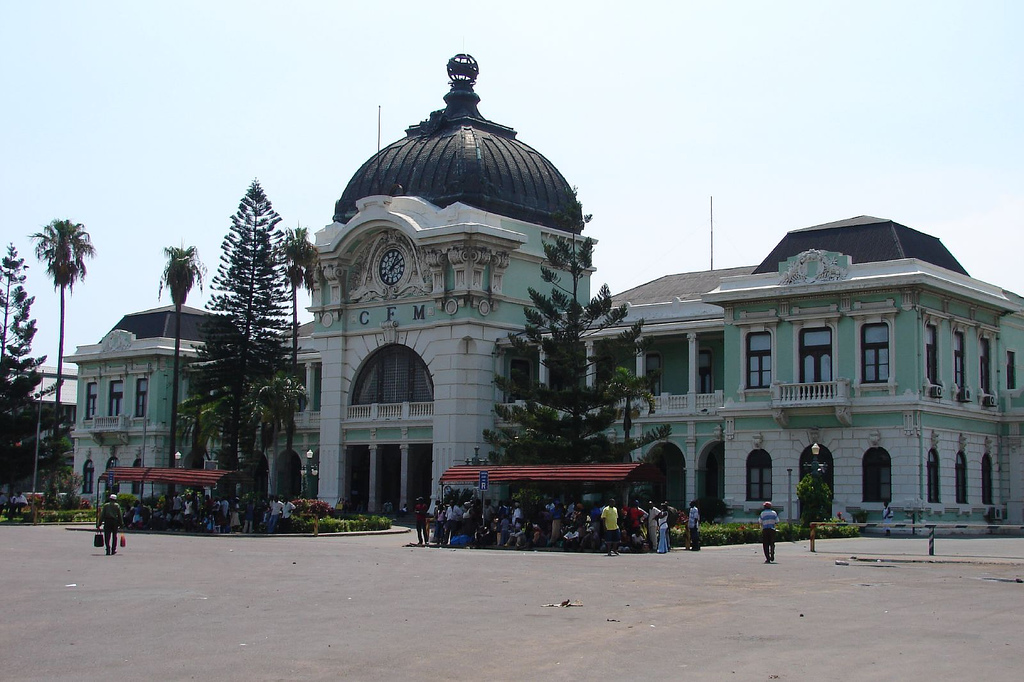
Maputo is the capital and largest city of Mozambique, set on the shore of Maputo Bay in the far south of the country, close to the borders of South Africa and Eswatini (Swaziland). It was known until 1976 as Lourenço Marques, named after the 16th-century Portuguese explorer who first landed here, and grew up in the 19th century as a port for exporting goods from the South African Rand. The Portuguese turned it into their colonial capital, leaving a grid of wide tree-lined avenues, Art Deco apartment blocks, and the unmistakable architecture of Portuguese Africa; the long civil war that followed independence in 1975 devastated the economy and the city, but the past two decades have seen a slow, uneven recovery. Maputo is still the most cosmopolitan and Westernised city in the country, and for most visitors the only one they pass through.
The city's signature sight is the Railway Station (Estação Central dos Caminhos de Ferro), completed in 1910, often cited as one of the most beautiful railway stations in the world — a wedding-cake confection of pale green domes, wrought iron and marble that is now used as much as a filming location and wedding venue as a functioning station. The nearby Praça da Independência holds the Maputo City Hall, the Maputo Cathedral (a striking 1944 Art Deco building), and the pink-and-white Iron House, a prefabricated iron house that was supposed to be the governor-general's residence and turned out to be uninhabitable in the African heat. The Museu Nacional de Arte has a good collection of 20th-century Mozambican painting, including works by Malangatana Ngwenya, the country's most famous artist. And the sprawling Mercado Central is the best place in the city for fish, fruit, and atmosphere.
The city splits broadly into the dense, slightly battered colonial Baixa downhill and the wealthier, leafier Polana and Sommerschield quarters above. The post-war architectural legacy is unusually rich — central Maputo holds one of the densest concentrations of late Art Deco and tropical modernist buildings in Africa, much of it the work of the inimitable Pancho Guedes. Beyond the city itself, Inhaca Island — a two-hour ferry ride across Maputo Bay — has good beaches, a marine reserve, and a handful of small resorts, and makes a pleasant overnight escape. For longer trips, Maputo is the entry point for the spectacular southern Mozambique coast: Ponta do Ouro, the dolphin-diving village on the South African border, and the beaches around Inhambane further north. Mozambican piri-piri prawns are legendary, and eating them with a cold Laurentina beer at one of the open-air grills along the Costa do Sol is the essential Maputo experience.