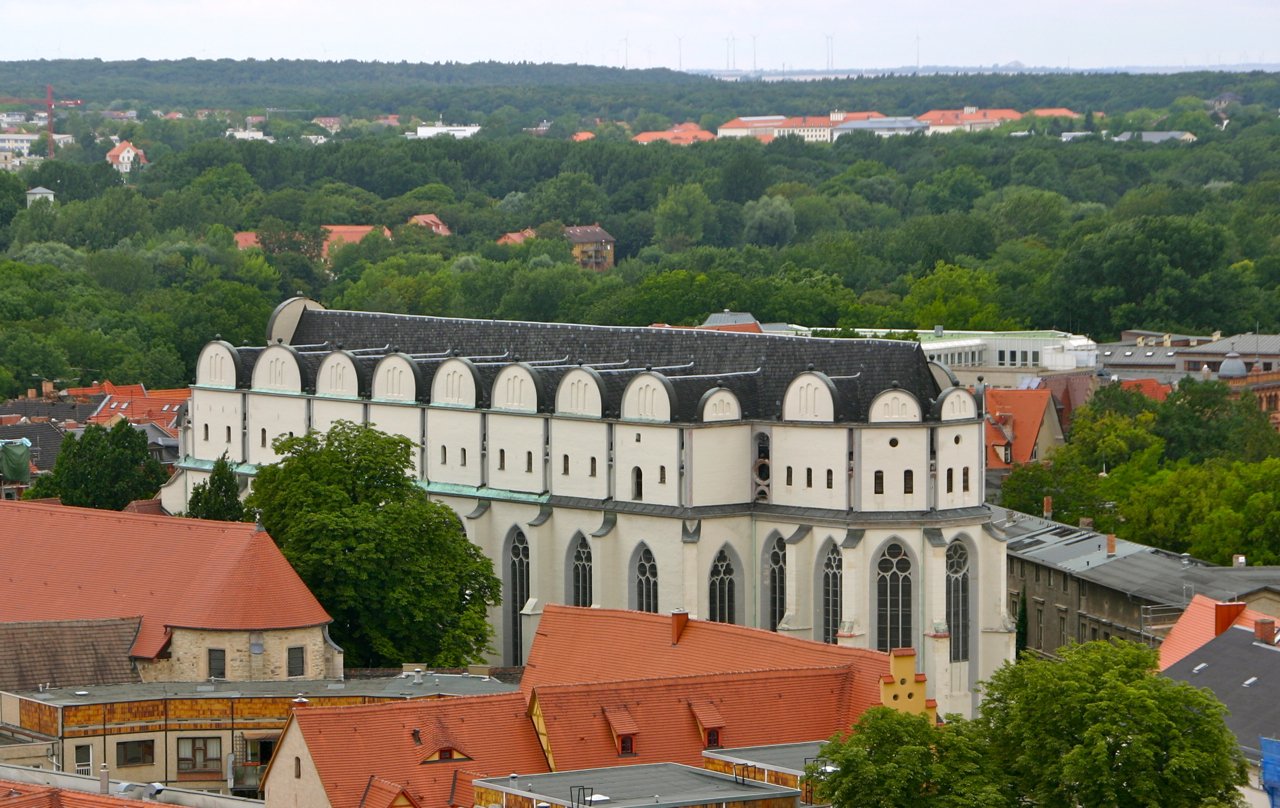
Halle an der Saale is Saxony-Anhalt's largest city, built on salt. For over a millennium, "white gold" mined from the surrounding brine springs made this one of the wealthiest towns in central Germany, and that prosperity left its mark in grand churches, merchant houses, and a skyline dominated by five famous towers. Stand on the Marktplatz and you see them all at once: the twin Hausmannstürme and twin blue towers of the Marktkirche Unser Lieben Frauen, and the free-standing red tower beside them — one of the most striking cityscapes in eastern Germany.
The city sits on the river Saale, a major tributary of the Elbe, and has a compact, walkable old town centred on the market square. It's a university city with a lively student scene, and birthplace of the composer George Frideric Handel, whose house is now a museum. The Moritzburg, with its modernist roof over a medieval shell, holds the regional art collection, while the State Museum of Prehistory houses the Nebra Sky Disc — the oldest known depiction of the cosmos. Despite being largely overlooked by international tourism, Halle rewards those who make the detour: the old town is well-preserved, the restaurants are unpretentious and good value, and the pace is refreshingly unhurried.