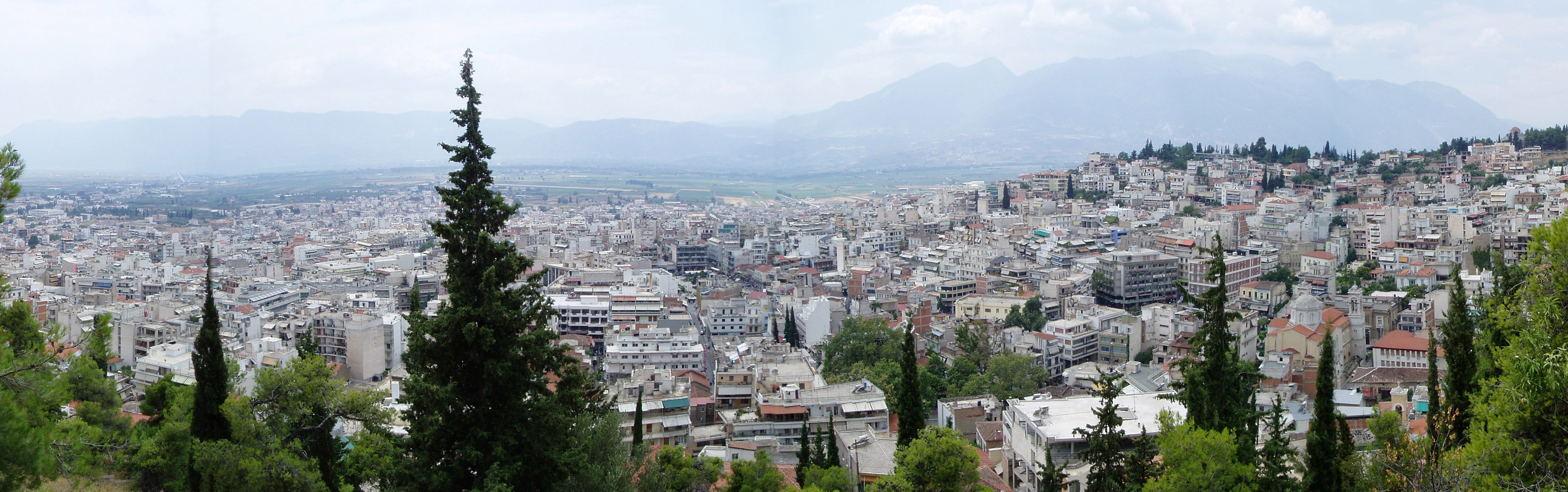
Lamia is a city of around 50,000 people in central Greece, set in a broad valley between Mount Othrys to the north and the mountains of Oeta to the south. It is not a tourist destination in its own right, but it sits on one of the great historical fault lines of Greek history — and it makes a practical stop for travellers heading between Athens and Thessaloniki.
The city's main claim to fame is its proximity to Thermopylae, 20 kilometres south, where a monument to the Spartan king Leonidas marks the site of the famous 480 BC battle. The hot springs that gave Thermopylae its name still flow, and you can bathe in them for free. But Lamia itself has more to offer than most travellers realise. The castle hill above the centre houses an Archaeological Museum with strong Hellenistic collections, and a stretch of ancient city walls survives on the hillside below. The central square, Plateia Diakos, is named for a local hero of the War of Independence and has the lively, unhurried character of a provincial Greek town doing its thing.
Lamia also has an unexpected place in Second World War history. To the south of town, the Gorgopotamos viaduct was the target of the first major Allied sabotage operation in occupied Greece — a November 1942 operation in which British SOE agents worked with Greek resistance fighters to blow up the railway bridge, delaying German supply lines for weeks. The wooded gorge is worth visiting in its own right.
The surrounding landscape opens up well. Delphi is 80 kilometres to the southwest, Meteora is about 90 kilometres north, and the mountain town of Karpenisi is accessible to the west. Lamia works well as a base for a day or two of regional exploration.