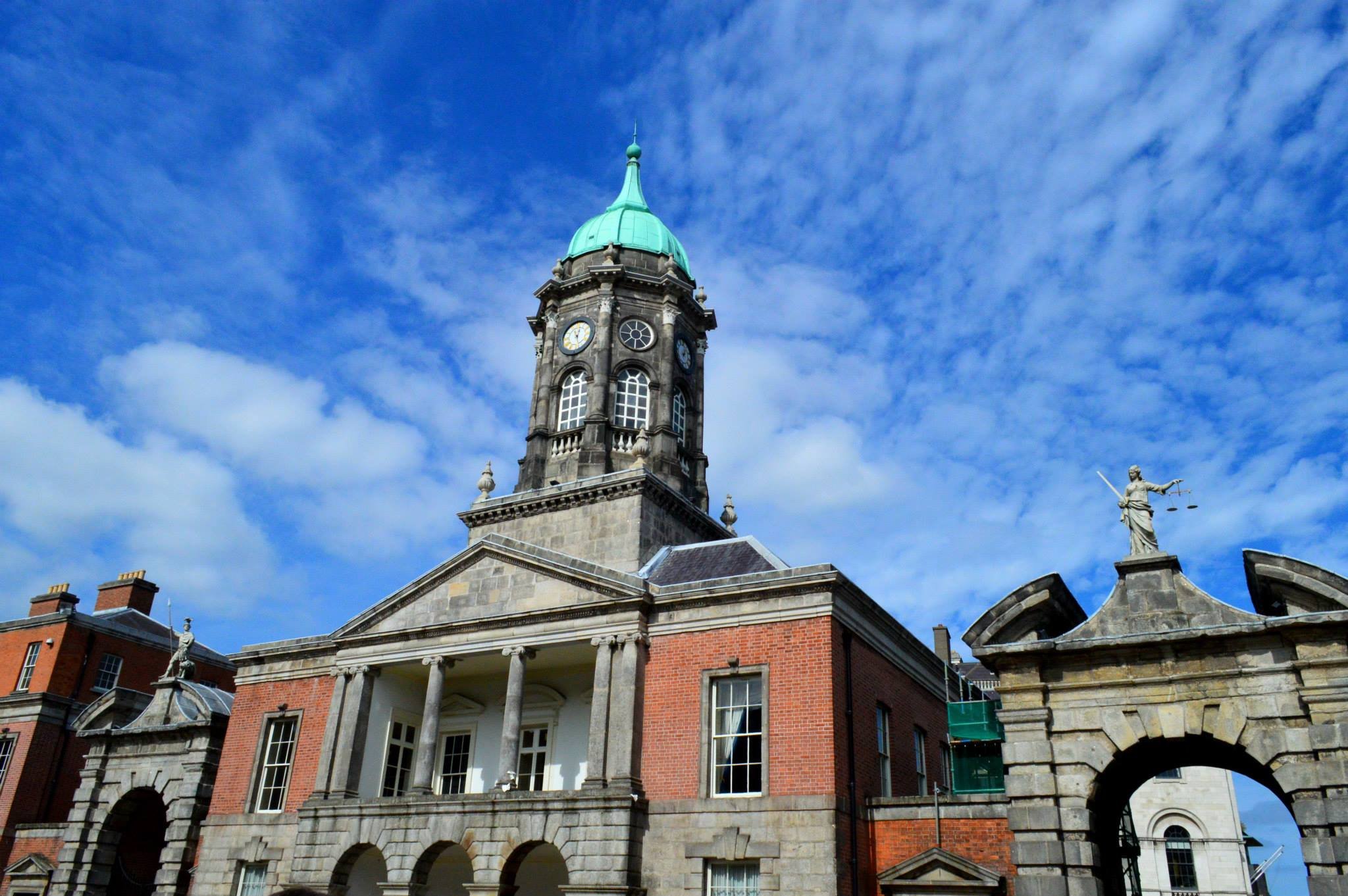
The oldest ground in Dublin, settled on the ridge above the dark pool — the dubh linn — that gave the city its name. The Vikings founded their settlement here in the 9th century; the Normans built the castle in the 13th. Dublin Castle itself anchored British rule in Ireland for seven centuries and still stands at the heart of the quarter, its Upper and Lower Yards open to visitors and the Chester Beatty Library — one of Europe's great manuscript collections — housed within its grounds.
Two medieval cathedrals rise nearby, both older than the castle itself. Christ Church, founded in 1030, has one of the most atmospheric crypts in Ireland. St Patrick's Cathedral, the largest church in the country, was once home to Jonathan Swift, who is buried beneath the nave. The Wood Quay area preserves the memory of the Viking town excavated here in the 1970s, and City Hall, with its domed rotunda, stands at the quarter's eastern edge.
The streets between the castle and the river reward wandering — narrow, sometimes cobbled, layered with medieval, Georgian, and Victorian fabric in ways that no other part of Dublin quite replicates.