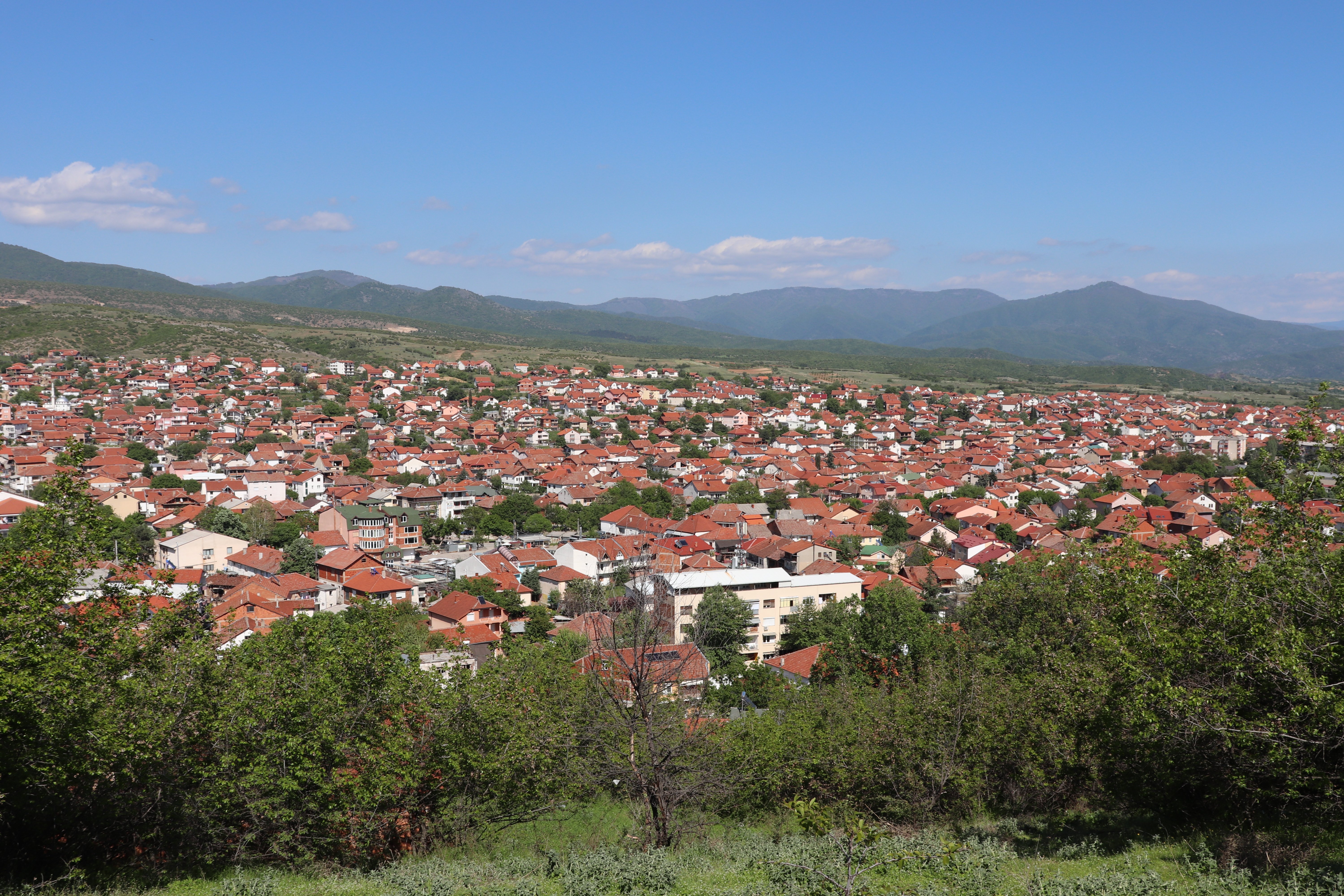
Radoviš (also spelled Radovis) is a small city of about 14,000 people in eastern North Macedonia, tucked into a fertile valley at the foot of the Plačkovica mountain range. It is one of those places that most travellers never hear of, but it has an agreeable, unhurried character and a history stretching back to Byzantine times.
The town was first documented in 1019, when Byzantine Emperor Basil II recorded it as a regional centre for trade and craftsmanship. Under Ottoman rule in the 17th century it was a settlement of 3,000 to 4,000 inhabitants — substantial for the period — and the legacy of that era is visible in the mixed population today: alongside ethnic Macedonians (about 74% of the population), the town has a Turkish community of around 11% and a smaller Romani community, which gives the local food and social culture a distinctive layering.
The modern town centre has a main square lined with espresso bars and a pair of striking Orthodox churches: the large, gleaming Church of the Holy Trinity with its white bell tower, and the older Church of St. Ilija tucked into the older residential quarter. Above the old town, a ruined medieval fortress survives on a low ridge. The local economy is anchored by the Bučim copper and gold mine — the only active mine of its kind in North Macedonia — which employs around 500 people and gives the town a working, self-sufficient quality that purely agricultural towns lack.
The surrounding Plačkovica mountains are the main reason to linger: the hiking trails are uncrowded, the mountain lodge Džumaja provides a base, and the summit ridge at 1,754 metres rewards with views across the Vardar basin. Getting here is easiest by car; regional buses connect Radoviš with Štip (37 km north) and Strumica (29 km south).