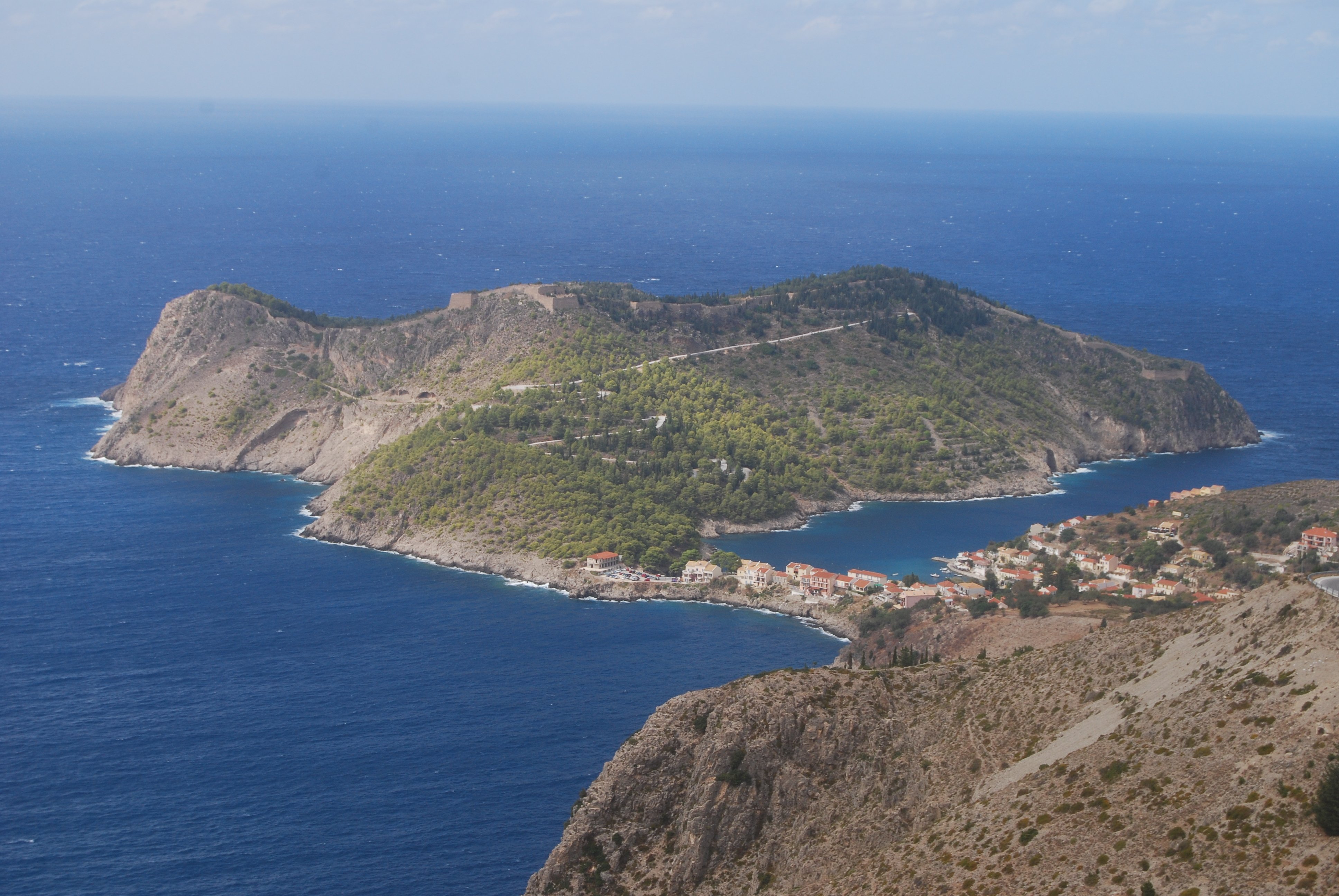
Kefalonia is the largest of the Ionian Islands, a mountainous island off the western coast of Greece that gained international fame through Louis de Bernières' novel Captain Corelli's Mandolin. The island was devastated by an earthquake in 1953 that destroyed most of its Venetian-era towns, so the architecture is mostly modern — but the landscape more than compensates: dramatic limestone mountains, hidden coves, and some of the most beautiful beaches in Greece.
Myrtos Beach, a sweep of white pebbles against turquoise water backed by sheer cliffs, is the island's most photographed spot. The Melissani Cave, a partly submerged lake inside a collapsed cave chamber, is another highlight — the sunlight hitting the water at midday turns it an extraordinary blue. Fiskardo, the one town that survived the earthquake intact, has a pretty Venetian harbour.
The island is big enough to need a car, and it rewards exploration. The mountain roads climb through fir forests to the summit of Mount Ainos (a national park), while the coastline alternates between busy resort beaches and empty coves you can have to yourself. Near Assos on the northwest coast, a Venetian castle stands on a promontory above a perfectly preserved village. The island capital Argostoli is the practical hub, with its unusual sea mills where the Mediterranean disappears into the rock and resurfaces at the Melissani Cave 15 kilometres away. The Drogarati Cave, near Sami, is a vast stalactite chamber with acoustics good enough that Maria Callas once performed here.