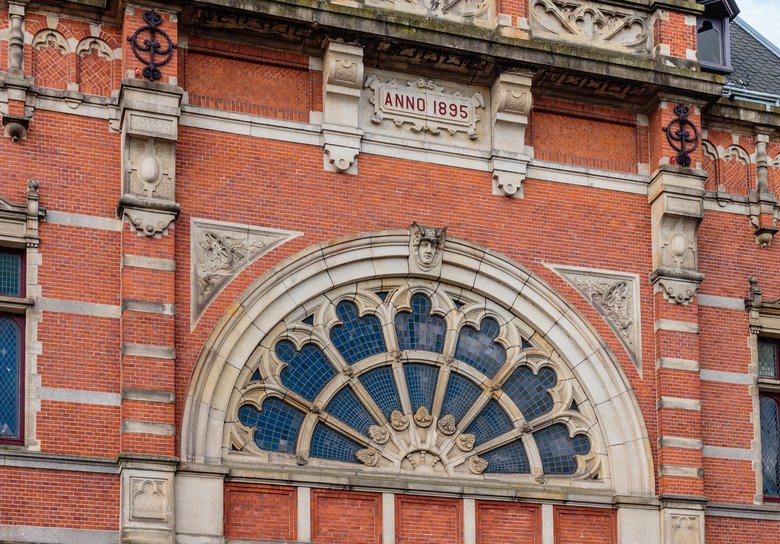
Groningen is the unofficial capital of the north — a compact, busy university city set in flat farmland an hour above the rest of the Netherlands. The historic centre was scarred by Allied bombing in 1945 and the patchy rebuilding that followed, but the medieval core survives in fragments and the surrounding canals still trace the lines of the 17th-century fortifications.
The Grote Markt is the heart of town, dominated by the Martini Tower and the 13th-century Martinikerk with its famous baroque organ. Just west, the Vismarkt and the Der Aa-Kerk form a quieter second square. The Groninger Museum on its own island opposite the station is the one essential modern sight: a wild deconstructivist building by Alessandro Mendini and Coop Himmelb(l)au, with a strong collection running from 17th-century Dutch masters to contemporary art. The new Forum Groningen on the east side of the Grote Markt now offers the best free city view from its rooftop.
The University of Groningen drives the city's rhythm. Thirty thousand students keep the bars, cafés and bike paths busy — the Peperstraat and the Poelestraat fill up most nights, with Thursday and Friday the main going-out evenings. The Folkingestraat south of the Vismarkt is the city's most interesting shopping street, lined with independents and quietly memorialising the lost Jewish community deported from this neighbourhood in the war.