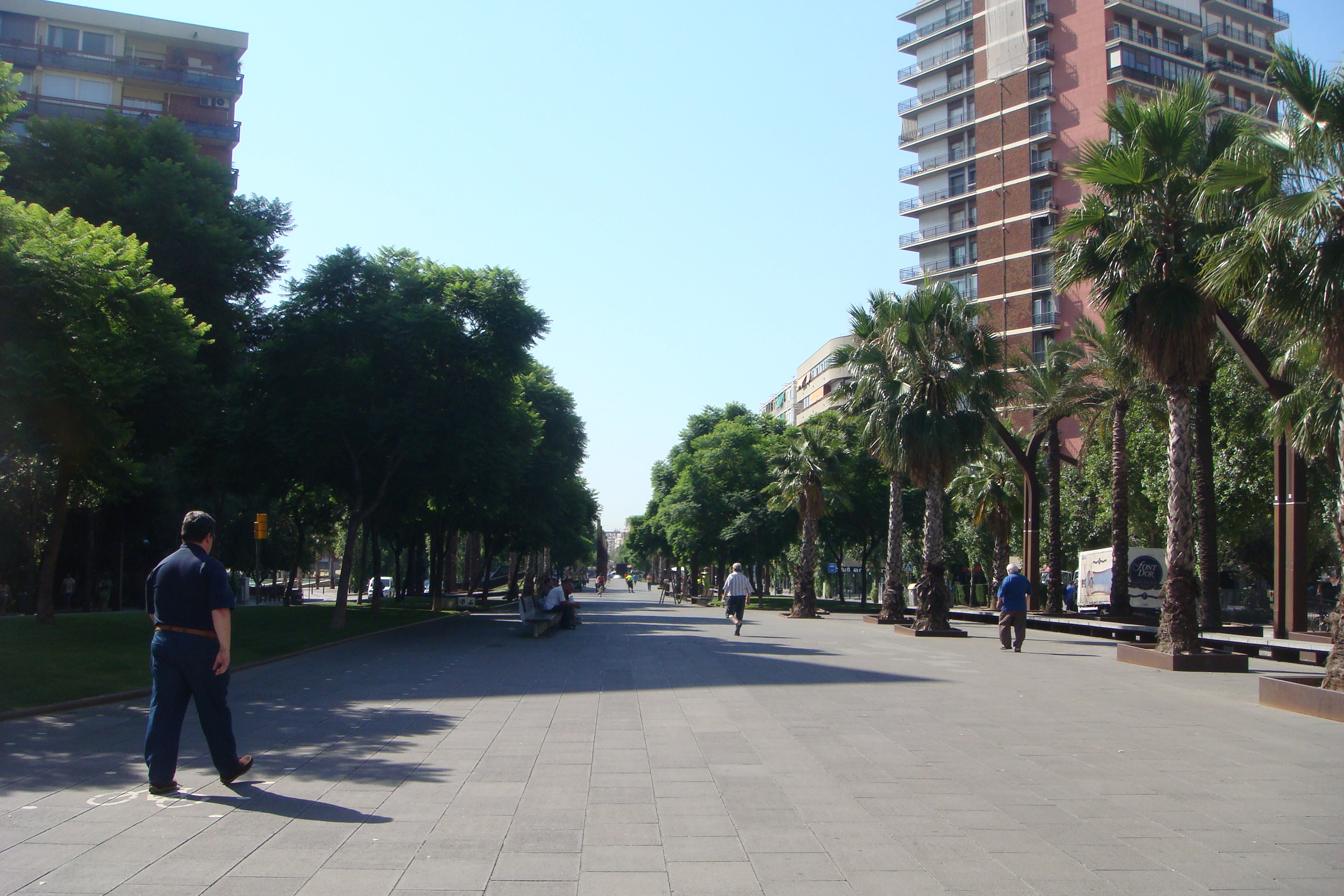
Les Corts was a farming village of country estates — its name comes from the cattle pens, or corts, that once dotted the area — before it was swallowed by the expanding city in the late nineteenth century. Today it is one of Barcelona's wealthiest and most workaday districts at once: a mix of corporate offices, university faculties and quiet residential streets, with little of the tourist crush that defines the centre.
For most visitors the neighbourhood means one thing: Camp Nou, the colossal home of FC Barcelona and, in its standard configuration, the largest football stadium in Europe. Match days fill the surrounding streets with a sea of blaugrana shirts, and the club's museum draws crowds even when the team is away. The district also holds the Avinguda Diagonal as it cuts toward the sea, lined here with the upscale L'Illa shopping centre and the city's main business towers, and the Turó Park, a small but elegant patch of green favoured by the well-heeled families of the Zona Alta above.
Dining and nightlife here are more about local restaurants and after-work bars than scene-chasing — this is where Barcelona goes to work and to watch its football, rather than where it goes out.